
DaysofPal- A worsening shortage of infant formula at Nasser Medical Complex in southern Gaza is placing the lives of vulnerable infants at immediate risk, as malnutrition rates continue to rise under ongoing blockade conditions.
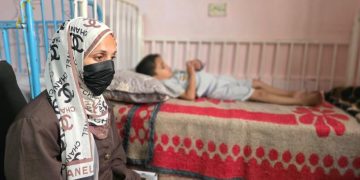
Inside the pediatric ward of Al-Tahrir Hospital, part of the Nasser Medical Complex in Khan Younis, the cries of weak infants echo intermittently.
Dozens of children lie on hospital beds showing clear signs of severe malnutrition, frail limbs, pale faces, and sunken eyes reflecting the scale of the crisis.
Mothers struggle to comfort their children while desperately searching for milk that could ease their suffering.
However, the hospital has run out of infant formula for both Stage 1 and Stage 2, critical for newborns up to one year old, placing many infants in life-threatening conditions.
The crisis comes amid a prolonged Israeli blockade and continued closure of border crossings, which have significantly reduced the entry of medical and food supplies.
This has worsened the situation for sick and malnourished children who rely on therapeutic and formula milk as a primary source of survival.
Among the cases is infant Diana Dib Kahil, who suffers from complex heart conditions in addition to severe malnutrition.
Her mother, Haneen Kahil, sits beside her, watching her daughter’s deteriorating condition.
She explained that Diana urgently needs specialized medical care and transfer abroad for treatment, but border closures have prevented her from traveling despite her receiving a medical referral.
Kahil noted that her daughter requires complex surgeries unavailable in Gaza, along with nutritional rehabilitation and continuous medical care before any procedure can be performed. However, her condition continues to worsen due to limited resources and the family’s inability to meet basic needs.
Nearby lies seven-month-old Mohammed Aahed Al-Masri, who has endured ongoing health complications since birth.
His mother, Manar Al-Masri, said her child suffers from severe intestinal problems and has undergone three surgeries without success.
Although doctors issued referrals for treatment abroad, he remains unable to travel due to crossing closures.
Mohammed’s weight has dropped dramatically to just four kilograms, down from six kilograms, highlighting the severe impact of malnutrition.
His mother added that he continues to suffer from recurring health complications and high fevers, while the lack of proper nutrition has further weakened his body.
Dr. Israa Al-Najjar, head of the Therapeutic Nutrition Department at Nasser Medical Complex, warned that malnutrition is one of the most dangerous consequences of the ongoing war.
She stressed that the shortage of infant formula poses serious risks to infants’ health.
“Children suffering from severe malnutrition urgently need appropriate nutrition and milk,” Al-Najjar said, emphasizing that access to infant formula is not only a humanitarian necessity but a fundamental right.
She added that many of the affected children are born to mothers who have experienced hunger, injury, and prolonged displacement, which has reduced their ability to breastfeed.
Al-Najjar noted that the lack of formula has directly impacted children’s growth and increased complications, particularly for those with chronic or complex health conditions.
She confirmed that infant formula for newborns up to one year old has been unavailable for some time, limiting the ability of medical teams to treat malnutrition cases effectively.
According to recent estimates by UNICEF, one in five children in Gaza suffers from acute malnutrition, underscoring the severity of the humanitarian crisis.
Amid exhausted medical staff, anxious mothers, and weakened children, the unfolding situation reflects a deepening humanitarian catastrophe.
Infant formula, once a basic necessity, has become scarce, leaving hundreds of infants in a daily struggle against hunger and disease as they await the reopening of crossings and the arrival of critical supplies.
Shortlink for this post: https://daysofpalestine.ps/?p=75510