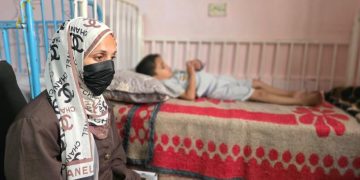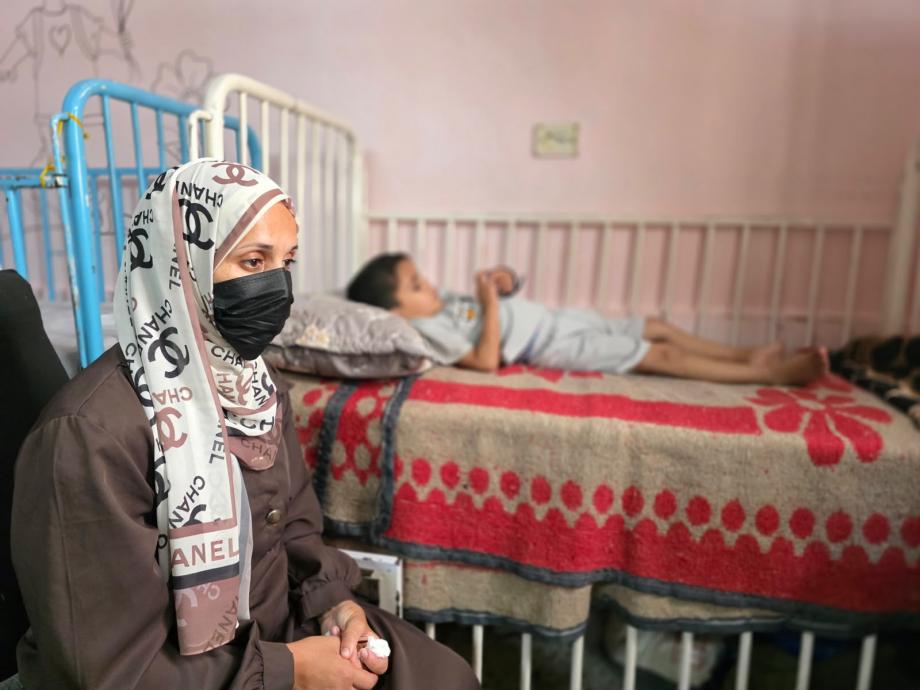
DaysofPal — In a small isolation room at Nasser Medical Complex in Khan Younis, a Palestinian mother sits beside her six-year-old son, watching every movement as he struggles with severe malnutrition.
For Iman Abu Jameh, the fight to save her child is also a fight against the fear of losing the last remaining member of her immediate family.
Her son, Yasser, has spent nearly seven months in the hospital receiving treatment, yet his condition has shown little improvement.
According to his mother, his weight continues to decline, and each brief recovery is followed by another setback.
Iman has already lost her husband and her eldest son in recent months after both suffered from malnutrition due to the starvation by Israeli occupation.
Now, she fears history may repeat itself.
“I am afraid of losing Yasser the same way,” she said. “I see the same pain happening again, and all I can do is wait and pray.” She added.
Doctors say the child requires specialized therapeutic milk known as F-100, commonly used to treat severe malnutrition.
However, supplies are extremely limited, forcing medical staff to rely on less effective alternatives that do not fully meet their needs.
Iman says she cannot afford to purchase the treatment on her own, as her family has lost its source of income amid the ongoing crisis.
She rejects claims that there is no famine in Gaza, describing her family’s experience as clear evidence of widespread suffering.
“The lack of food and medicine has taken away my child’s chance at a normal life,” she said.
Medical staff at the hospital continue to do what they can with limited resources. Pediatrician Dr. Deeb Shehadeh said Yasser has been under care in the therapeutic nutrition unit for about six months, but his condition remains critical.
He added that doctors suspect a possible genetic factor contributing to the child’s deterioration and are seeking to transfer him outside Gaza for advanced testing unavailable locally.
The hospital is seeing two to three new cases of severe malnutrition each day, often accompanied by complications such as infections, fever, or gastrointestinal illness.
Other children are treated as outpatients with nutritional supplements depending on the severity of their condition.
Doctors warn that food supplies entering Gaza remain far below what is needed, while soaring prices for basic items such as meat, vegetables, and fruit have made them unaffordable for most families.
As doctors continue their efforts, Iman remains at her son’s bedside, holding onto hope for any sign of recovery, while fearing that hunger and war could claim yet another member of her family.
Shortlink for this post: https://daysofpalestine.ps/?p=76169