Gaza Strip – July 22, 2025 – For the fourth consecutive day, the Israeli military has claimed to open a humanitarian corridor into Gaza, but residents and aid workers on the ground say the effort is little more than a performance.
Despite official announcements, no aid trucks have reached the desperate communities most in need, and the situation on the ground continues to deteriorate.
“Nothing is reaching us — not in the north, not in the center, not even in the so-called safe zones,” said Ahmed Abu Salem, a displaced resident from Beit Hanoun now sheltering in central Gaza. “This is not a corridor. It’s a photo op for foreign cameras.”
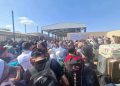
According to local sources and humanitarian groups, the vast majority of the population remains cut off from food supplies, forcing many to risk their lives in hopes of catching aid deliveries in dangerous, unregulated areas like Zikim or outside broken distribution centers in Khan Younis and Deir al-Balah.
“These are not aid routes — they’re death zones,” said a volunteer with a local food relief initiative, who asked not to be named for safety reasons. “People are collapsing from hunger and heat, waiting for trucks that never arrive.”
Hunger as a Weapon
Since October 2023, Israel’s siege on Gaza — intensified after the start of the war — has triggered a humanitarian catastrophe. The blockade has decimated the flow of essential goods, from food and fuel to medicine and clean water. According to the Palestinian Health Ministry, over 115 people have died from starvation, including children, and countless more are severely malnourished.
Despite repeated international calls to ensure the free flow of aid, Israel continues to tightly control and severely limit entry, often citing “security concerns.” Aid organizations like the UN’s Office for the Coordination of Humanitarian Affairs (OCHA) have described the situation as “unprecedented,” with less than 10% of Gaza’s food needs currently being met.
Propaganda Over Relief
In recent days, Israel has claimed to facilitate increased humanitarian access through newly designated corridors. However, witnesses and journalists say these announcements appear designed more to deflect international criticism than to alleviate suffering.
“Nothing real is happening,” said a mother of three in Rafah. “We hear about the aid corridors on the radio. But we see no trucks, no food, no help.”
Residents say these announcements are being used to give the appearance of cooperation with international aid efforts, without actually delivering relief. “Everyone here agrees — this is just for show,” said one resident.
International Inaction
Despite the worsening famine, the global response has been muted, with no meaningful pressure placed on Israel to ensure unrestricted aid access. Aid agencies report that over 400,000 pallets of humanitarian supplies are stuck in limbo, waiting at crossings or stockpiled in neighboring countries.
Meanwhile, inside Gaza, nearly two million people face a slow death from hunger and disease. With health services collapsing and basic infrastructure destroyed, even those who survive the famine are left vulnerable to outbreaks of disease and further displacement.
“There Is No Aid”
“What kind of corridor is it if no aid comes through?” asked one aid worker in Gaza City. “It’s a corridor to nowhere.”
As long as the blockade persists and meaningful humanitarian access is denied, every hour that passes is another life lost. And while the world watches, Gaza’s people are not just starving — they are being starved.
Shortlink for this post: https://daysofpalestine.ps/?p=66211