DaysofPal- Newly released testimonies have exposed chilling details of the deliberate targeting of Palestinian paramedics and rescue workers in Gaza by Israeli occupation forces.
According to an exclusive report by The New York Times, survivors and witnesses recounted how a convoy of ambulances and a fire truck was attacked in the Tel al-Sultan neighborhood of Rafah two weeks ago. The accounts describe what appears to be a calculated assault on humanitarian personnel, followed by efforts to conceal evidence of the crime.
“They Opened Fire After an Officer Spoke to Soldiers”
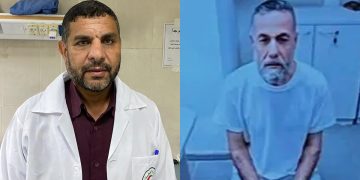
Two witnesses provided harrowing descriptions of the incident. Munther Abed, a 27-year-old volunteer paramedic with the Red Crescent, survived the initial attack but was later detained. He recalled hearing voices in Hebrew moments before the shooting began.
“I thought I was going to die,” Abed said. After being pulled from the ambulance, he was forced to undress, kneel, and endure brutal beatings with rifle butts. Soldiers interrogated him about October 7, accusing him of terrorism, and pressed a rifle barrel against his neck.
Dr. Saeed al-Bardawil, 55, who was arrested alongside his son during a separate hunting trip, corroborated Abed’s account. Al-Bardawil stated that he witnessed the soldiers opening fire on the ambulances after an officer conversed with his troops. Both witnesses described the scene as a “field execution” of unarmed rescue workers—a grim reminder of the repeated targeting of medical personnel in Gaza.
Burying Evidence
According to the testimonies, Israeli bulldozers and tanks arrived shortly after the attack, burying five ambulances, a fire truck, and the bodies of victims in pre-dug pits. Satellite images analyzed by The New York Times confirmed the presence of crushed vehicles at the site, including a UN vehicle. Witnesses reported being left beaten and exhausted before some were eventually released. However, one paramedic, Asaad al-Nasasra, remains missing, according to the International Committee of the Red Cross (ICRC).
A Pattern of Targeting Humanitarian Workers
The attack has sparked widespread outrage over the systematic targeting of aid workers in Gaza. On March 18 alone, intensive airstrikes killed hundreds of civilians, further underscoring the perilous conditions faced by humanitarian teams operating in the besieged territory. Israeli occupation forces have justified these attacks by alleging that ambulances were not marked as emergency vehicles.
In response to the revelations, Israeli writer Rogel Alpher criticized the military’s actions in an op-ed for Haaretz.
He questioned whether the “Israeli army” would ever admit to killing 15 aid workers in Tel al-Sultan, including one who was reportedly executed while handcuffed in front of soldiers.
Alpher argued that any admission or apology would force the military to halt its deadly operations against Palestinian relief teams, complicating future assaults like those seen in recent months.
A Culture of Dehumanization
Alpher placed significant blame on Israeli society, highlighting a prevailing mindset that views all Gazans—including children and aid workers—as legitimate targets. This dehumanization enables atrocities to be framed not as war crimes but as acts of “self-defense.”
Such rhetoric perpetuates a cycle of violence and impunity, leaving little room for accountability or empathy toward Palestinian suffering.
Calls for Justice Amidst Denial
Human rights organizations and international observers have condemned the killings, demanding investigations into the incident. Yet, the burial of bodies and vehicles suggests an attempt to erase evidence, raising concerns about transparency and accountability. For now, the testimonies of survivors serve as a stark indictment of the ongoing horrors endured by Gaza’s civilian population.
As calls for justice grow louder, the question remains: Will the world hold Israel accountable for these alleged crimes, or will they continue unchecked?
Shortlink for this post: https://daysofpalestine.ps/?p=61942