
DaysofPal – The Hamas Movement has affirmed in an extensive political memorandum that the ceasefire agreement in the Gaza Strip has been subjected to ongoing and systematic violations, despite the movement’s full and continued commitment to all of its provisions since the agreement came into effect.
According to a statement published on Hamas’s official website on Tuesday, the memorandum was issued after 100 days had passed since the ceasefire entered into force. The movement said the document was delivered to mediators, guarantor parties, states, and international organizations in recognition of efforts to reach the agreement and to warn of the grave consequences of continued violations on Gaza’s already catastrophic humanitarian conditions.
Hamas stressed that it has treated the ceasefire as a legal and moral obligation aimed at protecting civilians and halting bloodshed, not as a political cover for continued military operations or the perpetuation of policies of mass destruction.
The movement stated that it adhered to the agreed timeline and handed over 20 Israeli captives alive within the first 72 hours, in line with the terms of the agreement.
It also said it continued searching for the remains of captives despite widespread destruction, Israeli fire control over more than 63 percent of Gaza’s territory, the presence of unexploded ordnance, and the loss of several guard personnel. Hamas reported recovering 27 of the 28 bodies, confirming that efforts to locate the final body are ongoing in coordination with mediators and the International Committee of the Red Cross.
Death Toll During the Ceasefire
According to the memorandum, 483 people were killed during the period in which the ceasefire has been in effect. This includes 169 children (35 percent), 64 women (13.3 percent), 19 elderly individuals (3.5 percent), 191 civilian men (39.8 percent), and 39 fighters (8.1 percent).
Hamas stated that 96.3 percent of those killed were targeted within the areas designated as protected under the “yellow line,” describing this as evidence of deliberate and systematic killing.
Injuries Recorded
The memorandum reported 1,294 injuries, averaging 13 injuries per day. Those injured included 428 children (33 percent), 262 women (20 percent), 66 elderly individuals (5 percent), 528 civilian men (41 percent), and 10 fighters (1 percent).
It said all injuries occurred within areas covered by the ceasefire agreement, pointing to the continued direct targeting of civilians.
Field Violations
Hamas documented 1,298 field violations, averaging 13 incidents per day. These included 428 cases of direct gunfire, 66 military incursions, and 604 instances of aerial and artillery shelling.
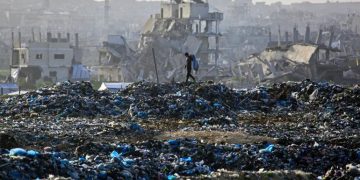
The memorandum added that Israeli forces carried out 200 demolitions of homes and residential blocks within the yellow line and areas under control, which Hamas said was intended to impose geographic and demographic changes.
It also reported the detention of 50 civilians, including fishermen at sea, and breaches of agreed withdrawal maps ranging from 200 to 1,300 meters, as seen in the Jabalia refugee camp. Hamas said additional fire-control zones were imposed, reaching depths of up to 1,700 meters in northern Gaza, estimating the newly imposed fire-control area beyond the yellow line at approximately 34 square kilometers.
These violations, the memorandum said, were accompanied by daily engineering destruction, including land leveling, demolition of buildings, and the removal of entire residential neighborhoods.
Collapse of the Health Sector
Hamas stated that Israeli policies have led to the near-total collapse of Gaza’s health sector due to the siege and the prevention of medical supplies. This included blocking the entry of medical teams and specialized personnel, as well as the seizure or destruction of medicines and medical equipment.
The movement said Israeli authorities prevented the entry of radiology equipment, intensive care units, and operating room supplies, as well as construction materials needed to repair damaged hospitals. This, it warned, has contributed to rising death rates, particularly among children, the elderly, and patients with chronic illnesses.
Aid and Fuel Restrictions
The memorandum said Israel failed to meet its obligation to allow the entry of 600 aid trucks per day, accusing it of providing misleading figures that do not reflect conditions on the ground.
According to Hamas, only 26,111 trucks entered Gaza over the past two months out of the 60,000 agreed upon. These included 15,285 humanitarian aid trucks, 10,165 commercial goods trucks, and just 661 fuel trucks.
The fuel sector was described as the most severely affected, with only 661 fuel trucks entering instead of the agreed 50 per day, just 13.2 percent of the required amount, leading to paralysis in hospitals, bakeries, transportation, and energy services.
Hamas said Israel also prevented the operation of Gaza’s sole power plant and blocked the entry of solar panels, bakery equipment, rescue and ambulance supplies, as well as caravans and tents needed to shelter displaced families.
It further cited the disruption of water, sewage, and telecommunications networks and the continued ban on construction materials and heavy machinery, noting that such restrictions have been in place for more than 27 months.
Rafah Crossing and Movement Restrictions
The memorandum said the Rafah crossing has remained fully closed in both directions since the ceasefire began, preventing thousands of wounded and sick patients from receiving treatment outside Gaza. It also restricted travel for students and humanitarian cases, blocked the entry of medical delegations and international experts, and hindered displaced residents from returning to their homes.
Detainees and Captives File
Regarding detainees, Hamas accused Israel of refusing to disclose the fate of dozens of detainees and missing persons, delaying the release of women and children, and refusing to provide lists of detainees who died in custody.
The movement said Israel continues to hold more than 1,200 bodies, accusing it of documented abuses against detainees and of publicly displaying footage of such acts, which Hamas described as evidence of a deliberate policy to undermine the agreement and reproduce the humanitarian catastrophe.
Hamas called for urgent international action to halt the violations immediately, compel a full Israeli withdrawal from Gaza, complete the first phase of the agreement, and move directly to the second phase.
It also demanded enforcement of the agreed withdrawal lines, an end to fire-control zones covering 34 square kilometers, and the establishment of a neutral international field monitoring mechanism.
The movement further urged guarantees for the daily entry of 600 aid trucks, including 50 fuel trucks, under direct international supervision, and for the United Nations and its agencies to operate without restrictions.
Finally, Hamas called for the immediate opening of the Rafah crossing in both directions and the entry of fuel, medical supplies, vital equipment, caravans, tents, and construction materials, as well as disclosure of the fate of detainees and missing persons, the release of women and children, and the return of withheld bodies.
Shortlink for this post: https://daysofpalestine.ps/?p=71487