DaysofPal – Families displaced by Israel’s two-year conflict in the Gaza Strip are preparing for yet another bitterly cold winter, their third consecutive year without proper shelter. With temperatures dropping and heavy rains approaching, thousands of Palestinians are once again facing nights of cold, hunger, and fear under torn tarpaulins and leaking tents.
For 19-year-old Farah Ashour, who lives in Gaza’s Tel al-Hawa neighborhood, the sky is her only roof.
“What if an Israeli bomb fell on me now, despite the ceasefire? They are wicked,” she told Quds News Network, her voice trembling with exhaustion. “Winter is coming soon. Local weather reports warn of rain and storms… and no one cares about our miserable situation.”
Farah’s family is one of thousands who lost their homes during Israel’s bombardment and now live in makeshift shelters, thin sheets of plastic and fabric that offer little defense against the cold or the rain.
“The situation was already unbearable, but the winds made it even worse,” Farah said. “Last winter, the flooding and strong winds ripped our tent apart, leaving us out in the open.”
Her family of ten, parents, siblings, and an aunt, now huddle together in what remains of their bombed house, the second floor partially intact but dangerously unstable. “There is also an unexploded rocket on the upper floors,” she said. “But we have no choice.”
The United Nations Satellite Centre reports that 81 percent of all structures in Gaza are damaged or destroyed. According to UNRWA, nearly all residents have been displaced.
Ceasefire Brings Little Relief
Since the ceasefire took effect on October 10, aid groups say Israel has blocked the entry of life-saving shelter materials. The Norwegian Refugee Council (NRC) said that Israel has rejected 23 requests from nine humanitarian agencies to deliver essential supplies, including tents, bedding, blankets, and sealing kits, totaling nearly 4,000 pallets.
“We have a very short chance to protect families from the winter rains and cold,” said Angelita Caredda, NRC’s regional director for the Middle East and North Africa. “More than three weeks into the ceasefire, Gaza should be receiving a surge of shelter materials, but only a fraction of what is needed has entered.”
The UN says 1.5 million people require tents or other emergency shelters. More than 282,000 housing units have been damaged or destroyed.
Collapse of Infrastructure and Health Risks
Gaza Municipality has warned that any rainfall could lead to severe flooding, threatening hundreds of thousands of people living outdoors. It said 93 percent of tents have already collapsed or become uninhabitable after nearly two years of war.
Officials cautioned that without immediate delivery of relief supplies, fuel, and repair equipment, Gaza’s fragile sanitation and water systems could fail completely, leading to contamination and outbreaks of disease.
“The tragedy of Gaza’s residents may worsen significantly in the coming weeks unless urgent international intervention is mobilized,” the municipality warned in a statement.
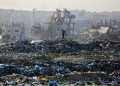
UNRWA said 61 million tonnes of debris still blanket Gaza, forcing families to search through ruins for shelter. The Gaza Rights Center confirmed that 74 percent of tents are unfit for living.
Aid Groups Blocked, Families Left Exposed
UK-based charity Muslims In Need (MIN) told Quds News Network that it is unable to deliver new tents to Gaza after Israeli authorities rejected requests from several humanitarian organizations, claiming they were “not authorized to deliver humanitarian aid.”
“Almost everyone in Gaza City is now living in tents or literally on the streets without any shelter,” a representative from MIN’s Gaza office said. “Many people are asking us for tents before winter, but we simply cannot afford them.”
For many families, survival now depends on sharing a single blanket through the night. Aya Sada, who lives in a makeshift camp near the sea in Deir al-Balah, said, “People in Gaza hate winter. Most families share one blanket throughout the entire season. This is the reality.”
Children, infants, and the elderly are at the greatest risk. Last winter, several children froze to death during a cold snap, trapped between the freezing sea air and Israel’s blockade that prevents shelter materials from entering.
“This winter, as fewer buildings remain standing, many Palestinians are forced to live in tents that can barely withstand the wind,” Aya said. “And even the tents are falling apart after two years of Israeli assault.”
Humanitarian groups warn that Gaza’s displaced population is entering winter on the brink of collapse, with no adequate shelter, dwindling supplies, and almost no fuel.
Shortlink for this post: https://daysofpalestine.ps/?p=69295