DaysofPAL- The Gaza Strip is no longer the narrow coastal enclave long known as one of the most densely populated places on earth. Today, it has effectively shrunk into an even smaller, suffocating space, where tents, rubble, hunger, and fear dominate daily life.
According to current estimates, Israeli occupation forces now control approximately 65% of Gaza’s total area of 365 square kilometers, leaving more than two million Palestinians confined to just 35% of the territory.
With ongoing threats of further territorial expansion, the remaining space has become dangerously overcrowded, triggering an unprecedented humanitarian crisis.
More than eight months after a ceasefire was declared in October 2025, residents say the agreement has had little tangible impact on the ground. For many, it feels like a symbolic gesture that failed to halt the realities of war.
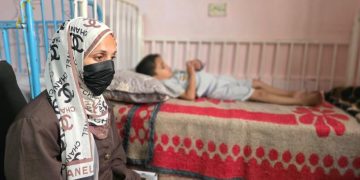
Across western Gaza City, sprawling displacement camps stretch over sand dunes and between destroyed buildings.
Families walk long distances in search of water, food, or even a stable internet connection, while military aircraft continue to circle overhead.
Children play between tightly packed tents, women bake bread over open fires, and men sit beside the ruins of their homes, contemplating a return that now seems impossible.
“What we are living is not just loss of homes, but loss of space itself,” said Mohammed al-Bawab, a father of five who now lives in a small tent after his house in Shuja’iyya was destroyed.
“Millions of people are trapped in a tiny part of Gaza, and every day life becomes more suffocating.”
Before the war, al-Bawab’s family lived in a three-story home. Today, they share a cramped tent on sandy ground amid severe shortages of water and sanitation.
With the infrastructure collapsed, many families are forced to dig makeshift sewage pits near their shelters.
Attempts to return to areas now under Israeli control have proven dangerous. “I tried to go back once, but I had to retreat under gunfire,” he said.
“My children keep asking when we will go home. I have no answer.”he added.
The crisis extends beyond housing to livelihoods. Abeer al-Safadi, a mother of four from Beit Hanoun, lost access to her farmland, which once sustained her family.
“My land was my whole life,” she said. “Now I stand in line for hours just to get basic food. I was never a beggar—I lived from my work.” He noted
Her land now lies within restricted areas, and she does not know whether her crops or trees still exist.
Like thousands of others, she has become entirely dependent on humanitarian aid.
Economic experts warn that the consequences of the territorial squeeze are catastrophic. “This is not just a humanitarian crisis—it is a complete economic collapse,” said Palestinian economist Ahmed Abu Qamar.
“When over two million people are forced into just 35% of the land, every aspect of life breaks down: housing, infrastructure, employment, and food production.”
Large portions of Gaza’s agricultural and industrial zones are now inaccessible, leaving families without income and deepening reliance on aid.
Experts also warn of rising disease, social tensions, and long-term psychological trauma caused by extreme overcrowding.
Even if hostilities were to cease immediately, Abu Qamar stressed, the damage would endure for years. “People have lost everything at once, their homes, land, livelihoods, and sense of security. Rebuilding life under these conditions will take a very long time.”
For Gaza’s residents, the question is no longer when the war will end, but how life can continue at all within such a confined and col
Shortlink for this post: https://daysofpalestine.ps/?p=75375