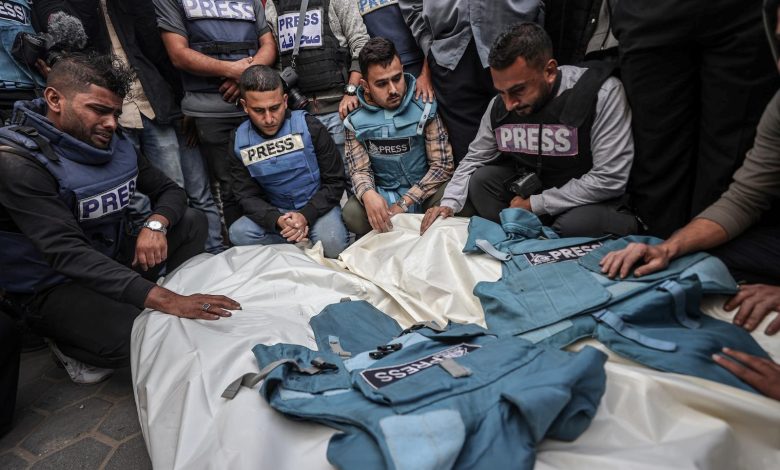
DayofPal—An extensive investigation by Forbidden Stories, in collaboration with Bellingcat, ARIJ, and other media partners, has revealed a disturbing pattern of Israeli military attacks targeting Palestinian journalists who use drones to document destruction in the Gaza Strip.
The findings raise serious concerns about the absence of clear rules of engagement and the apparent failure to distinguish between combatants and journalists engaged in newsgathering.
Since October 2023, Palestinian journalists have been effectively prevented from filming Gaza from the air. Of the small number who continued to use drones to document the scale of devastation, at least five have been killed or seriously wounded in Israeli strikes that colleagues and investigators describe as deliberate.
Testimonies from surviving journalists, corroborated by satellite imagery and exchanges with Israeli military sources, indicate that drone operators are frequently treated as legitimate targets, regardless of their civilian or press status.
One of the most recent cases is that of Mahmoud Samir Isleem Al-Basos, a contributor to the Gaza Project, who was killed on March 15, 2025, while a ceasefire was still in effect. Al-Basos was filming humanitarian activities for the Al-Khair Foundation in Beit Lahia, northern Gaza, using a drone to document aid distribution and preparations for a refugee camp extension.
According to his family and colleagues, he was wearing a press vest and helmet at the time. Israeli airstrikes hit the area, killing him along with aid workers and cameramen.
The Israeli army claimed it had targeted “terrorists” operating a drone but failed to provide evidence linking Al-Basos to any armed group.
Subsequent investigations found no proof of such affiliations, and the Committee to Protect Journalists (CPJ) has classified his killing as murder.
Earlier cases underscore a similar pattern. In February 2024, journalist Abdallah Al-Hajj, who filmed drone footage for UNRWA showing vast destruction in the Al-Shati refugee camp, was critically injured by an Israeli strike nine days after his images were published.
The attack killed his nephew and a fisherman and resulted in Al-Hajj losing both legs. He stated that he had taken precautions while filming, operating at low altitude and for short periods, and emphasized that there were no active military operations in the area at the time.
Despite this, the Israeli army claimed it had targeted a “terrorist cell” using a drone. Al-Hajj has strongly denied any militant affiliation, noting that he later left Gaza for medical treatment, something he argues would not have been possible had he been involved with armed groups.
The investigation also revisits the killing of freelance journalist Moustafa Thuraya in January 2024, who was struck while filming with a drone alongside journalist Hamza Al-Dahdouh.
Israeli authorities again claimed they had targeted a militant posing an immediate threat, releasing documents allegedly linking Thuraya to Hamas and Islamic Jihad.
However, independent analysis by The Washington Post and Bellingcat found no Israeli military presence in the vicinity at the time and no evidence that the journalists posed any threat.
Several journalists interviewed by Forbidden Stories reported losing control of their drones, believing they had been electronically intercepted by Israeli forces.
Well-known photographer Motaz Azaiza publicly accused the Israeli army of hijacking his drone in late 2023, after which he announced he would no longer film aerial footage. Other journalists followed suit, citing fear for their lives.
By early 2024, major international media organizations had sharply reduced, and later completely halted, drone use in Gaza.
Former Israeli military personnel interviewed for the investigation confirmed the lack of clear directives.
Michael Ofer-Ziv, who served at an Israeli military operations center near Gaza, stated that no official document outlining rules of engagement regarding drones was ever provided to him.
He described a prevailing attitude in which “anyone flying a drone” was treated as a target, “no questions asked,” without specific discussion of journalists. In June 2024, Ofer-Ziv refused to return to service, citing moral and legal concerns.
Legal experts and former military legal officers consulted by the investigation acknowledged the ambiguity. While some argued that drones near combat zones could reasonably be perceived as threats, they conceded that journalists such as Thuraya and Al-Hajj were not operating in active combat areas when they were targeted.
The findings also echo earlier concerns within Israel’s own legal establishment. An internal memo from the Israeli Attorney General’s office, dating back to 2018, warned that public statements suggesting drones automatically justify lethal force could erase the distinction between journalists and combatants, potentially violating international law and exposing Israel to international accountability.
According to the CPJ, the killing of Al-Basos adds to a growing list of journalists killed by Israeli forces in Gaza. Press freedom organizations warn that unsubstantiated accusations against journalists not only endanger lives but also undermine public trust in reporting from Gaza.
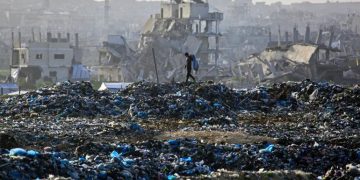
As drone footage remains one of the few ways to document large-scale destruction inaccessible from the ground, the systematic targeting of drone journalists risks blinding the world to the full extent of the humanitarian catastrophe.
The investigation concludes that, despite repeated Israeli denials of a systemic attack on journalists, the evidence points to a pattern of lethal ambiguity, one in which the act of documenting Gaza from the air has itself become a deadly risk.
Shortlink for this post: https://daysofpalestine.ps/?p=71503