DaysofPal – The Gaza Civil Defense is facing the most dangerous phase in its history amid the ongoing war of annihilation on the Gaza Strip, according to Brigadier Raed Al-Dahshan, Director of the Civil Defense in Gaza Governorate. He warned that the assault has not been limited to civilians and their homes but has systematically targeted rescue crews, operational headquarters, and essential equipment, resulting in a near-total paralysis of the agency’s operational capacity.
Al-Dahshan explained that the continued ban on the entry of heavy machinery has prevented the recovery of nearly 10,000 bodies still buried under rubble. He stressed that this task could be completed within three months if the necessary equipment were allowed in. Without it, however, the disaster risks turning into an open-ended tragedy stretching over many years, he said in an interview with Palestine Online.
He cautioned that maintaining restrictions on equipment will slow recovery operations to the extent that they could last more than a decade, leaving thousands of families trapped in prolonged and painful uncertainty.
Severely Depleted Capabilities
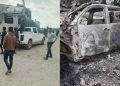
Al-Dahshan noted that the Civil Defense entered the war already operating at no more than 45 percent capacity due to a siege imposed for over 17 years and the long-standing prohibition on modern equipment. As the assault intensified, the agency lost approximately 85 percent of its equipment, leaving it today functioning at only 5 to 7 percent of its pre-war operational strength.
Rescue teams, he said, are working with extremely primitive tools, often with bare hands, after losing most fire engines, hydraulic rescue ladders, ambulances, water tanks, and heavy machinery capable of lifting massive concrete slabs.
In Gaza Governorate, the most densely populated area in the Strip, only one fire engine, one rescue vehicle, and one ambulance remain in service. Before the war, the governorate had a fully equipped fleet of specialized vehicles.
Al-Dahshan revealed that 142 Civil Defense personnel have been killed while performing their humanitarian duties, most of them veterans with 15 to 30 years of experience. In addition, 352 crew members have sustained severe injuries that permanently removed them from service, including amputations, permanent disabilities, and life-threatening wounds.
Before the war, the Civil Defense force in Gaza numbered between 800 and 900 personnel. This heavy human loss, he said, has created a profound professional imbalance and severely undermined the agency’s ability to respond rapidly to emergencies.
He emphasized that civil defense crews were deliberately targeted despite the protection afforded to them under the Geneva Conventions, their use of fluorescent uniforms, and prior coordination with the Red Cross and international organizations.
Destroyed Facilities and Forced Redeployment
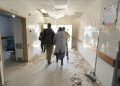
All 17 civil defense headquarters across the Gaza Strip have been completely destroyed, including five main centers in Gaza City, Al-Dahshan said.
In Rafah, deployment has become nearly impossible due to the absence of residents, leading to the integration of crews into Khan Younis and the central areas of the Strip. Overall deployment has been reduced due to escalating security risks and proximity to active combat zones.
As a result, the Civil Defense no longer operates according to internationally recognized standards but rather under harsh field conditions that impose an emergency, irregular mode of work.
Regarding the bodies trapped beneath the rubble, Al-Dahshan said that Civil Defense teams have managed to recover only around 350 bodies so far, while thousands remain buried.
Most of these bodies are known to their families, he explained, but what is often found are skeletal remains due to the passage of time and the inability to reach sites promptly.
Rubble removal is proceeding at an extremely slow pace because of the absence of bulldozers and heavy machinery. In some cases, rescue teams can hear the groans of people trapped beneath the debris yet remain powerless to save them—leaving civilians to bear the cost alone.
Buildings at Risk of Collapse
Al-Dahshan also warned of the growing danger posed by structurally damaged buildings, particularly during periods of severe weather. Dozens of buildings have collapsed recently, causing deaths and injuries.
He said many residents are forced to live in homes at risk of collapse or in unsafe tents due to the lack of alternatives, while the Civil Defense remains unable to remove or secure these structures because of equipment shortages.
Concluding his remarks, Al-Dahshan stressed that the Civil Defense is a purely humanitarian institution with no political affiliation. He called on the international community, United Nations agencies, and Palestinian official bodies to intervene urgently to provide equipment, machinery, fuel, and logistical support.
Supporting the Civil Defense, he said, means supporting life itself. Reviving this vital institution could save thousands of lives and enable its crews to carry out their humanitarian duty under some of the harshest conditions imaginable.
Shortlink for this post: https://daysofpalestine.ps/?p=71156