DaysofPal- The Euro-Med Human Rights Monitor said escalating Israeli measures ahead of the holy month of Ramadan aim to restrict Palestinians’ freedom of worship in the occupied West Bank, including occupied East Jerusalem.
The group said the steps include expanding bans preventing Palestinians from entering Al-Aqsa Mosque, imposing discriminatory access restrictions, and undermining the ability of the Islamic Waqf Department to administer the site and organize Ramadan arrangements. In a statement, the monitor expressed deep concern over an announcement by the Israeli military spokesperson of a wide-scale operation across the West Bank under the titleof ” combating incitement, purportedly to enhance stability during Ramadan.
It said the campaign is being used in practice to broaden prosecutions related to online expression under vague and elastic criteria applied in a discriminatory manner.
This, it added, has led to widespread criminalization of Palestinian political and national content, while explicit incitement and hate speech by settlers and extremist Israeli groups often goes unpunished and sometimes escalates into physical attacks.
The organization warned that the campaign coincides with an expanded wave of exclusion orders barring Palestinians from Al-Aqsa Mosque just days before Ramadan.
Its field team has received dozens of reports of bans affecting Palestinian residents of Jerusalem as well as Palestinian citizens into occupied lands of 1948, some lasting up to six months.
According to data from the Jerusalem Governorate, more than 250 exclusion orders have been issued since the start of 2026, signaling a systematic escalation in using such measures to reduce the Palestinian presence at the mosque, particularly during religious seasons.
The monitor said restrictions on access extend beyond exclusion orders to disrupting the administrative role of the Islamic Waqf, including preventing it from implementing customary Ramadan arrangements such as regulating entry and exit flows, preparing emergency medical responses, and managing crowds within the mosque compound.
Israeli authorities have also barred about 25 Waqf employees from the site and arrested four others, further weakening the institution’s ability to manage the mosque during Ramadan and creating an administrative vacuum.
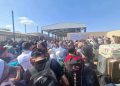
According to the statement, the Israeli plan for Ramadan includes strict limits on Palestinian entry to Jerusalem from West Bank governorates, especially on Fridays, capping attendance at no more than 10,000 worshippers.
Access would be restricted to men over 55 and women over 50, subject to prior approval, a measure the group described as discriminatory based on age and geographic origin and as infringing on the right to access places of worship without arbitrary restrictions.
While restrictions are imposed on Muslim worshippers, the monitor said extremist Israeli groups continue to push for expanded incursions into the Al-Aqsa compound and longer visiting hours, as part of a declared political and religious campaign to impose Israeli “sovereignty” over the site and alter longstanding arrangements.
The announcement followed a letter from Temple-movement organizations to Israeli Prime Minister Benjamin Netanyahu calling for Israeli sovereignty and freedom of worship for Jews on the Temple Mount, the Israeli term for the Al-Aqsa compound, during Ramadan.
Israeli police reportedly postponed a decision on access during the final ten days of the month pending an assessment of reactions to measures implemented at the start of Ramadan.
Euro-Med said the cumulative measures represent a new phase in a systematic policy aimed at reducing Palestinian presence at Al-Aqsa and restricting religious practice, potentially paving the way for gradual changes to the status quo in violation of the obligations of an occupying power to respect and protect the religious life of the occupied population.
The organization emphasized that Jerusalem, including Al-Aqsa Mosque, forms part of the Palestinian territory occupied since 1967, and that the Israeli occupation, as an occupying power, has no sovereignty over the city nor the right to alter its legal, demographic, or administrative status.
It argued that preventing West Bank Palestinians from reaching Jerusalem should not be viewed as temporary administrative measures but as part of a structural policy of separation that isolates the city from its Palestinian surroundings and turns access to it into a permit-based privilege.
The monitor called for the immediate lifting of restrictions on access to Al-Aqsa during Ramadan, including removal of age limits and the permit system, which it said effectively fragments families and prevents large segments of Palestinians, particularly youth, from exercising their right to pray.
It also demanded cancellation of administrative bans imposed on Waqf employees, guards, and worshippers, describing them as a direct interference in religious affairs.
The group urged the deployment of an urgent international fact-finding mission through UN Human Rights Council mechanisms to document restrictions on freedom of worship in Jerusalem during Ramadan and prevent further escalation.
It called on UNESCO to take a firm stance to protect Al-Aqsa as a threatened World Heritage site, and urged UN special rapporteurs on freedom of religion and on human rights in the occupied Palestinian territory to issue a joint statement condemning discriminatory restrictions.
The organization also demanded an independent investigation into rising digital arrests and the use of surveillance tools and artificial intelligence to target Palestinians for online expression, warning that such practices violate privacy and freedom of speech.
Finally, Euro-Med urged social media companies, including Meta, TikTok, and X , not to comply with Israeli requests to remove Palestinian content under claims of incitement, and called on the international community, particularly states party to the Fourth Geneva Convention, to pressure the Israeli occupation to ensure civilians’ safe access to places of worship without military or administrative obstacles.
Shortlink for this post: https://daysofpalestine.ps/?p=72257