DaysofPal – Gaza’s health authorities announced on Tuesday the death of a two-week-old infant from severe hypothermia, highlighting the deadly impact of winter conditions on displaced families across the besieged enclave. The infant’s death raises the number of children who have died from cold-related causes in Gaza since last Wednesday to four, amid an intense winter storm and worsening humanitarian conditions.
The Palestinian Ministry of Health said the baby, Mohammad Khalil Abu Al-Khair, was admitted to hospital two days earlier and placed in intensive care after suffering a sharp drop in body temperature caused by extreme cold. Despite medical efforts, he died on Monday.
Children Succumb to Freezing Conditions in Displacement Sites
The ministry’s announcement follows a series of similar tragedies. Last Friday, two Palestinian children were declared dead on arrival at Al-Shifa Hospital in Gaza City after succumbing to freezing conditions at their displacement sites, as the polar storm “Biron” swept through the territory.
According to medical sources, the child Hadeel Hamdan died from a severe cold and harsh weather conditions. Witnesses said she had been living with her family inside a school converted into a displacement shelter, where basic heating supplies were unavailable.
In a separate case, infant Taim Al-Khawaja died of cold exposure while living with his family in the remains of their home in Al-Shati refugee camp, west of Gaza City, which had been damaged by earlier Israeli airstrikes.
Another infant, Rahaf Abu Jazar, died last Thursday in Khan Younis, southern Gaza, after her family’s tent was flooded by rainwater. Large areas of both formal and informal displacement camps have turned into pools of water and mud, as tents failed to withstand heavy rainfall, trapping thousands of families amid coldness, darkness, and floodwaters.
Hospitals Struggle as Hypothermia Cases Surge Among Newborns
Dr. Jameel Suleiman, head of Al-Rantisi and Al-Nasr Children’s Hospitals, warned of a dangerous rise in hypothermia cases among children, particularly newborns, due to extreme cold and life inside tents.
He said hospitals are operating under “nearly impossible” conditions, citing severe fuel shortages, the lack of heating equipment, and prolonged power outages. “We are trying to save children with whatever is available, but our capabilities are almost nonexistent,” Suleiman said.
Dozens of children arrive at hospitals daily with critically low body temperatures, while many other cases are handled in field clinics or by families inside tents. Newborns are especially vulnerable, as their body temperatures often fall below safe levels, sometimes reaching life-threatening extremes.
Suleiman said children often arrive suffering from severe shivering, bluish skin discoloration, and body temperatures below 37 degrees Celsius. A drop below 36 degrees, he warned, places a child in immediate danger and can be fatal, particularly given their young age and weakened immunity.
Tents Offer No Protection as Aid Restrictions Persist
Suleiman stressed that displacement tents are completely unfit for winter conditions, allowing rainwater and cold winds to penetrate for hours at a time. Children often spend nights soaked and exposed to freezing temperatures, leading to severe respiratory infections that can prove fatal. Even hospitals, he added, lack adequate heating, compounding the crisis.
Displaced families live on muddy ground without heating, electricity, sufficient clothing, or basic shelter. When food, fuel, and aid are restricted, cold itself becomes lethal.
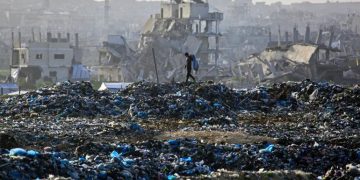
Israel’s war has destroyed more than 80 percent of buildings in Gaza, forcing hundreds of thousands of families into fragile tents or overcrowded shelters. A powerful storm that recently hit the territory killed at least 12 people, flooding tents and causing the collapse of already damaged structures.
“We try to dry the children’s clothes over fire,” said Umm Mohammad Assaliya, a displaced mother in Gaza City, speaking to Al Jazeera. “There are no extra clothes. The tent we were given cannot withstand winter. We need blankets.”
International Warnings as Humanitarian Crisis Deepens
The Gaza Government Media Office reported that more than 27,000 tents have been swept away, flooded, or destroyed by strong winds, with over a quarter of a million displaced people directly affected by rain and flooding. The office said these developments confirm earlier warnings, as tens of thousands of families struggle to survive in shelters that offer no protection amid what it described as “shameful international silence.”
The office accused Israel of obstructing the entry of 300,000 tents, mobile homes, and caravans, and of preventing the construction of alternative shelters, calling the policy a grave violation of international humanitarian law.
On Monday, the United Nations said Israel continues to block the entry of humanitarian aid into Gaza despite harsh winter conditions, warning of an increased risk of newborns freezing to death. The warning was delivered by Farhan Haq, deputy spokesperson for the UN secretary-general.
Although a ceasefire came into effect on 10 October, ending Israel’s war on Gaza, living conditions for Palestinians have not improved due to continued restrictions on humanitarian aid, in violation of the humanitarian protocol of the agreement.
Over nearly two years of war, tens of thousands of tents have been damaged by direct attacks, repeated displacement, extreme summer heat, and violent winter storms.
The ceasefire ended a war that began on 8 October 2023 and lasted two years, leaving more than 70,000 Palestinians killed, over 171,000 injured, and nearly 90 percent of Gaza’s civilian infrastructure destroyed, with losses estimated at $70 billion, while Gaza’s youngest residents remain the most vulnerable to its aftermath.
Shortlink for this post: https://daysofpalestine.ps/?p=70418