DaysofPal – In the small Palestinian village of Umm al-Khair, part of the Masafer Yatta communities in the southern occupied West Bank, residents say Israeli settlement expansion is steadily stripping them of their land, livelihoods, and sense of security. For many families, daily life has become a struggle as nearby settlement outposts and military restrictions increasingly surround their homes.
Among those affected are Salem and Ikhlas al-Hathaleen and their eight children. Their modest sheet-metal home now stands only about 20 meters from a newly established Israeli settlement outpost, built last September as an extension of the nearby settlement of Carmel.
The outpost was erected on land the family once used for grazing livestock and farming. What was once part of their daily routine has become nearly impossible.
Daily Life Disrupted
Ikhlas recalls that each morning she used to feed and water the family’s sheep, milk them, and lead them out to graze. Today, even reaching the livestock enclosure behind her home has become a challenge.
She says the family was initially prevented from accessing the enclosure for four consecutive days. They were later allowed to enter only once under Israeli military escort to provide food and water before being barred again. Throughout July, the family says they have been able to reach the animals only three times.
“I look every morning to see whether the sheep are still alive,” Ikhlas says. “I only wish I could reach them and take care of them like I used to.”
The restrictions have placed the family’s livestock, and their primary source of income, at risk.
The family’s difficulties extend beyond their livestock. Their freestanding bathroom, located just a few meters from the house, has also become difficult to reach.
Ikhlas says that earlier this month, settlers erected barbed wire and kid’s play equipment around the restroom, making it especially challenging for young children and elderly family members to get in.
The situation worsened after the Israeli military declared the surrounding area a closed military zone. As a result, the family, including children as young as one year old, has been forced to use a neighbor’s bathroom.
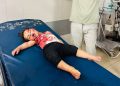
Reaching it requires crossing a road frequently used by settler vehicles. Ikhlas says her five-year-old daughter, Swar, was struck and injured by a vehicle on that road last August.
For the family, the issue goes beyond inconvenience.
“We will not leave our land,” Ikhlas says. “Even if we have to live in a tent or under a tree, we will stay here.”
Systemic Expansion and Legal Impunity
Residents say pressure on Umm al-Khair has intensified since October 2023, alongside the escalation of Israeli military operations in Gaza and increased settler violence across the occupied West Bank.
Although an Israeli court ordered the evacuation of the new settlement outpost last October, residents say the order was never enforced. It was later canceled after Israeli authorities took no action to remove the outpost.
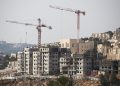
According to Khalil al-Hathaleen, head of Umm al-Khair’s village council, settlement expansion has accelerated through the construction of new outposts, expansion of existing settlements, and the opening of settler-only roads, all at the expense of Palestinian-owned land.
He says these developments have severely affected traditional farming and herding.
The village’s livestock population has fallen from around 3,000 animals to just 700, while more than 1,000 olive trees have reportedly been cut down. Residents also say approximately 50,000 square meters of agricultural land have been taken over, and demolition orders have been issued against 14 homes and structures.
“For the people of Umm al-Khair, losing access to their land does not only mean losing property,” Khalil says. “It means losing an entire way of life that has existed for generations.”
Children Growing Up in Fear
Hisham al-Sharbati, a researcher with the Jerusalem Legal Aid and Human Rights Center, says his organization has documented the worsening conditions in Umm al-Khair for years.
He says settlement expansion has affected nearly every aspect of daily life, from residents’ ability to earn a living to access to homes and basic services.
According to al-Sharbati, these practices violate international law governing occupied territories and have created an increasingly severe humanitarian situation for Palestinian communities in the area.
For many residents, children are bearing the greatest psychological burden.
Ahmed al-Hathaleen, who documents incidents in the village, says he has compiled approximately 1,500 videos and 1,200 photographs since April 2025 to record what residents experience.
“Photography and video have become a way to tell our story and show people what is happening here,” he says.
Ahmed says many children now suffer from fear and recurring nightmares because of the constant presence of settlers and repeated confrontations.
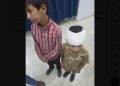
Among them is 12-year-old Sahm Khalil al-Hathaleen, who says children in Umm al-Khair have lost the simple freedoms many others take for granted.
“I just want to go to school and play without fear,” he says.
While he watches children living in nearby Israeli settlements play freely, Sahm says he often wakes during the night frightened by noises outside his home.
“The children here just want to live like other children,” he says.
Shortlink for this post: https://daysofpalestine.ps/?p=76427