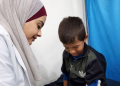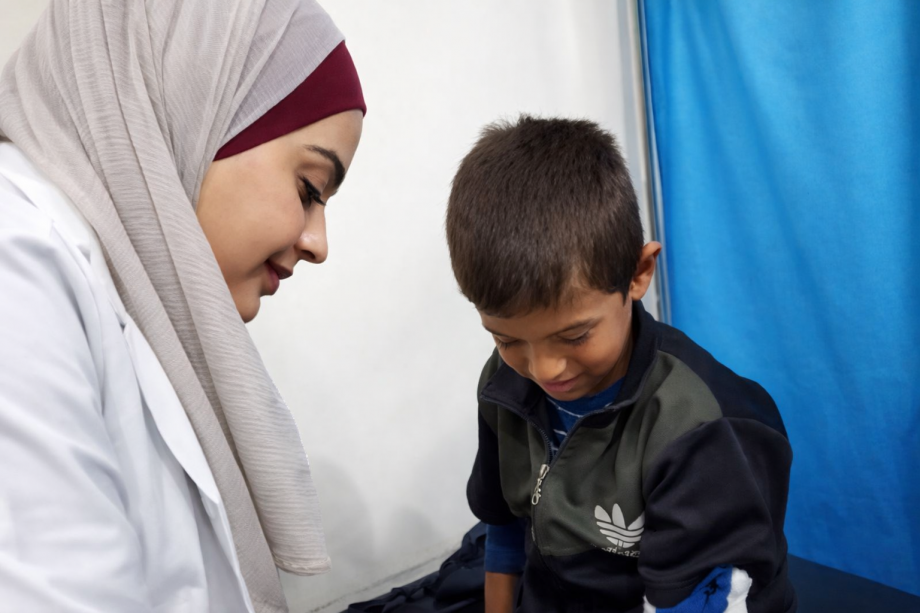
DaysofPal— Amid ongoing Israeli genocidal war and devastation in the Gaza Strip, the young nurse Ghaidaa Arafat is carrying forward a humanitarian mission shaped by personal loss and resilience.
Arafat chose the path of nursing not simply as a career but as a commitment to the legacy of her late brother, Khaled Arafat, who was killed while attempting to rescue a colleague during an Israeli military raid on Al-Shifa Medical Complex.
For Arafat, the decision to study nursing was deeply influenced by her brother’s conviction that the profession is “a humanitarian mission before it is a career.”
Following his death, she felt a profound responsibility to continue what he had started.
Despite achieving high academic results that could have led to alternative fields of study, Arafat pursued nursing, guided by her brother’s belief that “a nurse can one day be the difference between life and death.”
She completed her degree over four years and entered the workforce during one of the most challenging periods in Gaza’s recent history.
Since the outbreak of war in October 2023, hospitals across the territory have struggled to cope with overwhelming numbers of casualties, severe shortages of medical supplies, and a lack of personnel.
Khaled Arafat had been among the medical staff working under extreme conditions at Al-Shifa Hospital, Gaza’s largest medical facility.
He often worked shifts lasting up to 24 consecutive hours, rarely leaving the hospital as he cared for the wounded.
As the humanitarian situation deteriorated, medical workers also faced hunger and exhaustion.
According to Ghaidaa, her brother sometimes relied on intravenous nutrients during short breaks to continue treating patients.
He was ultimately killed while trying to evacuate an injured colleague during intense fighting, as Israeli forces surrounded and raided the hospital complex.
“His death was not the end of his story,” Arafat said. “It became the beginning of my responsibility.” She added.
Now working in Gaza’s strained healthcare system, she faces conditions similar to those her brother once described: overcrowded wards, limited resources, and a constant influx of injured civilians.
One case that left a lasting impression involved a nine-year-old girl who survived an attack on her home but lost both legs and suffered severe injuries to her hands.
Unaware that her family had been killed, the child repeatedly called out for her mother.
“She wasn’t crying from pain as much as she was searching for her family,” Arafat said, describing the moment as emblematic of the suffering endured by children in Gaza.
Despite the daily risks, Arafat remains committed to her work.
“Every time I leave home, I feel that the chance of being injured or killed is higher than the chance of returning safely,” she said.
“But that does not make me afraid; it pushes me to stand by my people.” She added.
Originally from the Zeitoun neighborhood in southern Gaza City, Arafat also lost her home during the war, joining thousands of displaced residents.
She said the experience has only strengthened her determination.
“Our homes may be destroyed, but we cannot lose our humanity or our duty to those in need,” she said.
After more than 1,000 days of Israeli genocide, Arafat says she no longer sees herself solely as a nurse but as both a witness to the collapse of Gaza’s healthcare system and a guardian of her brother’s legacy of compassion and sacrifice.
Shortlink for this post: https://daysofpalestine.ps/?p=76337