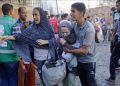

DaysofPal – Rising temperatures in the Gaza Strip are worsening the suffering of hundreds of thousands of displaced people living in makeshift tents that lack even the most basic living conditions, as a result of the ongoing Israeli genocide and suffocating siege on Gaza.
This also comes amid medical warnings of a growing danger of heatstroke and heat exhaustion due to overcrowding, water shortages, and the absence of ventilation or cooling.
Dr. Sara Hussein, a medical expert and author of a comprehensive health guide issued by the Humanitarian Medical Forum Foundation on heatstroke prevention, said displacement camps in Gaza have become extremely hazardous environments, with many tents turning into human ovens during daylight hours.
In remarks to Felesteen Newspaper, Hussein explained that the harsh environmental conditions in the camps significantly increase the likelihood of heat-related illnesses, especially as the ongoing blockade and restrictions on reconstruction materials force thousands of families to remain in tents that provide little protection from extreme summer heat or winter cold.
She noted that heatstroke is a life-threatening medical emergency in which body temperature rises above 40°C due to the failure of the body’s natural cooling mechanisms, particularly sweating.
Risk factors are amplified in displacement camps, she said, due to direct exposure to sunlight, dehydration, physical exertion required for daily survival, and the lack of suitable clothing, forcing many to wear heavy or dark garments.
Hussein emphasized that children, the elderly, and individuals with chronic illnesses are particularly vulnerable, as they are less able to cope with extreme heat.
She urged families to watch for early symptoms of heatstroke, including severe dizziness or fainting, sudden intense headaches, rapid breathing, and a feeling of chest heaviness.
Prompt reassurance and immediate care, she stressed, can prevent deterioration.
Danger signs requiring urgent medical attention include loss of consciousness, seizures, confusion, hot and dry skin without sweating, and repeated vomiting or lack of improvement after cooling attempts.
Hussein also highlighted a “golden minutes protocol” , a set of rapid first-aid steps that can help save lives in camp settings. These include moving the affected person to a shaded area, loosening or removing heavy clothing, cooling the body with water, and giving fluids slowly if the person is fully conscious.
She warned against common mistakes, such as administering fever-reducing medications like paracetamol, which do not treat heatstroke and may cause further complications. She also advised against placing ice directly on the body, recommending gradual cooling with normal or cool water instead.
Hussein concluded by stressing that prevention remains the most effective measure. She advised displaced residents to drink water frequently, even before feeling thirsty; avoid direct sun exposure during peak hours between 10 a.m. and 4 p.m.; wear light and loose clothing; cover the head; and avoid strenuous activities during extreme heat.
“Through awareness and solidarity, we can protect the most vulnerable,” she said. “A drop of water, a patch of shade, or timely attention could save a life.”
Shortlink for this post: https://daysofpalestine.ps/?p=75286