DaysofPal- For the third consecutive year, residents of the Gaza Strip are facing the approach of Eid al-Adha without the traditions that once defined the season, as Israeli war, displacement, and deepening hardship continue to reshape daily life.
Just a few years ago, Gaza’s streets would come alive ahead of the Hajj season and Eid al-Adha, with bustling livestock markets, children gathering around decorated sheep, and families preparing to bid farewell to pilgrims or purchase sacrificial animals.
The season was considered a rare moment of joy for residents living under years of blockade.
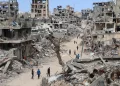
Today, those scenes have all but disappeared because of the Israeli siege and ongoing war on Gaza.
Instead, the holiday arrives burdened with grief and deprivation, as thousands of families are unable to perform the pilgrimage or even take part in the traditional sacrifice ritual, once closely tied to values of charity, faith, and celebration.
Abu Alaa, a father who lost two sons and now lives with his family in displacement tents, recalls past celebrations with sorrow. Sitting outside his tent and looking at old photos of his family gathered around a sacrificial animal, he said: “We used to wait for Eid eagerly.
The children would be happy days before the sacrifice, and the whole family would gather. Today, there is no home, no sacrifice, not even the ability to buy a kilogram of meat.”
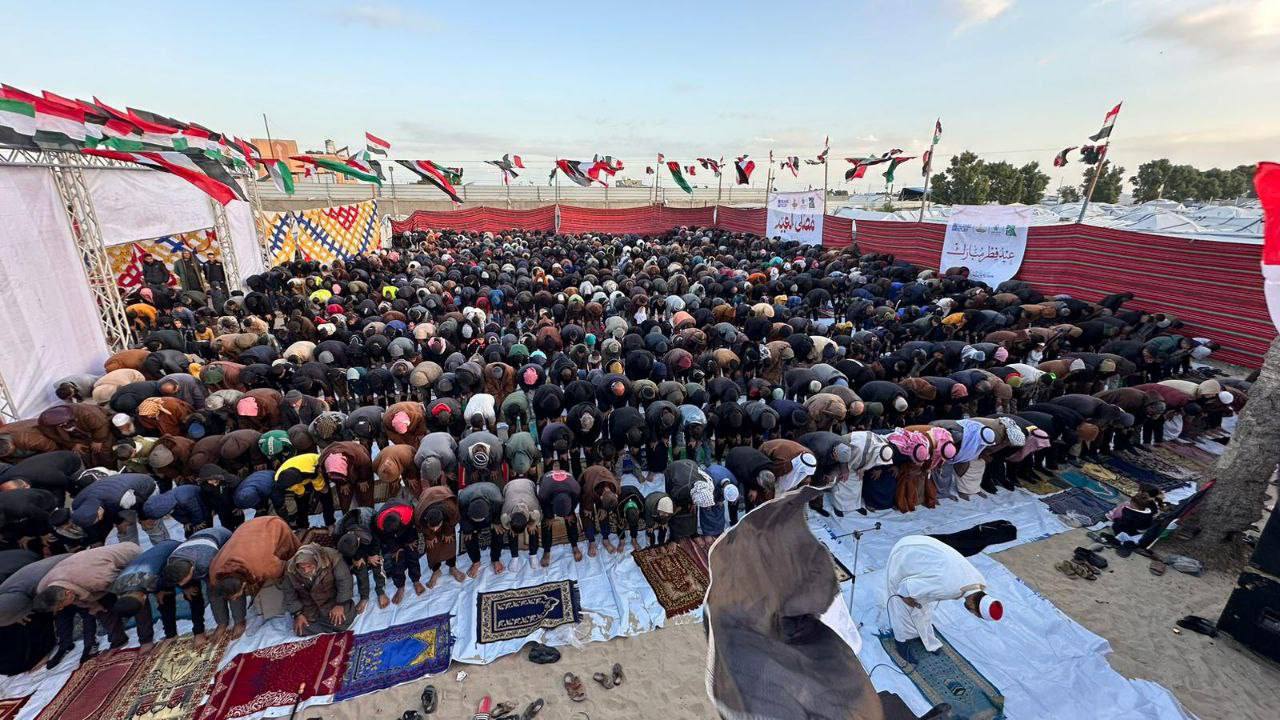
He added that the sounds of Eid prayers and chants once filled every street and alley, but now “people’s hearts are weighed down by fear, hunger, and loss.”
Umm Mohammad, a displaced mother who lost her home in Gaza City, said her greatest pain is being unable to provide even the simplest signs of Eid for her children.
She explained that her young son repeatedly asks why they are not buying a sacrificial animal as they did in previous years, but she cannot afford one, especially as livestock is largely unavailable.
Before the war, despite economic hardship and the long-standing blockade, families in Gaza rarely abandoned the sacrificial ritual. Many would save money throughout the year to purchase animals for Eid.
According to data from Gaza’s Ministry of Agriculture, around 17,000 cattle and 24,000 sheep were slaughtered during Eid al-Adha in 2023, with nearly 130,000 families, about 28% of the population, participating in the ritual.
Charitable organizations and aid groups also played a key role, distributing meat to thousands of poor families who relied on the holiday season to access food.
But the war changed everything.
Widespread destruction, the death of large numbers of livestock due to bombing, shortages of feed and veterinary care, and a severe economic collapse have made sacrificial animals out of reach for most residents.
The crisis has worsened as Israeli authorities continue to restrict the entry of live animals into Gaza, leading to near-total shortages and soaring prices.
Livestock traders and farmers say the restrictions have devastated the sector’s agricultural system. Abu Ali, a livestock breeder in central Gaza, said that markets once crowded with buyers are now empty, with barns largely devoid of animals.
“Before the war, the markets were full of life,” he said.
“Now they are completely empty. Many breeders lost their animals to bombing and hunger, and no new livestock has been allowed in.” he added.
Social experts warn that the continued deprivation of religious and social rituals for a third year is deepening the psychological toll of the war, particularly on children who have grown up amid displacement, violence, and loss.
As millions of Muslims around the world prepare to celebrate Eid al-Adha with joy and spiritual reflection, Gaza’s residents remain on the margins, carrying a double sense of loss: for traditions that have vanished, and for a life that, despite hardship, once found ways to create moments of happiness.
Shortlink for this post: https://daysofpalestine.ps/?p=74634