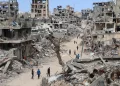
DaysofPal – Inside Nasser Medical Complex in the southern Gaza city of Khan Younis, doctors and nurses are anxiously monitoring oxygen levels and ventilators as a worsening crisis threatens to halt oxygen supplies at one of the largest functioning hospitals in the territory.
In the neonatal ward, premature infants lie inside glass incubators connected to oxygen tubes that help them breathe, while their mothers watch the machines with growing fear over the possibility of supply interruptions.
In intensive care units, critically ill patients rely on ventilators to stay alive as warning alarms repeatedly sound due to declining oxygen pressure. Medical teams are struggling to prevent any disruption in service, according to a field report documented by the Anadolu Agency from inside the hospital.
Nasser Medical Complex operates two oxygen-generation stations. According to Ismail Abu Nimer, head of the hospital’s engineering and maintenance department, the main station has recently gone out of service because of technical failures and depleted operating oils, while the backup station is functioning at limited capacity and could stop operating at any moment.
In scenes reflecting the severity of the crisis, dozens of empty oxygen cylinders are lined up in the hospital courtyard awaiting refilling, while fears grow that the hospital may soon become unable to meet the needs of its most sensitive departments.
The Gaza Health Ministry has repeatedly warned of the dangers posed by Israel’s restrictions on the entry of medicines, medical supplies, equipment, and related materials, cautioning that such measures could have catastrophic consequences for healthcare services and patients’ lives.
Official Palestinian reports have also warned about the impact of preventing the entry of spare parts needed to maintain equipment, machinery, and vehicles that provide essential services across the Gaza Strip.
A Death Sentence
Ahmed Al-Farra, director of the children’s and maternity building at Nasser Medical Complex, described the situation as “a slow suffocation,” warning that the ongoing oxygen crisis threatens the lives of hundreds of patients, particularly premature infants and intensive care patients.
“Oxygen is the lifeline inside hospitals, especially for babies in incubators, intensive care patients, and operating rooms. These patients depend on it completely,” Al-Farra told Anadolu Agency.
He warned that the failure of the oxygen stations would amount to “a real catastrophe and a death sentence for hundreds of patients,” urging immediate international intervention before the service collapses entirely.
For his part, Ismail Abu Nimer said the hospital depends on oxygen-generation stations not only to supply patients within its departments but also to provide medical oxygen cylinders to field hospitals and other healthcare institutions.
He explained that the main oxygen-production station stopped functioning because of worn-out parts and the depletion of specialized operating oils, though he did not specify when the breakdown occurred.
Abu Nimer stressed that the second station is operating “at limited capacity and faces the risk of shutting down at any time.”
He added that, like other hospitals in Gaza, Nasser Medical Complex has struggled for years to obtain the spare parts and oils necessary for maintenance, forcing technical crews to rely on locally sourced substitutes “that do not meet proper specifications.”
Abu Nimer said that the use of these alternatives has caused additional malfunctions and damage to pumps, while maintenance teams continue to work with extremely limited resources to keep services running.
An Imminent Humanitarian Disaster
The crisis at Nasser Medical Complex reflects the broader near-collapse of Gaza’s healthcare system, particularly the operation of oxygen-generation stations.
On April 28, the Gaza Health Ministry warned that the only functioning oxygen station serving Gaza City and the northern governorates was also at risk of shutting down.
In a statement issued at the time, the ministry said the station represented the primary source of medical oxygen for patients, especially those with chronic illnesses, in addition to supplying healthcare institutions operating in the territory.
The ministry explained that the station suffers from repeated breakdowns caused by heavy pressure and prolonged operating hours, compounded by the lack of adequate alternatives. It warned that interruptions in oxygen supplies could place patients’ lives in grave danger.
The ministry also warned of an imminent humanitarian catastrophe as hospitals and health centers face growing demand for oxygen while the risk of system failure continues to escalate.
It called on international organizations and relevant parties to urgently intervene by facilitating the entry of new oxygen-generation stations and ensuring a sustainable supply of medical oxygen to healthcare facilities in order to protect patients’ lives and maintain medical services.
Destruction of Oxygen Stations
By October 2025, about 25 of Gaza’s 34 oxygen-production stations had been destroyed by Israeli military operations during a genocidal war, according to data released by the Gaza Health Ministry.
The ministry stated in separate reports that the destruction occurred during Israeli ground incursions into hospitals as part of broader military operations in the territory.
In another statement issued in May 2025, the ministry said only nine oxygen stations remained operational across Gaza, adding that they function only partially and are insufficient to meet patients’ needs.
Throughout the war, Israeli forces repeatedly targeted the healthcare sector, including hospitals, medical centers, health facilities, ambulance vehicles, and medical personnel.
The oxygen crisis has continued to worsen amid accusations that Israel has failed to uphold obligations outlined in the ceasefire agreement that came into effect on October 10, 2023, including provisions related to opening crossings and allowing the agreed-upon quantities of medical aid and supplies into Gaza.
Palestinian health authorities also accuse Israel of repeatedly violating the ceasefire through shelling and gunfire, which they say has so far killed 854 Palestinians and injured 2,453 others, according to Health Ministry figures.
Shortlink for this post: https://daysofpalestine.ps/?p=74621