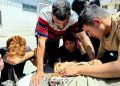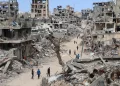

DaysofPal- Amid torn tents and the exhausted faces of children, mothers in the Gaza Strip are enduring the increasingly severe crisis, marked by the combined hardships of hunger, displacement, and the loss of children and husbands as a result of the ongoing Israeli genocidal war.
In overcrowded shelters and makeshift camps, where memories of destroyed homes meet the daily reality of fear and deprivation, many mothers struggle to survive in conditions that lack even the most basic standards of human dignity.
Since the outbreak of the war in October 2023, more than 90 percent of Gaza’s population has been displaced, often multiple times, according to United Nations and international aid reports.
Many now live in overcrowded shelters or in the open, facing widespread disease and severe shortages of water and medicine.
Inside a small tent that offers little protection from the heat of the day or the cold of the night, Widad Al-Najjar, displaced from the town of Khuza’a east of Khan Younis, recalls a long journey of displacement that began in the early days of the war.
She said her family has been displaced more than six times, moving from one area to another in search of safety, without ever finding stability.
“We lost our homes, our relatives, and everything we owned. Nothing remains except memories,” she said.
Yet, she explained that the most painful burden is not displacement but the unknown fate of her only son, born after six daughters.
She has had no contact with him since the early months of the war and now lives between hope that he is alive and fear that he has been lost forever.
“I only want to know his fate, whether he was killed or is detained. I need an answer to ease my heart. I cannot live without him. He is the air I breathe,” she said.
In another displacement camp in Khan Younis, Huda Al-Madani lives with the pain of losing her son Ibrahim, who was killed during the war, and the ongoing anxiety over her other son, Ahmad, who has been detained in Israeli prisons for more than two years.
Ibrahim left behind five children, while Ahmad has never seen his youngest child, who was born after his detention and is now over two and a half years old.
“The child keeps asking about his father and wants to see him like other children. Our hearts are broken, and we wait for any news,” she said.
For many mothers, suffering extends beyond loss to the daily struggle for survival. Food and water are scarce, and sources of income are nearly nonexistent.
Umm Mahmoud Baraka, a widow and mother of four, said she now carries the full responsibility of providing for her family after her husband was killed. “I have become both mother and father.
We are trying to stay alive amid hunger, fear, and the absence of the most basic necessities of life,” she said.
Displaced mothers say they are no longer searching for a dignified life, but simply for minimum safety, food, and a chance to protect their children from death and continuous displacement.
According to data documented by UN Women, approximately 38,000 women and girls have been killed in Gaza during the war, including 22,000 women and 16,000 girls, averaging at least 47 deaths per day. This figure represents more than half of the total number of fatalities in the territory.
Around one million women and girls have been displaced multiple times, while nearly 790,000 are facing acute or catastrophic levels of food insecurity.
In addition, more than 22,000 women have lost their husbands and become widows in the Israeli genocidal war.
Approximately 55,000 pregnant and breastfeeding women are facing severe health risks due to the collapse of the healthcare system and widespread malnutrition, according to data from Gaza’s Government Media Office and reports by the United Nations Population Fund.
Shortlink for this post: https://daysofpalestine.ps/?p=74581