DaysofPal- The blockade of Gaza represents far more than a series of closed border crossings or the disruption of commercial trade; it is a calculated, long-standing policy that has reduced the lives of over two million Palestinians to a relentless daily struggle for the most basic human needs.
This two-decade-long siege serves as a permanent instrument of pressure designed to systematically dismantle the foundations of a functioning society. By controlling the flow of water, medicine, electricity, and food, the occupation has intentionally reshaped the fabric of Palestinian existence into a cycle of survival and dependency.
For years, Gaza has lived under continuous restrictions that limit movement, travel, medical access, reconstruction, and trade. Each new round of violence has deepened the humanitarian cost. The blockade does not begin after bombardment, nor does it end with a ceasefire. It prevents recovery and transforms temporary crises into ongoing suffering. Understanding current conditions in Gaza requires recognizing the blockade as a system of collective punishment rather than a temporary security measure.
The Impact of Siege on Daily Existence
One of the harshest consequences of the blockade lies in how it forces people to devote all their energy to securing basic needs. Families that would normally focus on education, income, or long-term planning find themselves preoccupied with fundamental questions: Is there safe drinking water? Are essential medicines available? Will bakeries continue to operate? Can damaged homes be repaired? In some cases, even finding a tent becomes a pressing concern.
This constant strain cannot be measured by statistics alone. Poverty, unemployment, and food insecurity rates are alarming, yet the deeper impact is reflected in the persistent sense of losing control over daily life. Many residents live in a state of prolonged waiting—waiting for aid deliveries, fuel supplies, permission to travel for treatment, or materials to rebuild homes. Over time, this waiting becomes a form of pressure in itself.
The most vulnerable groups bear the heaviest burden. Children grow up in an environment marked by fear and deprivation. Elderly people face chronic illnesses within an overwhelmed healthcare system. People with disabilities encounter additional barriers to mobility and care. Women often carry a disproportionate share of responsibilities within households, managing scarce resources while caring for the injured and sick under difficult conditions.
A Healthcare System Under Pressure
Gaza’s healthcare system has not only been strained by conflict but also worn down by years of restrictions. Limitations on medical supplies and constraints on the movement of patients and healthcare workers have left the system functioning at minimal capacity.
Hospitals require more than beds and medication. They depend on stable electricity, clean water, functioning equipment, spare parts, and trained personnel who can move freely and access ongoing training. In Gaza, each of these elements faces disruption. As a result, access to treatment becomes uncertain, and chronic illnesses pose greater risks due to the surrounding conditions.
This situation represents more than a temporary shortage. It reflects a sustained weakening of the system’s ability to function. Patients face reduced chances of receiving proper care, and healthcare workers operate under constant pressure with limited resources.
Food Insecurity and Malnutrition
The breakdown of supply chains and purchasing power has made food insecurity a central feature of life in Gaza. Restrictions affect fishing, agriculture, employment, and trade. Aid enters in limited quantities and under strict conditions.
Families often reduce the number of meals they consume or rely on less nutritious alternatives. Some fall into debt simply to meet basic needs. Children, pregnant women, and those with health conditions are particularly vulnerable to the long-term effects of malnutrition, which may not always be immediately visible but can have lasting consequences on growth and overall health.
Education Disrupted
Education in Gaza has long been affected by instability, including power outages, overcrowded classrooms, and limited resources. The prolonged interruption of the learning process during years of conflict has further deepened the crisis, with schools frequently damaged or destroyed.
Universities have also faced significant challenges. Restrictions have limited access to equipment and research opportunities for years. Repeated destruction of academic institutions has compounded these difficulties, narrowing prospects for higher education and knowledge development.
The psychological toll on students is considerable. A generation has grown up under repeated cycles of violence, displacement, and deprivation. Concentration, a sense of safety, and confidence in the future—key elements of learning—are all undermined under such conditions. Educational institutions often become spaces of resilience rather than solely places of instruction.
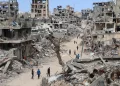
The housing crisis illustrates the long-term impact of the blockade. When homes are destroyed, reconstruction is often delayed or prevented due to restrictions on building materials. Debris remains in place, and displaced families face prolonged uncertainty.
Basic infrastructure, including electricity, water, and sanitation systems, plays a critical role in daily life. Ongoing disruptions in these sectors affect health, education, economic activity, and overall living conditions. Repair efforts are slow and uncertain, creating a cycle of destruction followed by limited recovery, then renewed damage.
A Constrained Economy
The humanitarian situation cannot be separated from economic restrictions. Severe limitations on trade and production have reduced the ability of the local economy to generate stable income. Unemployment is widespread and affects nearly all segments of society.
In more stable conditions, communities can absorb shocks through employment, investment, and local initiatives. Under prolonged restrictions, opportunities shrink significantly. Even individuals with skills or business ideas face barriers related to materials, energy, movement, and market access. This has led to increased reliance on humanitarian aid.
Aid can address urgent needs but does not resolve the root causes of the crisis. Without broader structural changes, it risks becoming a mechanism for managing ongoing hardship rather than ending it.
Legal and Ethical Dimensions
The blockade raises significant legal and ethical concerns. When access to food, medicine, fuel, movement, and reconstruction is restricted for an entire population, the situation enters the realm of collective punishment in both legal and moral terms. Framing such measures solely through the lens of security overlooks the fundamental principle that civilians should not be targeted.
Describing the situation accurately is not a matter of rhetoric alone. Language shapes understanding. Presenting the blockade as a neutral administrative measure or a conflict between equal parties obscures the reality of a population living under sustained restrictions that affect every aspect of life.
Relief efforts, regardless of scale, cannot establish stable living conditions under continued restrictions. Food aid may enter, limited medical evacuations may occur, and some materials may be allowed through, but these measures remain fragile without broader change.
Ending the siege must be a priority that transcends mere relief. Aid may alleviate immediate hunger, but it cannot build a stable life under closure. Gaza does not need “pain management”; it needs the natural right to movement, work, and reconstruction.
Breaking the blockade is not an emotional slogan but the minimum level of justice required. Any responsible discussion about the future must begin with the refusal to normalize starvation and collapse, ensuring the Palestinian person remains at the heart of the narrative—defined by their rights and dignity rather than their deprivation.
Shortlink for this post: https://daysofpalestine.ps/?p=74051