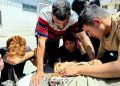
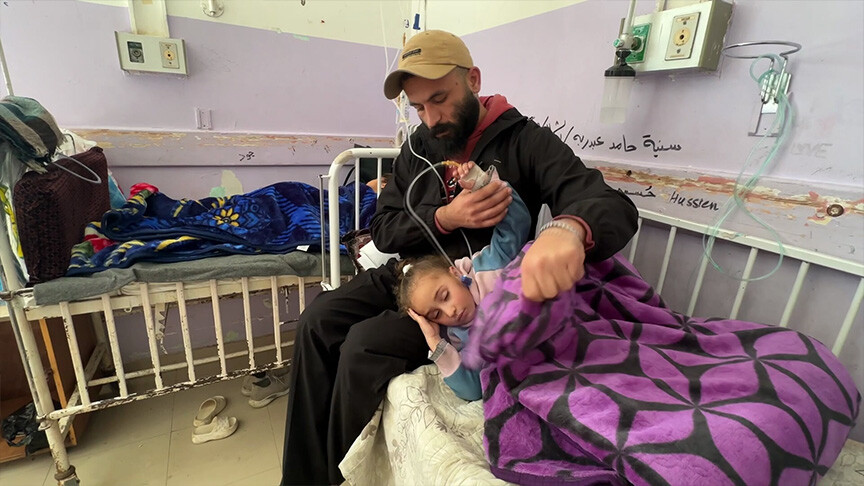
DaysofPal- In a pediatric ward at Al-Aqsa Martyrs Hospital in the central Gaza Strip, young Masa al-Khatib lies frail and pale, her small hand connected to medical tubes delivering fluids that are keeping her alive. Beside her sit her two sisters, each suffering from the same rare illness, in a scene that reflects the hardship of an entire family battling a severe genetic condition.
Their father, Ahmed al-Khatib, explains that his daughters have lived with a rare immune disorder since birth. The condition causes recurring infections and prevents normal growth. He says their bodies do not respond to the limited treatments available inside Gaza.
The family received a medical referral in 2024 through the World Health Organization for treatment abroad. However, they have been unable to travel due to ongoing restrictions at border crossings. Masa’s condition continues to worsen, and she urgently requires a bone marrow transplant that is not available in Gaza, placing her life at serious risk.
The Medical Reality
Dr. Iyad Abu Muailiq, who is overseeing her case, confirms that the child suffers from a rare genetic immune disorder that leads to severe weight loss and repeated bacterial and viral infections. He explains that current treatment relies on immune-support supplements, which provide only temporary relief. A bone marrow transplant in a specialized center outside Gaza remains the only long-term solution.
He warns that without urgent surgical intervention, her life is in real danger, particularly given the deterioration of the healthcare system in the territory.
Masa’s mother describes the family’s harsh living conditions. She says they struggle to provide proper nutrition and essential medications for their daughters. The children require a special diet and supplements, yet the family often cannot secure even basic food. Daily life has become a constant struggle between illness and limited resources.
She calls for urgent intervention from the international community and the World Health Organization to allow her daughters to travel for treatment.
A System Under Pressure
Gaza’s healthcare system is under extreme pressure due to prolonged restrictions and severe shortages of medicines and medical supplies, which limit its ability to handle complex cases. Local estimates indicate that around 22,000 patients and wounded individuals need to leave the territory for treatment, while strict travel limitations remain in place.
Although the Rafah crossing was partially reopened in March, patient movement continues to face significant obstacles, including lengthy procedures and strict controls. The crossing was expected to reopen more fully under the first phase of a ceasefire agreement that took effect on October 10, 2025, but this has not been implemented.
Before the war, hundreds of Palestinians traveled daily through Rafah into Egypt and returned in a routine process managed jointly by Palestinian and Egyptian authorities. That movement has since been severely disrupted, leaving families like the al-Khatibs waiting for a chance to access life-saving care.
Shortlink for this post: https://daysofpalestine.ps/?p=73658