
DaysofPal- As the world marks World Water Day, residents of the Gaza Strip are facing a starkly different reality, where access to water has shifted from a basic human right to a daily struggle for survival.
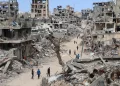
Amid widespread destruction of infrastructure, severe shortages, contamination, and a near-total lack of electricity, more than two million people are grappling with one of the most severe water crises in recent history.
In the Al-Shati refugee camp west of Gaza City, a mother of five, identified as Umm Ahmad, begins each day searching for water before anything else.
Since losing her home and husband, she walks long distances carrying plastic containers, often waiting hours for water trucks that may arrive late , or not at all.
She says the small amount she collects is barely enough for drinking. Bathing has become a rare and difficult task, especially in winter, as it also requires firewood to heat water. Her children now bathe only once a week, and she reuses the same water for washing clothes.
“The hardest part is illness,” she explains, recalling how two of her children suffered from diarrhea after drinking contaminated water. “We used to fear airstrikes. Now we fear thirst,” she adds.
Across Gaza, the crisis extends beyond water access, intersecting with poverty, unemployment, and ongoing restrictions, creating a prolonged humanitarian emergency.
In northern Gaza, a resident known as Abu Khaled says his family has no choice but to rely on polluted well water.
Despite its salty and bitter taste, the lack of alternatives forces them to continue using it, leading to recurring intestinal illnesses.
“We know we are drinking disease, but there is no other option,” he says.
In displacement areas, the situation is worsened by collapsing sanitation systems. Contaminated pools of wastewater have formed between tents, spreading foul odors and increasing health risks, particularly for children who have no safe spaces to play.
A local mother, Umm Mohammad, says her children often play near polluted water due to a lack of alternatives, heightening fears of disease amid growing insect infestations. “We no longer know which is worse , thirst or contamination,” she says.
The water crisis is compounded by a near-total electricity blackout, preventing households from operating water pumps or storing supplies. Small desalination plants are also struggling due to fuel shortages and high maintenance costs.
A teenager, Mohammad Miqdad, describes how his family depends on a shared generator to pump water to rooftop tanks every few days, depending on fuel availability. Each family waits its turn, often for over an hour, to fill a single tank.
Fuel prices have surged dramatically, driving electricity costs far beyond what most families can afford.
This has disrupted essential services, including hospitals, water networks, and sanitation systems.
According to international and humanitarian reports, around 77% of water facilities in Gaza are now at risk or out of service.
The burden of securing water falls disproportionately on women and girls, who spend between six and eight hours daily collecting it, limiting access to education, safety, and basic privacy.
Officials warn that approximately 85% of water and sanitation infrastructure has been damaged or destroyed, while daily water production has dropped by more than 60% compared to pre-war levels.
Currently, individuals in Gaza receive between 3 and 15 liters of water per day, most of it unsafe for drinking, with only about 2 liters considered potable. This falls well below minimum emergency standards.
The destruction of sanitation systems has further intensified the crisis, with untreated wastewater flooding the environment and threatening groundwater supplies, increasing the risk of widespread disease.
Rehabilitation of Gaza’s water and sanitation infrastructure is estimated to cost around $800 million, according to recent technical assessments.
Local authorities have called on the international community to take urgent action, including allowing the entry of fuel, generators, and essential repair materials, as well as restarting Gaza’s only power plant.
Emergency measures such as mobile desalination units near displacement camps have also been proposed.
They stress that access to water is a fundamental human right, warning that continued deprivation, particularly affecting women and children, could amount to a grave humanitarian violation requiring immediate global intervention.
Shortlink for this post: https://daysofpalestine.ps/?p=73232