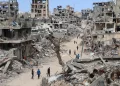

DaysofPal- Uncertainty and controversy have intensified following the United States’ announcement of four new entities intended to oversee the administration of the Gaza Strip, as the territory reels from a devastating humanitarian crisis after the Israeli genocidal war between 2023 and 2025.
The proposed framework includes three internationally led bodies and one Palestinian technocratic committee, all assigned to govern Gaza, a densely populated enclave of just 365 square kilometers that has been largely destroyed by the conflict.
Analysts say the responsibilities, authority, and effectiveness of these entities remain vague, particularly in confronting Gaza’s overwhelming humanitarian, environmental, health, educational, administrative, demographic, and security challenges.
Last week, US Secretary of State Steve Witkoff announced the start of the second and most complicated phase of the ceasefire agreement.
Soon after, the White House confirmed plans to establish a Palestinian “National Committee for the Administration of Gaza,” alongside a “Peace Council” and an “International Stabilization Force.”
These bodies form part of US President Donald Trump’s plan to end the war on Gaza, which was adopted by the UN Security Council under Resolution 2803 on November 17, 2025. On Friday evening, however, the White House unveiled an additional body, the “Gaza Executive Council”, broadening the governance structure and sparking further debate.
According to the White House, the Gaza Executive Council is designed to support governance and public services in the Strip and would include participation from key ceasefire mediators such as Qatar, Egypt, and Turkey.
Israel swiftly rejected the move, with the Prime Minister’s Office saying the council was established without Israeli coordination and runs counter to its policies.
Political analyst Ahmad Al-Heila described the emerging framework as an “unnatural trajectory” that raises serious questions.
He said the Palestinian technocratic committee would operate under the oversight of the Peace Council, chaired by former UN Middle East envoy Nikolay Mladenov, who is expected to act as the High Representative for Gaza and serve as a link between international bodies and Palestinian administrators.
Al-Heila said the Gaza Executive Council would function as a high-level administrative authority made up of prominent international figures. Announced members include US envoy Steve Witkoff; Jared Kushner, President Trump’s son-in-law; former British prime minister Tony Blair; US investor Mark Rowan; Turkish Foreign Minister Hakan Fidan; UAE Minister of State Reem Al-Hashimy; Qatari diplomat Ali Al-Thawadi; Egyptian intelligence chief Hassan Rashad; Nikolay Mladenov; businessman Yaker Gabay; and Dutch politician Sigrid Kaag.
“These councils are being formed while Gaza is submerged in cold, rain, and hunger,” Al-Heila said, questioning whether they are meant to serve Gaza’s population, advance Israeli interests, or dilute the Palestinian cause through a web of international mechanisms.
Palestinian factions have voiced strong concerns. The Islamic Jihad movement said the Peace Council was established “in line with Israeli interests,” arguing that its composition reflects “prearranged negative intentions” toward the implementation of the ceasefire.
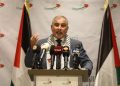
Veteran Palestinian leader Dr. Hassan Khreisheh also questioned whether the new structures are driven by political objectives, such as undermining Palestinian rights, or by economic ambitions linked to President Trump.
He said the bodies appear to pursue two parallel tracks: enforcing Trump’s ceasefire plan and promoting new political formulas for the Palestinian issue, alongside the US president’s personal agenda.
Khreisheh said resistance factions agreed to the ceasefire last October to stop the war, prevent mass displacement, and alleviate civilian suffering in Gaza.
He criticized the Palestinian Authority for sidelining initiatives proposed by factions in Egypt, including the idea of a National Consensus Committee, warning that such exclusion further weakens the PA as Israeli settlement expansion erodes its authority in the West Bank.
“The two-state solution no longer exists on the ground,” Khreisheh said, adding that the PA has largely faded from the political arena despite this reality.
Writer and political analyst Yassin Ezzedine described the Peace Council as “highly dangerous,” not only for the Palestinian cause but also for the international system.
He argued that President Trump intends the council to act as a substitute for the United Nations and the Security Council, citing reports that participating countries would be required to contribute at least $1 billion.
According to Bloomberg, a draft charter indicates that the Trump administration would demand a minimum $1 billion payment from member states.
The document reportedly grants Trump the council’s inaugural presidency, authority over membership invitations, and final approval of all decisions, even those adopted by majority vote.
Under the UN resolution, the mandates of the Peace Council and any international civilian or security presence in Gaza would remain in place until December 31, 2027.
Palestinian leaders say the real measure of these bodies will be whether they can end Israeli violations, fully open border crossings, improve living conditions, and initiate genuine reconstruction, while preserving Palestinian unity and protecting national rights.
Shortlink for this post: https://daysofpalestine.ps/?p=71448