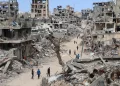
DaysofPal- An Egyptian political analyst stated that the Israeli occupation is failing to implement key provisions of the Gaza ceasefire agreement, warning that the humanitarian situation in the besieged enclave has deteriorated to catastrophic levels amid continued restrictions on aid and alleged violations of the truce.
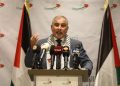
Talaat Taha, an expert on Arab affairs, said the Gaza Strip is facing widespread deprivation, infrastructure collapse, and the threat of famine, which he attributed to ongoing Israeli violations and the international inaction, particularly by the United States. Speaking to Palestine Online, Taha argued that the UN Security Council has been unable to enforce binding measures to halt the Israeli conduct, citing repeated U.S. vetoes or policy reversals as a key obstacle.
According to Taha, harsh winter conditions have compounded the crisis, leaving thousands of displaced families exposed in makeshift tents without adequate shelter or basic services.
He said the first phase of the ceasefire has not been carried out as agreed, alleging that Israeli forces continue field operations and impede the entry of humanitarian assistance. Under the agreement, at least 600 aid trucks were to enter Gaza each day, a target Taha said has not been met, worsening conditions for civilians.
Taha also questioned the Israeli announcement allowing the entry of some 40,000 mobile housing units into Gaza, saying the proposed mechanism would initially permit only about 1,000 units, with the remainder delayed for up to 90 days or more—far beyond the agreed 30-day period. He described the approach as part of a broader pattern of delaying measures that do not serve Israeli interests.
On negotiations over the second phase of the ceasefire, Taha said the Israeli occupation is seeking to slow progress by raising pretexts, including claims related to the remains of an Israeli soldier. He argued that such claims are intended to buy time, tighten the blockade, and present Prime Minister Benjamin Netanyahu domestically as having secured a political victory.
Taha warned that continued breaches of the first phase could foreshadow violations of subsequent stages. He added that even when the Israeli occupation allows limited aid or reduces military activity, it seeks to act unilaterally and outside Egyptian mediation to retain control over relief and reconstruction.
Last week, U.S. Secretary of State Steve Witkoff announced the start of the second and most complex phase of the ceasefire. Shortly afterward, the White House confirmed plans to establish a “National Committee for the Administration of Gaza,” alongside a “Peace Council” and an “International Stabilization Force.”
Taha said the Israeli occupation would not have agreed to advance toward later phases without U.S. pressure, describing the ceasefire framework as carrying an effective American guarantee. He added that the U.S. administration, particularly President Donald Trump, faces political costs if it fails to see the agreement through all three phases.
Commenting on the proposed technocratic committee to administer Gaza, Taha said it could play a pivotal role in overseeing security arrangements, coordinating humanitarian assistance, and leading reconstruction efforts away from factional rivalries.
He noted that Hamas has publicly welcomed the committee and called for it to begin operating in Gaza.
However, Taha said the Israeli occupation has rejected both the technocratic committee and the Peace Council, as well as the involvement of countries such as Qatar and Turkey, citing alleged links to Hamas. He characterized these objections as attempts to block any framework that does not conform to the Israeli preferred outcome.
Taha concluded by saying the Peace Council, formed under U.S. sponsorship, includes prominent Arab figures, including Egyptian intelligence chief Major General Hassan Rashad, lending it added credibility.
He stressed that the next phase will require coordinated Arab action, led by Egypt and Jordan, to rebuild Gaza, curb Israeli actions in the West Bank and Jerusalem, and work toward a durable calm across the Palestinian territories.
Shortlink for this post: https://daysofpalestine.ps/?p=71442