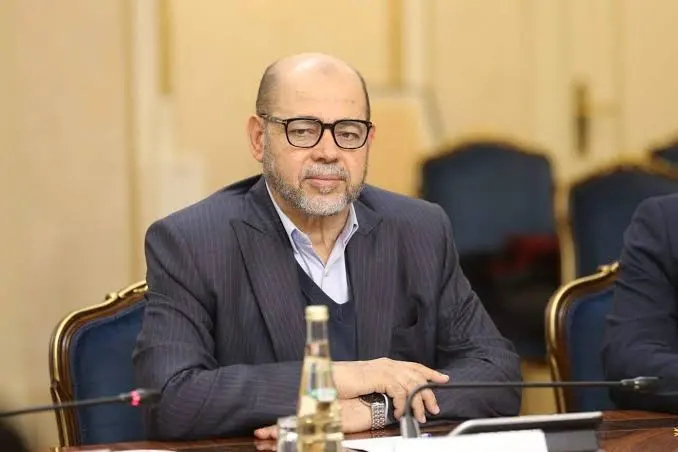
DaysofPal– A senior Hamas delegation arrived in Cairo for high-level talks with Egypt’s intelligence leadership, seeking urgent intervention amid what the group describes as a surge in Israeli breaches of the fragile ceasefire agreement.
During a meeting with Egyptian intelligence chief Hassan Rashad, Hamas reaffirmed its commitment to the first phase of the truce, stressing that its fighters have adhered to the terms.
The delegation, led by exiled Gaza figure Khalil al-Hayya, warned that Israel’s “repeated and escalating violations” threaten to unravel the entire agreement unless an internationally supervised mechanism is put in place to document and halt the breaches.
Egypt, Qatar, and the United States, key mediators in the ceasefire, were urged to act swiftly to protect the deal.
Hamas also raised alarm over a growing humanitarian and military dilemma: communication has been completely cut with groups of its fighters trapped in tunnel networks beneath Rafah, now controlled by Israeli forces. The movement asked Egypt to help establish safe means to address the situation before it deteriorates further.
A Ceasefire Under Fire
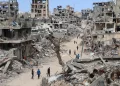
The Cairo talks came less than 24 hours after Israeli air raids swept across the Gaza Strip, flattening homes, tents sheltering displaced families, and civilian vehicles. At least 24 Palestinians, including children, were killed in the Saturday attacks.
Israeli authorities claimed they were targeting Hamas members, alleging that one fighter had crossed into an Israeli-controlled area to attack soldiers. Hamas denied this accusation, saying Israel was “seeking pretexts to kill,” and urged mediators to pressure Tel Aviv into halting its operations.
Local authorities in Gaza estimate that Israel has violated the ceasefire at least 497 times since it took effect on October 10, killing 342 civilians, most of them women, children, and the elderly.
Across Gaza City, residents say the reality on the ground feels nothing like a ceasefire. Israeli forces continue to conduct strikes beyond the so-called “yellow line,” areas under direct Israeli military control, razing infrastructure and transforming entire districts into barren ruins.
Many Palestinians fear the attacks could soon expand into other regions of Gaza, casting doubt on whether a transition to phase two of the ceasefire is even possible. Humanitarian aid remains restricted, and reconstruction efforts have barely begun.
Where the Ceasefire Stands Now
Phase one of the agreement, rooted in the peace plan advanced by the US administration, includes prisoner exchanges, humanitarian access, and the reopening of the Rafah crossing with Egypt. Hamas has already released all remaining living captives and returned dozens of bodies.
Israel has freed nearly 2,000 Palestinians from its prisons, including individuals serving life sentences, but continues to impose strict limitations on Gaza’s border crossings. Tel Aviv has also refused to reopen Rafah, blocking a significant flow of aid.
Phase two outlines a new governance arrangement for Gaza: a technocratic Palestinian committee working under the oversight of an international “board of peace,” accompanied by a temporary stabilization force tasked with securing border areas, demilitarizing the enclave, and training Palestinian police. Hamas, however, insists it will not disarm while the occupation persists.
A Plan Endorsed but Not Yet Realised
The broader peace plan, now endorsed by the UN Security Council, states that no Palestinian will be forcibly displaced from Gaza and that Israel is not to occupy or annex the territory. Yet on the ground, the continuous violations, blocked crossings, and ongoing airstrikes have left many Palestinians skeptical that the agreement can survive, let alone progress to its next stage.
Shortlink for this post: https://daysofpalestine.ps/?p=69704