
DaysofPal – While the world’s attention has largely been fixed on the devastation in Gaza, Palestinians across the occupied West Bank describe a different but equally suffocating form of aggression, one defined by constant raids, humiliation, economic destruction, and daily fear.
In recent months, Israeli forces have intensified military operations, settler violence, and arrests across Palestinian towns and refugee camps as part of a “slow annexation” of the territory.
The E1 settlement plan, advancing despite international opposition, threatens to fragment the West Bank and erase any remaining prospect of a viable Palestinian state.
Expanding Settlements, Daily Raids, and Systematic Violence
The Israeli army continues to conduct almost daily incursions into West Bank cities, including Tulkarm, Jenin, and Nablus. Residents report that raids often turn violent, with homes demolished, streets bulldozed, and civilians subjected to arbitrary searches, intimidation, and arrests.
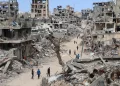
In Tulkarm’s Nur Shams refugee camp, scenes of devastation stretch across the narrow streets. Dozens of homes and shops have been destroyed or damaged, and residents say entire families have been killed in operations targeting alleged fighters.
Eyewitnesses recount soldiers firing indiscriminately into homes, drones hovering overhead, and snipers positioned on rooftops. One mother lost all four of her children in a single strike; others speak of women and elderly people killed in their own houses.
According to Palestinian medical staff, Israeli snipers frequently shoot civilians through windows or while they walk along streets, labeling anyone who moves as a “potential threat.”
Movement across the West Bank is heavily restricted by a network of Israeli checkpoints that fragment Palestinian towns. Commuters describe long hours of waiting and humiliation. Soldiers routinely search passengers, demand phones, and point guns at unarmed civilians.
Witnesses say young men are often singled out for harsher treatment. At one checkpoint, soldiers reportedly forced two men to remove their shoes, raise their hands, and submit to an aggressive body search while others filmed the scene.
Such experiences are common, residents say, part of a wider system of domination designed to instill fear and suppress daily life under occupation.
Raids, Torture, and Home Seizures
In February 2025, Israeli forces seized several Palestinian homes in Tulkarm and converted them into temporary military outposts. Families expelled from their houses returned days later to find their property vandalized, belongings destroyed, and walls defaced.
One resident described how soldiers urinated indoors, burned family photographs, and destroyed electrical appliances. They reportedly drained the home’s prepaid electricity and taunted the family by phone, demanding further payments.
Elsewhere, detainees have spoken of severe mistreatment. A 23-year-old man said soldiers tied his hands, forced him to kneel, stepped on his head, and spat on him while recording the abuse. In Jenin refugee camp, another man recounted being forced to strip naked and walk barefoot at gunpoint alongside his teenage son, an act he called “worse than death.”
The violence extends beyond the streets and homes to the agricultural heart of the West Bank. Farmers in the al-Aqsa and Bal’a areas report widespread destruction of nurseries, greenhouses, and olive groves, key sources of livelihood.
One 65-year-old farmer said Israeli forces bulldozed his entire nursery, costing him more than 1.5 million shekels ($459,000) in losses. Others accuse Israeli settlers of vandalizing farmland, uprooting centuries-old olive trees, and even releasing wild boars to destroy crops, a tactic locals say is intended to drive them off their land.
Doctors across Tulkarm and Jenin describe a collapsing health system crippled by Israeli restrictions. Hospitals face chronic shortages of medicines and equipment.
At Thabet Thabet Hospital, patients in need of dialysis, kidney transplants, or cardiac care are often left untreated due to shortages and blocked transfers. “We watch people die because we cannot move them or get supplies,” said one physician.
He described how stroke and heart attack patients rarely survive because Tulkarm lacks a catheterization lab, and transfers to Nablus can take hours. “It’s not only a medical crisis,” he said. “It’s a moral one, a deliberate policy to suffocate healthcare.”
A Slow Death Across the West Bank
Human rights advocates warn that Israel’s actions in the West Bank form part of a broader campaign of displacement and control. While Gaza has suffered large-scale destruction, the West Bank faces what residents call a “slow death”, a steady erosion of freedom, land, and dignity.
Families in Tulkarm, Jenin, Tubas, and beyond live under near-constant threat of raids and demolitions. Religious holidays and daily routines alike unfold under the shadow of fear.
As one resident put it, “We are punished for existing. The world sees Gaza’s ruins but not our quiet destruction.”
Even amid the current ceasefire in Gaza, West Bank Palestinians continue to endure raids, collective punishment, and economic strangulation, a relentless reality that, they say, is part of the same ongoing project of dispossession that began decades ago.
Shortlink for this post: https://daysofpalestine.ps/?p=68678