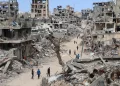
DaysofPal- Thousands of Palestinians continue to flee from Gaza City and the northern parts of the enclave toward central and southern areas as the Israeli occupation forces intensify their bombardment, creating scenes of despair and exhaustion that repeat themselves with each wave of forced displacement.
The first stop for many of the displaced is al-Nuweiri hill, west of Nuseirat refugee camp in central Gaza, a launching point into the unknown.
Families arrive carrying only fragments of their lives, their faces marked by fatigue, loss, and fear.
Some walk slowly under the scorching sun, while others crowd onto rickety trucks piled with mattresses, furniture, and household items, as if trying to carry their shattered homes with them.
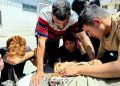
Elderly people and the sick struggle to keep up, many collapsing in need of help. Children cling tightly to their parents, their eyes wide with exhaustion and confusion.
Each family carries the remnants of its past life, aware that everything left behind could be destroyed at any moment.
Among them is 50-year-old Abu Abdullah, who arrived at al-Nuweiri with part of his furniture, leaving the rest of his family behind in Gaza City’s al-Amoudi neighborhood.
He told Felesteen newspaper that he moved after receiving a threatening phone call from the Israeli military ordering the family to evacuate.
“I only brought the essentials,” he said, adding that heavy congestion on the roads made it impossible to transport everything. He has since pitched a makeshift tent on the beach but fears the bombardment may reach him there too.
For those unable to continue, the roadside has become a temporary home. Some families set up tents along the coast, while others simply collapse on the sand.
Volunteers and charity organizations try to ease the burden by distributing food, water, and basic supplies.
Still, the soundscape is one of despair, the cries of children mingling with the hum of engines and the shuffle of countless feet moving through dust and rubble.
The journey itself is fraught with obstacles. Vehicles often stall due to a lack of fuel or mechanical breakdowns, causing long delays and adding to the frustration of families desperate for shelter. One displaced man, Islam
Abu Shamlah described waiting for nearly an hour as his overloaded truck broke down, forcing him and dozens of others to endure yet another delay.
Even journalists covering the mass displacement face dangers. With Israeli forces frequently targeting media workers, many reporters approach their work cautiously, hiding behind tents or vehicles while documenting the scenes.
Some weave quickly through the congested roads to capture images of families on the move, balancing the urgency of coverage with the risks of being in an active war zone.
The displacement crisis underscores not only the humanitarian toll of Israel’s campaign but also the economic and logistical strain on Gaza’s population.
Families are left financially fragile, physically exhausted, and uncertain about their future, even as small gestures of solidarity from volunteers offer fleeting relief in a landscape defined by loss and upheaval.
Shortlink for this post: https://daysofpalestine.ps/?p=67864