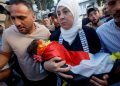

DaysofPal- As famine tightens its grip on Gaza’s children, tons of humanitarian aid and food supplies sit rotting just outside the enclave’s borders, blocked by Israeli occupation forces.
Haja Lahbib, EU Commissioner for Preparedness, Crisis Management, and Equality, described the situation as a catastrophic humanitarian crisis during a statement on the plight of Gaza and the West Bank ahead of a meeting of EU foreign ministers in Luxembourg.
Aid Blocked, Lives Lost
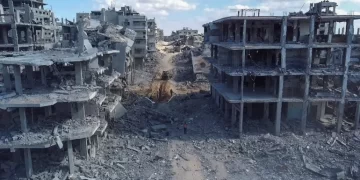
Lahbib condemned Israeli refusal to allow humanitarian aid into Gaza, emphasizing that the blockade has pushed the Strip to the brink of collapse. “For more than a month, no aid, no food, no electricity, not even a single morsel of bread has arrived,” she stated. Meanwhile, warehouses brimming with food and supplies remain stranded outside Gaza, left to spoil as the population inside starves.
The European official highlighted the dire consequences of this man-made famine, particularly for children. “At least 100 children are killed or injured every day,” she said, underscoring the urgent need to resume aid deliveries. The lack of basic necessities has created a life-threatening situation for Gaza’s youngest residents, many of whom face malnutrition, disease, and death.
Three Urgent Priorities
Lahbib outlined three critical priorities for addressing the crisis in Gaza: resuming a ceasefire, securing the release of all hostages, and facilitating the entry of humanitarian aid. She stressed that without immediate action, the suffering of Gaza’s people will only worsen.
Israeli ongoing genocide, which it describes as a response to events on October 7, 2023, has been accompanied by what Lahbib called an “economic war” and a suffocating blockade. This includes the prevention of goods and aid, the closure of crossings, and other punitive measures that have crippled Gaza’s economy and infrastructure.
Humanitarian Workers Under Threat
The EU commissioner also expressed deep sorrow over the targeting of humanitarian workers attempting to save lives in Gaza. “We must protect them at all times and in all places,” she insisted, calling for accountability against those responsible for attacks on aid personnel.
Lahbib noted that the Israeli occupation has refused to approve humanitarian missions seeking to operate in the region, leaving Gaza and the West Bank devoid of international staff. This absence has further exacerbated the crisis, leaving vulnerable populations without critical support.
West Bank: A Parallel Crisis
While much of the world’s attention has focused on Gaza, Lahbib warned that conditions in the occupied West Bank are also deteriorating rapidly. “Forced displacement and violence have become normalized,” she said, urging decisive political action to address the escalating situation.
She announced that the first meeting of the high-level political dialogue between the European Union and Palestine would take place following the foreign ministers’ gathering, with Palestinian Prime Minister Mohammad Mustafa among the participants. The discussions will focus on opportunities for cooperation, bilateral relations, and meeting the needs of the Palestinian people.
A Call for Global Action
Lahbib’s statements underscore the urgent need for global intervention to end the blockade and ensure the safe passage of aid into Gaza. As food rots outside the Strip and children die inside, the moral and legal imperative for action grows clearer by the day.
The international community faces mounting pressure to hold the Israeli occupation accountable for its actions, which human rights organizations describe as violations of international law. Without swift and decisive measures, the humanitarian catastrophe in Gaza will deepen, leaving behind a legacy of suffering and loss that could haunt generations.
Shortlink for this post: https://daysofpalestine.ps/?p=62081