DaysofPal- As Israel’s relentless genocide against the Gaza Strip enters its second year, the deprivation of water has emerged as a deliberate and systematic weapon against defenseless civilians.
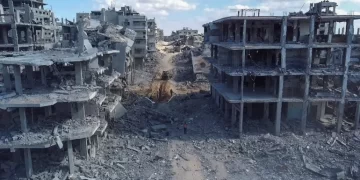
The Israeli occupation’s crimes —cutting off drinking water, destroying wells and desalination plants, bombing infrastructure, and withholding fuel needed to operate water stations—are exacerbating an already dire humanitarian crisis.
A Weapon of War: Denial of Water
The Israeli destruction of vital water resources has left Gaza teetering on the brink of collapse. Since March 2, when Prime Minister Benjamin Netanyahu ordered the closure of Gaza’s crossings to relief supplies, food, medical aid, and essential goods, the situation has deteriorated sharply. This move violated the ceasefire agreement brokered by Egypt, Qatar, and the United States, plunging the territory into deeper despair.
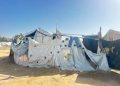
Local municipalities across Gaza have been forced to ration water supplies to homes and displaced persons’ tents due to a severe fuel shortage caused by the Israeli strict blockade. According to Eng. Mohammed Al-Jadi, director of the Water Department in Nuseirat Municipality, his municipality resorted to pumping water into the network for just one day per week. “This coercive step came after our fuel reserves, prepared during the initial phase of the ceasefire agreement (January 19 – March 2), were depleted,” Al-Jadi explained. He warned that the remaining fuel would last only a few more days.
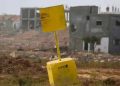
Compounding the crisis is the destruction of the Mekorot water pipeline, which supplied several governorates in Gaza. Despite repeated requests from international organizations such as UNICEF and the ICRC, Israeli occupation has refused to allow repairs or rehabilitation of this critical infrastructure. Additionally, the occupation’s prevention of electric generators and maintenance equipment further cripples efforts to address the water shortage.
Crowded Areas, Worsening Conditions
The overcrowding of displaced persons in residential areas west of Salah al-Din Road has created a complex and overwhelming challenge. With large numbers of families fleeing Israeli military operations in eastern areas, these zones face unprecedented pressure on already strained resources.
Khalil al-Nabahin, a 55-year-old displaced resident of al-Bureij camp now sheltering in al-Nuseirat, expressed his frustration over the cascading crises engulfing Gaza. “We are trapped in a cycle of suffering: food, drink, medicine, tents, bombing, killing—it never ends,” he said bitterly. Speaking about the water crisis in his camp, which houses dozens of displaced families, al-Nabahin lamented, “Who will endure water reaching us only one day a week? We spend our days searching for even usable water.”
Similarly, Asaad al-Assar, 35, described how the water crisis has worsened since his home became overcrowded with relatives displaced from Rafah Governorate. “The water shortage is unbearable, especially with so many people crammed into one house,” he said. “There are no solutions in sight. Gaza has become a disaster zone.”
Health Risks Escalate
According to Tommaso Della Longa, spokesman for the International Federation of Red Cross and Red Crescent Societies, the water shortage is driving alarming rates of disease, particularly among children. Contaminated water sources and poor sanitation conditions have led to outbreaks of diarrhea, skin infections, and other preventable illnesses.
The Euro-Mediterranean Human Rights Monitor condemned Israeli systematic targeting of Gaza’s water resources, describing it as part of a broader genocidal strategy. “Israeli occupation is deliberately reducing access to potable water, imposing famine, and causing mass suffering among more than 2.4 million Palestinians,” the organization stated. By depriving civilians of this fundamental necessity, Israeli occupation forces are committing crimes that constitute war crimes under international law.
Calls for Accountability
Human rights advocates argue that Israeli crimes violate multiple provisions of international humanitarian law, including the Geneva Conventions, which prohibit the targeting of civilian infrastructure and the use of starvation and thirst as weapons of war. Article 8 of the Rome Statute of the International Criminal Court explicitly classifies such practices as war crimes.
Despite mounting evidence of atrocities, accountability remains elusive. Western powers, particularly the United States, continue to shield Israeli occupation from condemnation, enabling the perpetuation of these violations without consequence.
The water crisis in Gaza is not merely a byproduct of war but a calculated tactic aimed at subjugating and punishing the Palestinian population. As families struggle daily to secure even minimal amounts of water, their resilience is tested to its limits. Without immediate intervention to lift the blockade, restore infrastructure, and ensure the flow of essential resources, the humanitarian catastrophe will deepen, claiming countless lives through preventable means.
The world must act decisively to hold Israeli occupation accountable and protect the basic human rights of Gaza’s civilians. Until then, the deprivation of water—and life itself—will remain a grim reality for millions trapped in this besieged enclave.
Shortlink for this post: https://daysofpalestine.ps/?p=62064