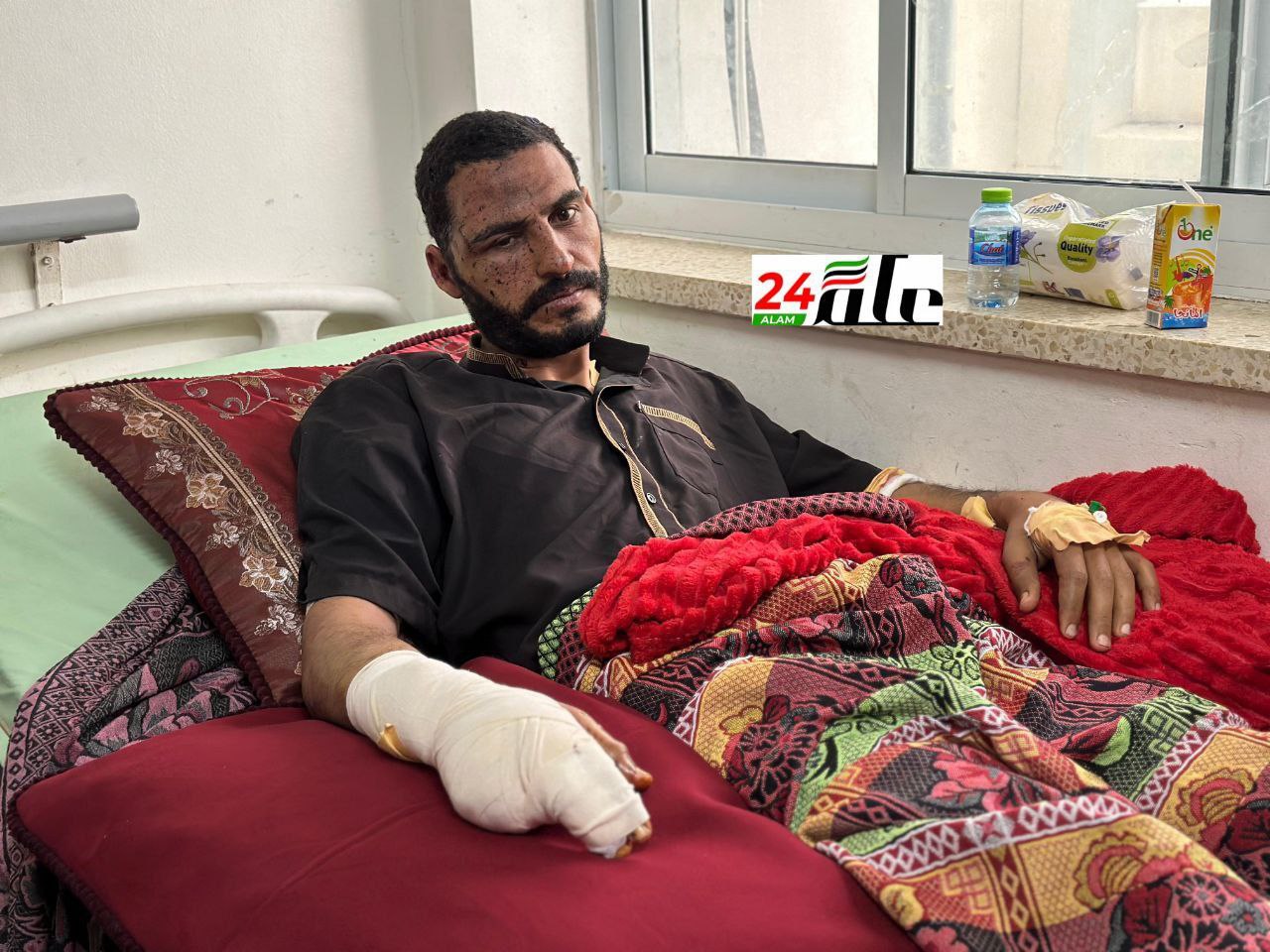
DayofPal– A targeted Israeli airstrike on a press tent in Khan Younis has left journalist Hassan Esleih wounded, following months of digital incitement from the Israeli officials.
The attack killed one journalist, a civilian, and injured seven others, sparking global outrage after harrowing footage emerged showing journalists engulfed in flames.
The strike, which occurred amid Israel’s resumed war in Gaza, followed a sustained and coordinated smear effort aimed at Esleih.
Originating in Israeli media and circulating widely on social media, the incitement campaign accused the veteran journalist of links to Hamas, claims unsubstantiated by any credible evidence.
One allegation cited a photograph of Esleih with Hamas leader Yahya Sinwar, while another, entirely uncorroborated, claimed he carried a grenade on October 7.
No visual or forensic evidence has been presented to support these charges. Shockingly, figures affiliated with the Palestinian Authority also echoed and amplified these accusations, further fueling the narrative.
Digital rights watchdog Sada Social documented the trajectory of this incitement. Researcher Ibrahim Al-Hajj explained that, despite the lack of substantiation, the campaign led major news organizations, including CNN and the Associated Press, to sever ties with Esleih, raising grave concerns about journalistic integrity under political pressure.
The psychological and physical toll on Esleih intensified as his home was bombed and he became the target of numerous online death threats.
Among the most disturbing was a message from a former Israeli soldier belonging to the far-right Netzah Yehuda battalion, who ominously wrote, “The missile is on its way to your head.”
Experts say the digital vilification laid the groundwork for his physical targeting, creating a permissive atmosphere in which the assassination of journalists becomes not only acceptable, but expected.
Since the start of the war on October 7, Israeli offensives, bolstered by military and diplomatic support from the United States and European allies, have killed or injured more than 166,000 Palestinians.
Over 14,000 remain missing beneath the rubble. The death toll among journalists has reached at least 210, making Gaza the deadliest place in the world for media workers.
Press freedom organizations continue to raise alarm about the escalating threats faced by journalists in Gaza. Hassan Isleih’s case is among dozens that highlight the systematic targeting of the press, underscoring a broader strategy aimed at silencing documentation of the ongoing war.
Shortlink for this post: https://daysofpalestine.ps/?p=61955