DaysofPal- As winter tightens its grip on the Gaza Strip, the suffering of displaced Palestinians has reached alarming levels, with severe cold and torrential rains exacerbating an already dire humanitarian crisis.
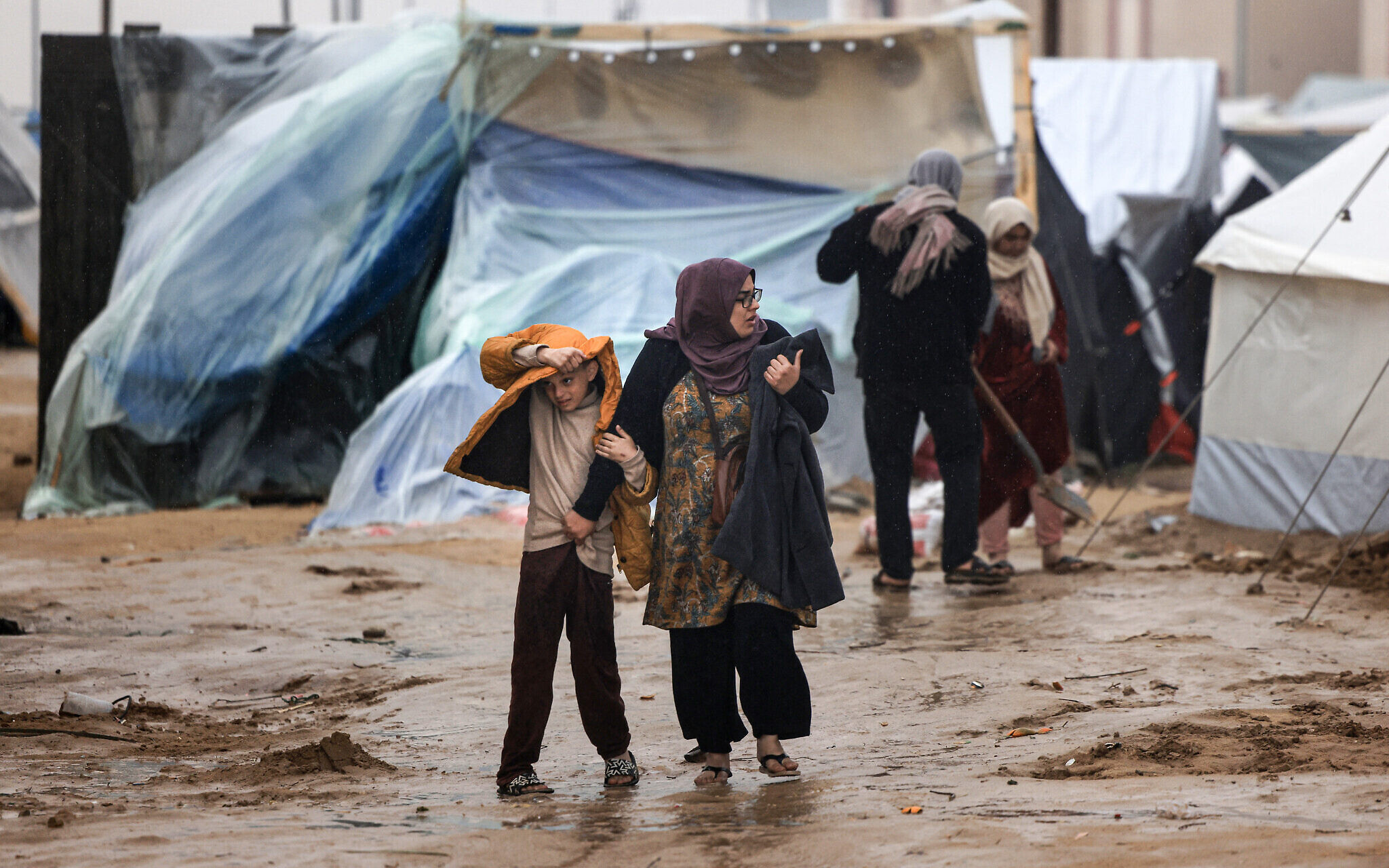
In Yarmouk Stadium, located in the heart of Gaza City, hundreds of families are enduring floods, damaged tents, and stormy winds that have uprooted their makeshift shelters, leaving them exposed to the elements.
A Harsh Winter Takes Its Toll
The recent bout of heavy rainfall and freezing temperatures has plunged the lives of displaced Gazans into further despair. Floodwaters inundated tents, destroying personal belongings and rendering many shelters uninhabitable. Stormy winds have torn through fragile nylon structures, leaving residents at the mercy of the harsh weather conditions.
Tragically, the severe cold has claimed the lives of more than seven displaced individuals, most of whom were infants, due to a lack of adequate heating methods. Health officials warn that the number of casualties could rise as the winter progresses, given the dire living conditions and limited access to medical care.
Infrastructure Devastation Compounds Misery
The destruction wrought by Israel’s prolonged military campaign, which began over 15 months ago on October 7, 2023, continues to haunt the people of Gaza. Critical infrastructure, including sewage networks and water drainage systems, was obliterated during the conflict, leaving the Strip ill-prepared to cope with seasonal rains.
Flooding has become a common occurrence across all governorates, paralyzing daily life and hindering movement for residents. Streets are submerged, turning neighborhoods into impassable swamps. Without proper drainage systems, rainwater accumulates rapidly, forming torrents and ponds that exacerbate the misery of those living in temporary camps.
A Population Struggling to Survive
Approximately two million citizens, nearly the entire population of the Gaza Strip, find themselves displaced, struggling to survive amidst scarce resources. According to government statistics, 161,600 housing units were completely destroyed by Israeli airstrikes, while another 82,000 became uninhabitable. An additional 194,000 suffered partial damage, leaving tens of thousands of families without permanent shelter.
For many, life consists of little more than tattered cloth and flimsy nylon sheets meant to shield them from the elements—a futile effort against the relentless storms. Areas such as Al-Mawasi in the south and Deir al-Balah in the center have seen widespread flooding and destruction of tents, underscoring the urgency of addressing this crisis.
Appeals for Aid Fall on Deaf Ears
Despite international promises made during the first phase of the ceasefire agreement to allow the entry of essential materials like tents and caravans, progress has been painfully slow. The scarcity of these necessities leaves families vulnerable to the whims of nature, with no respite in sight.
As night falls, the darkness is punctuated only by the sound of rain and wind battering the fragile remains of their homes. Some have likened their plight to drowning—not just physically but emotionally and psychologically—as they face an uncertain future with dwindling hope.
Calls for Action Amidst Desperation
Humanitarian organizations and local authorities have repeatedly called for urgent intervention to alleviate the suffering of displaced Gazans. However, the response remains woefully inadequate, leaving countless families to fend for themselves in one of the world’s most densely populated and besieged territories.
With each passing day, the situation grows more perilous. Unless immediate action is taken to provide safe, durable housing solutions and restore critical infrastructure, winter threatens to claim even more lives among the resilient yet battered population of Gaza.
In the face of such adversity, the world must not turn a blind eye to the plight of these displaced Palestinians, whose cries for help echo through the flooded streets and battered tents of Gaza City.
Shortlink for this post: https://daysofpalestine.ps/?p=60598