
DaysofPal- Experts and refugee advocates have described 2025 as the most perilous year in the history of the United Nations Relief and Works Agency for Palestine Refugees (UNRWA), amid unprecedented political, legal, and financial pressures that brought the agency close to collapse.
Analysts say the campaign, led by the Israeli occupation with backing from the United States, reflects a broader assault on Palestinian existence.
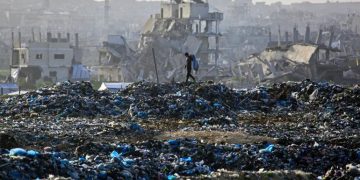
In Gaza, where over two million people rely on UNRWA for essential services, sustained bombardment and restricted aid coincided with intensified political and legal efforts to weaken the agency, observers argue, aiming to detach the humanitarian crisis from its political roots and diminish UNRWA’s role as an international witness to the Palestinian refugee issue.
Ali Hweidi, Director General of Lebanon’s 302 Commission for the Defense of Palestinian Refugee Rights, said 2025 marked the most dangerous year for UNRWA since its founding in 1949.
He described a strategic Israeli campaign, supported by Washington, targeting the core of the refugee question.
Hweidi highlighted unprecedented discussions within the U.S. administration about potentially designating UNRWA as a “foreign terrorist organization.”
On the ground, Israeli actions escalated, including a raid on UNRWA headquarters in Sheikh Jarrah, seizure of property, and the raising of the Israeli flag over the compound, violations of the international immunity afforded to UN premises, he said.
Legal measures in the Israeli occupation, including Knesset amendments cutting water and electricity to UNRWA facilities, further threatened the agency’s operations in the West Bank, Gaza, and East Jerusalem, paving the way for property confiscation and the potential removal of UNRWA from the region.
In October 2025, the International Court of Justice issued an advisory opinion clearing UNRWA of allegations of neutrality breaches or political affiliations.
Hweidi called the ruling a “legal shield” but noted that it failed to translate into significant political or financial support.
A July report by British official Ian Martin, commissioned by UN Secretary-General António Guterres, outlined scenarios including transferring UNRWA’s responsibilities to host countries or the Palestinian Authority, or shifting funding to Arab states, moves Hweidi said would undermine the agency’s mandate and strip the UN General Assembly of its responsibility.
Hweidi also warned of internal pressures within UNRWA, including proposals to align the agency with political tracks related to the two-state solution.
Remarks by Deputy Commissioner-General Antonia De Meo Bajer about transferring UNRWA administration to a Palestinian body and reclassifying staff as civil servants were described as “dangerous indicators.”
The agency’s ongoing implementation of 50 recommendations by former French Foreign Minister Catherine Colonna, including proposals to place UNRWA under an external international body and undermine staff unions representing 30,000 employees, further complicated the agency’s position.
Israeli occupation reportedly conditioned the entry of humanitarian aid into Gaza on ending UNRWA’s operations and replacing the term refugee camps with neighborhoods, aiming to erase the legal foundations of the refugee issue.
Support from Europe also weakened, with Germany, Italy, the Czech Republic, Bulgaria, and the Netherlands abstaining from voting to extend UNRWA’s mandate until 2029.
Financially, UNRWA faced a $200 million budget deficit, with Arab states contributing only 3% of the needed funding. Smear campaigns in the U.S. and Europe sought to strip UNRWA curricula of national content and accuse the agency of supporting “terrorism.”
Nasser Shraiteh, Director of the Executive Office for Refugees in the West Bank, described 2025 as the most aggressive attack on UNRWA since its founding, citing closures of headquarters, schools, and clinics, and restrictions on staff and institutions in Gaza.
Israeli occupation reportedly conditioned refugee returns on the shutdown of UNRWA operations and the elimination of the term camps.
Hweidi warned that political trade-offs, including temporary Palestinian Authority roles in Gaza in exchange for Western support to end UNRWA operations elsewhere, along with European doubts over the agency’s role in Syria, signal an expanding campaign against the agency.
He concluded that UNRWA stands on the edge of the abyss and urged urgent Palestinian, Arab, and international action to protect the agency as a humanitarian, legal, and political pillar of the Palestinian refugee cause.
Shraiteh echoed the warning, predicting that 2026 may be even harsher for Palestinian refugees and UNRWA amid continued international inaction and pressure from the U.S. and the Israeli occupation.
Shortlink for this post: https://daysofpalestine.ps/?p=70893