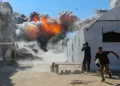
DaysofPal- Nearly 1.5 million Palestinians have lost their homes during two years of relentless Israeli bombardment and destruction in the Gaza Strip, according to Amjad al-Shawa, Executive Director of the Palestinian NGO Network in Gaza.
Al-Shawa said that between 300,000 and 400,000 displaced Palestinians have managed to return to parts of northern Gaza and Gaza City, despite the dire humanitarian conditions and widespread devastation, most of them, he said, returned to find their homes and properties completely destroyed.
He added that the number of returnees is expected to rise if shelter materials are allowed into Gaza and the second phase of Israeli withdrawal from Rafah, eastern Khan Younis, Shuja’iyya, and the northern areas is implemented.
Al-Shawa noted that uncertainty still surrounds the ceasefire and negotiation process, describing the available information as “general and unreliable.” He expressed doubts about the Israeli intentions, particularly “in light of continued U.S. support” and the “many obstacles preventing real progress toward peace.”
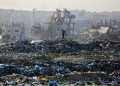
According to estimates cited by Al-Shawa, Gaza is now covered by 60 million tons of rubble, with 80% of the population’s homes destroyed.
He warned that reconstruction will take an extremely long time, stressing that immediate priorities should focus on emergency relief and humanitarian response, including retrieving bodies, locating the missing, and providing shelter for millions of displaced residents.
Current efforts, he said, are concentrated on reviving key sectors such as healthcare, education, and water, as well as supplying food, medicine, blankets, mattresses, and clothing.
Al-Shawa also mentioned ongoing efforts to organize a donors’ conference in Egypt, based on a reconstruction plan prepared by Cairo in cooperation with the Palestinian Authority and several Arab and international partners. The plan has reportedly received broad international approval.
He emphasized that humanitarian aid remains the backbone of efforts to counter Gaza’s worsening famine, calling for a continuous and diversified flow of assistance to ensure a stable food supply chain and to restore the health and humanitarian systems as quickly as possible.
Al-Shawa concluded by urging urgent Arab and international support, both financial and humanitarian, noting that thousands of displaced Palestinians are still unable to return to their areas and that more than 17,000 patients and wounded individuals require immediate medical evacuation and lifesaving assistance.
Shortlink for this post: https://daysofpalestine.ps/?p=68375