DaysofPal- The United Nations Relief and Works Agency for Palestine Refugees (UNRWA) has issued a stark warning of an escalating humanitarian crisis in the Gaza Strip, saying that approximately 1.6 million Palestinians are facing severe or multiple levels of malnutrition and food insecurity as restrictions on humanitarian aid continue.
UNRWA media adviser Adnan Abu Hasna said the situation is rapidly deteriorating, describing the crisis as a “humanitarian tsunami” that far exceeds the response capacity of the agency and Gaza’s heavily damaged local authorities.
Abu Hasna attributed the worsening conditions to ongoing obstacles to the entry of essential supplies, particularly those needed to cope with winter weather.
The warning comes as a strong low-pressure system batters Gaza, intensifying the suffering of hundreds of thousands of displaced residents.
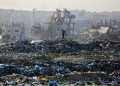
Abu Hasna said the storm has had catastrophic consequences, destroying makeshift shelters and flooding residential areas with rainwater and sewage.
He noted that most shelters commonly referred to as tents are improvised structures made from plastic sheets and scraps of fabric, offering little protection from harsh weather.
Even standard tents, he added, have deteriorated after repeated displacement and are no longer able to withstand strong winds or heavy rainfall.
Abu Hasna said many Palestinians feel the war has not truly ended, but has instead taken new forms through the continued degradation of living conditions.
He pointed to rising illness and shortages of food, shelter materials, medical supplies, and spare parts for water and sewage systems as factors deepening the crisis.
According to UNRWA, nearly 6,000 aid trucks are currently waiting at Gaza’s borders, unable to enter.
The shipments include hundreds of thousands of tents purchased at a cost of hundreds of millions of dollars, as well as large quantities of blankets, winter clothing, and food supplies intended to support the population for up to three months.
The agency also warned that the absence of heavy machinery, pumping stations, mobile sewage facilities, and other essential equipment has severely limited humanitarian response efforts. Many of these critical items, Abu Hasna said, are not being allowed into the enclave.
UNRWA cautioned that humanitarian conditions could deteriorate dramatically if current restrictions remain in place, raising the risk of a return to famine-like conditions and the collapse of already strained humanitarian and medical systems.
With heavier rainfall expected in January and February, Abu Hasna warned that the crisis could deepen further.
He recalled a previous incident in which a sea-level rise of just half a meter washed away hundreds of tents, stressing that Gaza is on the brink of a major humanitarian breakdown unless urgent action is taken.
“The real rains have not yet begun; without immediate intervention, the consequences will be devastating,” he said.
Shortlink for this post: https://daysofpalestine.ps/?p=70867