
DaysofPal- The Israeli decision to prohibit the operations of the United Nations Relief and Works Agency for Palestine Refugees (UNRWA) is set to take effect at the end of January, despite international and human rights warnings about the potentially catastrophic repercussions and significant risks associated with implementing this decision.
UNRWA stated that time is running out for it to be banned, which would leave millions of Palestinian refugees without access to its services, adding that the United Nations has no intention of replacing the agency, and the Israeli Knesset must reverse its decision to ban it.
The head of the ‘302 Authority for Defending the Rights of Palestinian Refugees, Ali Huwaidi, noted that the law banning UNRWA activities will come into effect on January 28. However, there is currently no executive decision to stop UNRWA’s work in Gaza, the West Bank, or other regions.
Huwaidi pointed out that “UNRWA is still the one performing its role until now, and there is not enough information about how Israel will address alternatives to the UN agency.”
He warned of significant risks if the Knesset law passed last October is implemented, confirming that ” UNWRWA will not be able to operate in the areas under Israeli control, including closing its offices and any bank accounts it holds within Israel.”
UNRWA was established by a decision of the United Nations General Assembly in 1949, following the Palestinian Nakba in 1948, and began its operations on May 1, 1950, to assist Palestinian refugees in its five areas of operation: Jordan, Syria, Lebanon, the West Bank (including East Jerusalem), and the Gaza Strip, until a just solution to their issue is reached.
Huwaidi pointed out that UNRWA provides basic services to approximately 5.9 million Palestinians, including food, shelter, and medical care, as well as human development services such as education and vocational training.
He noted that the occupation has deliberately targeted the agency and distorted its image over the past years.
He emphasized that cancelling UNRWA’s role during this sensitive time and under these difficult circumstances will inevitably lead to serious humanitarian repercussions, further exacerbating the suffering of refugees.
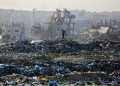
This is particularly true in the Gaza Strip, which has been devastated by the Israeli occupation in a manner unprecedented in the history of human conflict, where the majority of its residents now rely on relief aid.
UNRWA states on its official website that “if the Knesset bill is enacted, UNRWA will be barred from operating in the occupied Palestinian territory, and there is no other UN agency capable of fulfilling such roles.
It characterized the situation as “part of an effort to erase Palestinian history and identity,” emphasizing that “UNRWA can only be supplanted by a functioning Palestinian state that effectively addresses the plight of Palestinian refugees, which can be achieved through political and diplomatic will.”
In the same context, the New York Times reported that UN officials warned of the disastrous consequences arising from the Israeli enforcement of a law banning UNRWA activities in Gaza and the West Bank, which could result in a near-total freeze of the agency’s operations in these regions.
A UN official explained that UNRWA coordinates with the Israeli army daily, especially when distributing aid or transporting its staff within the Palestinian territories. If this coordination ceases, the lives of UNRWA employees will be at risk, thus severely hampering relief operations.
Former UN official Jamie McGoldrick, who oversaw humanitarian operations, stated that The United Nations in Gaza and the West Bank shares a similar position. In a press interview, he remarked: “If the Israeli goal is to disrupt our ability to save lives, we must question the motives and ultimate goal behind that.”
He emphasized that UNRWA operations in Gaza and the West Bank provide a lifeline for millions of Palestinians who rely on its essential services, including education, health care, and food aid.
The fierce Israeli campaign against UNRWA escalated after October 7, 2023, with claims that UNRWA employees were involved in the Al-Aqsa Flood operation executed by the Palestinian resistance in the Gaza Strip. The occupation also alleged that the resistance was utilizing the agency’s facilities for military purposes.
The United Nations rebuffed the Israeli accusations, stating that Israel had not provided adequate evidence to support them.
Despite international pressure on Israel and growing demands to avoid disrupting UNRWA’s role, concerns persist regarding the impact of these policies on the worsening humanitarian situation, particularly given the decline in international support for aid aimed at Palestinians.
Shortlink for this post: https://daysofpalestine.ps/?p=59802