DaysofPal- While global attention is increasingly diverted by broader regional tensions, the humanitarian and institutional situation in the Gaza Strip and the occupied West Bank is steadily worsening.
A senior United Nations official has warned that conditions in the Gaza Strip and the occupied West Bank are steadily deteriorating, even as escalating regional tensions divert international attention.
Speaking before the UN Security Council on Tuesday, Khaled Khiari, Assistant Secretary-General for the Middle East, said recent developments across the region have drawn focus away from the worsening realities in the Occupied Palestinian Territory. He cautioned that, outside the global spotlight, the situation in Gaza, the West Bank, and East Jerusalem continues to decline.
The Humanitarian Crisis in Gaza
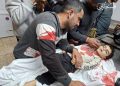
Khiari highlighted the scale of displacement in Gaza, noting that approximately 1.8 million people, nearly the entire population, have been forced from their homes. Many now reside in overcrowded camps for internally displaced persons, relying heavily on humanitarian assistance while facing ongoing violence, widespread infrastructure destruction, and mounting public health risks.
Although there have been limited improvements in aid delivery, Khiari stressed that humanitarian operations remain severely constrained. He pointed to unpredictable access, a limited number of operational crossings, and restrictions on essential supplies as major obstacles hindering effective relief efforts.
He underscored the urgency of moving beyond emergency aid toward comprehensive recovery and reconstruction planning, warning that delays could deepen the humanitarian crisis.
The ceasefire, described as increasingly fragile, has failed to shield civilians from continued violence. Khiari emphasized that ordinary people remain the primary victims of ongoing hostilities.
Escalation in the West Bank and East Jerusalem
In the occupied West Bank, he reported a significant escalation in Israeli settlement expansion. A March 25 cabinet decision approving 34 settlements marked the largest such authorization to date. At the same time, attacks by Israeli settlers have intensified, with Palestinian communities facing frequent violence, property damage, and harassment, often occurring in the presence of Israeli forces.
Khiari also raised alarm over the financial situation of the Palestinian Authority, describing it as an existential crisis that threatens the viability of governance structures necessary for a future independent state. Economic conditions across the West Bank continue to worsen under mounting restrictions and declining resources.
“There is no military solution to this conflict. Diplomacy is the path toward sustainable peace,” Khiari told the Council, stressing that resolving the Israeli-Palestinian conflict remains essential for broader regional stability.
Addressing the Council in his capacity as chair of the Ad Hoc Liaison Committee, Norwegian Foreign Minister Espen Barth Eide echoed these concerns and voiced support for advancing Palestinian economic and political autonomy.
Eide emphasized the need to enable recovery and uphold Palestinian aspirations, pointing to a severely constrained economy shaped by movement restrictions, fiscal pressures, limited access to natural resources, and a weakened private sector.
He warned that the growing risk of systemic collapse within Palestinian institutions could undermine prospects for self-determination and independent statehood, calling for urgent international support to stabilize the situation and preserve the pathway toward a viable future.
Shortlink for this post: https://daysofpalestine.ps/?p=74253