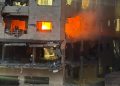

DaysofPal- The Government Media Office in Gaza has released a comprehensive report marking 1,000 days since the start of the Israeli genocidal war, detailing the scale of destruction and the deepening humanitarian crisis affecting approximately 2.4 million residents in the territory.
According to the report issued on Thursday, Israeli occupation forces have dropped an estimated 223,000 tons of explosives on Gaza, resulting in widespread destruction reaching approximately 90 percent of the territory.
The report further states that around 80 percent of Gaza’s land area has come under Israeli control through military operations, while areas previously designated as “safe zones,” including Al-Mawasi, were reportedly struck 241 times.
The report indicates that the death toll has risen to 73,066 people, with an additional 9,500 reported missing. It notes that 55 percent of the victims are children, women, and the elderly.
Among them are 21,500 children, including 1,022 under the age of one and 520 infants who were born and died during the Israeli war.
The report also records the deaths of 12,500 women, 9,000 mothers, and 22,500 fathers.
In total, 39,022 families were affected by mass casualty incidents, including 2,700 families that were completely wiped out, accounting for 8,574 deaths.
Additionally, 6,020 families were left with only a single surviving member, representing 12,917 deaths.
The report states that those killed include 1,700 medical personnel, 145 civil defense workers, 262 journalists, 194 municipal employees, 2,800 police and aid security personnel, and 928 athletes.
It also documents 460 deaths attributed to hunger, including 164 children, as well as 23 deaths caused by incorrectly airdropped aid and 28 deaths due to cold weather, including 25 children.
On the humanitarian and health front, the number of injured has reached 173,514, including 19,000 individuals requiring long-term rehabilitation. The report records 5,400 amputations, 18 percent of which involve children, alongside 1,500 cases of paralysis and 1,200 cases of vision loss. A total of 433 journalists were reported injured. Additionally, 362 medical personnel were detained, of whom 83 remain in custody.
The war has left 26,370 widows and 58,800 orphans, including 2,700 who lost both parents, 6,100 who lost their mothers, and 50,000 who lost their fathers.
The report also cites widespread public health impacts, including more than 2.1 million cases of infectious diseases, 71,338 cases of hepatitis, and the deaths of 43 percent of kidney patients. It also records 12,000 miscarriages among pregnant women.
Extensive damage has been inflicted on infrastructure and public services. A total of 38 hospitals and 96 health centers have been taken out of service, while 197 ambulances were targeted, and 788 attacks on medical facilities were reported.
Civil defense infrastructure also sustained heavy losses, including the destruction of vehicles and operational centers.
The education sector has been severely affected, with all schools impacted. According to the report, 81 percent require major rehabilitation, 80 percent have been directly hit, and 40 percent fall within high-risk zones.
Seventeen higher education institutions were destroyed, depriving 620,000 school students and 90,000 university students of access to education.
The report also records the deaths of 20,051 students, 830 teachers, and 194 academics, while nearly 19,900 students have left Gaza.
Religious and cultural sites have also been damaged. Of 1,275 mosques, 1,047 were completely destroyed and 210 partially damaged, along with three churches.
The report notes the deaths of 312 religious leaders and teachers, with 37 reported missing, as well as 20 Christian fatalities. Forty cemeteries were damaged, and 2,450 bodies were reportedly exhumed, while seven mass graves were established in hospitals.
In the housing sector, 227,703 buildings and approximately 510,000 housing units were affected. Of these, 410,000 were destroyed and deemed uninhabitable, while 100,000 sustained partial damage.
Around 2 million people have been displaced, with 350,000 families left without shelter. The report also notes the deterioration of 132,000 tents out of 135,000, while 346 shelters were targeted.
The humanitarian situation has been further exacerbated by the prolonged closure of border crossings for 650 days, preventing the entry of approximately 390,000 aid and fuel trucks.
The report documents attacks on aid infrastructure, including 48 community kitchens and 64 distribution centers, as well as 128 incidents involving aid convoys.
A total of 556 aid workers were killed, while 2,605 people were killed, 19,124 were injured, and 200 were reported missing in incidents described as occurring at aid distribution points.
Children remain among the most vulnerable, with 650,000 facing the risk of death due to malnutrition and 40,000 infants threatened by severe shortages of milk.
The report also highlights critical risks facing 12,500 cancer patients, 350,000 individuals with chronic illnesses, 3,000 other patients in urgent need of care, and 107,000 pregnant and breastfeeding women.
Approximately 22,000 patients have been prevented from traveling abroad for treatment, including 5,200 children requiring urgent medical evacuation.
Essential services have also been devastated. Damage includes 725 central water wells, 134 freshwater projects, approximately 700,000 meters of water and sewage networks, 5,080 kilometers of electricity networks, 2,285 distribution transformers, and 235,000 electricity meters.
Gaza has also lost access to more than 2.1 billion kilowatt-hours of electricity.
The report further notes the destruction of 3 million meters of road networks, 253 government facilities, 292 recreational and sports facilities, and 208 archaeological sites.
The agricultural sector has been severely impacted, with 87 percent of farmland destroyed, along with greenhouses and irrigation systems.
Approximately 8,700 agricultural wells and 7,748 livestock and poultry farms were destroyed, while 69,000 animals were killed.
Annual vegetable production has dropped dramatically from 524,000 tons to just 20,000 tons, and 99 percent of the fishing sector has been affected.
According to the report, the total direct economic losses are estimated at approximately $80 billion.
The losses are distributed across sectors, including housing ($34 billion), health ($6 billion), services and municipalities ($6 billion), commerce ($5 billion), household assets ($5 billion), education ($4 billion), industry ($4 billion), agriculture ($4 billion), telecommunications and internet ($3 billion), transportation ($3 billion), electricity ($2 billion), tourism and hospitality ($2 billion), religious institutions ($1 billion), and media ($1 billion).
The report concludes that the scale of destruction and loss underscores the unprecedented humanitarian and economic crisis facing Gaza, with long-term implications for recovery and stability in the region.
Shortlink for this post: https://daysofpalestine.ps/?p=75890