DaysofPal- The 3-year-old Palestinian girl Hanan lost both her legs in an Israeli airstrike that killed her mother last month. Her sister Misak, just 18 months old, also lost her left leg—she had only just begun to learn how to walk.
They are only two among more than 4,000 children who have lost at least one limb since Israel launched its genocidal war on Gaza last October.
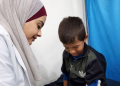
“It’s heartbreaking,” said Shifa al-Daghi, who now cares for her two nieces.
She added that Hanan, too young to fully understand her condition, keeps asking about her legs.
“She keeps asking why other children have legs, and she doesn’t. I can’t find the words to explain it to her. When they ask about their mother, I tell them she’s coming, but they are starting to lose faith in my answers. What should I say when she asks me who took her legs?”
Thousands of Amputations
The Gaza Health Ministry estimates that more than 10,000 Palestinians have lost at least one limb since the start of the genocidal war a year ago, including at least 4,000 children.
The World Health Organization (WHO) estimates the number of amputations in the Gaza Strip to be between 3,105 and 4,050.
The WHO reported that severe limb injuries, estimated to be between 13,455 and 17,550, are the primary reason for the urgent need for rehabilitation.
The UN agency also noted a rise in spinal cord and brain injuries, as well as severe burns, contributing to the growing number of life-altering cases.
“Martyrdom is Easier”
Sahar, 8, from Jabalia camp in northern Gaza, lost her left leg in a bombing that also claimed her mother’s life last April.
“Losing my wife was very difficult,” said her father, Saqr Wadi. “But seeing my daughter lose her leg was even harder.”
“Sahar was always full of life—running, playing, laughing—and now she’s confined indoors. Sometimes I just carry her outside to give her a change of scenery,” he added.
His two sons were also injured in the attack, though their wounds were minor. In Gaza, many children bear both the physical and emotional scars of a year of devastating war, and Sahar’s injury has left a profound emotional impact.
Her father said she is no longer the joyful child she once was. Now, her conversations often revolve around death and war, and her only wish is to stand on her feet again.
The family faces immense challenges in obtaining painkillers and medication due to the Israeli blockade. “We have applied for travel permits to get her proper treatment, but no one has responded,” her father said.
Wadi’s greatest hope is for Sahar to be fitted with a prosthetic leg. “I just want her to walk again like other children,” he said. “She used to love karate and going to the gym, but now she’s deprived of all that.”
A New Reality
Amputations in Gaza are often the result of severe tissue injuries, explained Dr. Mohammed Shaheen, an orthopedic surgeon at Al-Aqsa Martyrs Hospital in Deir al-Balah, central Gaza.
“We decide to amputate when the limb is no longer salvageable due to infection, loss of arteries, deep tissue damage, or bone loss,” he said.
“When patients arrive with already amputated limbs, they usually understand. But when we have to make the decision to amputate, it’s difficult to convince them.”
Shaheen estimates that there are about 10 amputations a day across Gaza, with three taking place at Al-Aqsa Martyrs Hospital alone. Preparing amputees for their new reality requires a team of specialists, including orthopedic surgeons, vascular surgeons, physical therapists, and mental health professionals.
Dr. Arafat Abu Mashayekh, head of the mental health department at Al-Aqsa Martyrs Hospital, emphasized the profound psychological impact of amputations.
“Losing a limb, seeing your body change, and being unable to perform daily activities causes immense psychological distress,” he said. “It’s a journey that begins with denial and often never fully ends with acceptance for many.”
To make matters worse, Gaza’s shortage of rehabilitation centers, wheelchairs, and crutches makes it even more difficult for amputees to adjust to their new circumstances.
“I often hear the same heartbreaking question from children: ‘Will my legs grow back?’” says Dr. Abu Mashayekh. “I can’t answer them because they don’t yet understand the reality of their situation.”
“With no prosthetic centers or sufficient mental health facilities in Gaza, there is an urgent need for more mental health professionals to help amputees adapt,” he added.
Shortlink for this post: https://daysofpalestine.ps/?p=57717