DaysofPal- The Arab media community was shaken on Saturday by the killing of three journalists in southern Lebanon following a direct Israeli strike that targeted them during field coverage.
Al Mayadeen correspondent Fatima Ftouni, her brother and photojournalist Mohammed Ftouni, and Al Manar correspondent Ali Shoeib were the victims, according to Lebanese sources. The three were reporting on developments along the border when they were struck, turning from witnesses into victims in an incident that highlights the growing dangers facing journalists under Israeli occupation.
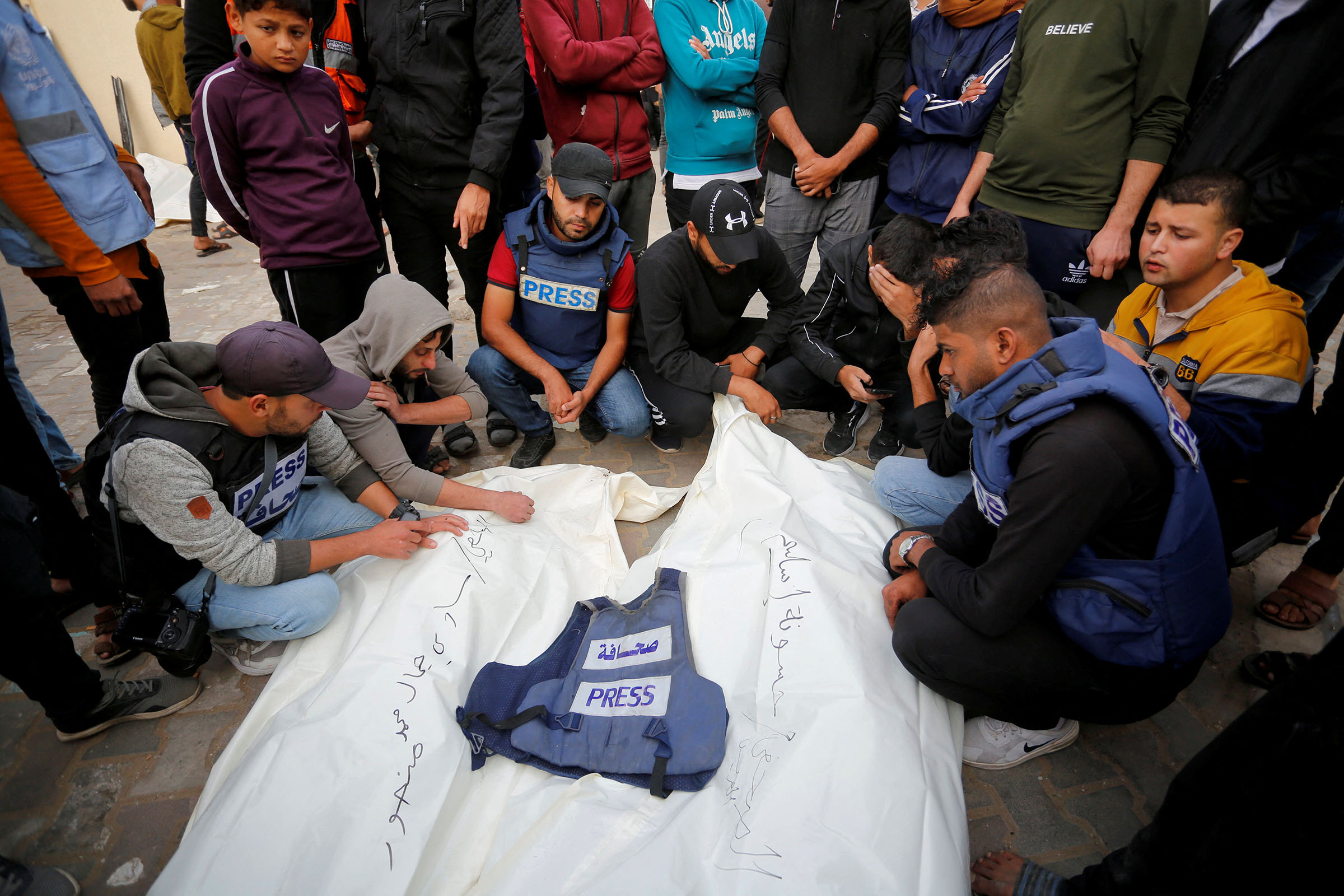
The attack recalls the deadly conditions faced by journalists in the Gaza Strip during the genocide, where many media workers were killed while covering events on the ground. Those incidents sparked widespread debate over deliberate targeting and the lack of effective protection for journalists.
Data from Gaza’s Government Media Office indicates that the number of journalists killed since the start of the Israeli genocide in October 2023 has risen to 261, following the death of journalist Amal Shamali earlier this month. This period is considered one of the deadliest for media workers in modern history.
A Repeated Pattern of Violence
The latest incident in southern Lebanon reflects a pattern seen in Gaza, where journalists documenting events have come under fire. Reports indicate that the strike was direct, pointing to escalating risks for reporters operating in hostile environments while attempting to convey events on the ground.
In Gaza, journalists were not only observers but also among the victims. Media institutions were destroyed, journalists’ families were targeted, and strikes continued in areas where reporters were present despite clearly identifying themselves as press. The situation now appears to be repeating itself in Lebanon, though in a different geographic setting.
A Lebanese journalist reacting to the incident said, “We believed what happened in Gaza was exceptional in its severity, but today proves the danger follows journalists wherever they are in this region.” Another journalist working in southern Lebanon stated, “We go out to cover events knowing we may not return. There is no safe place and no guarantees of protection.”
These testimonies reflect a harsh reality in which cameras and microphones have become tools associated with daily risk.
Official and Institutional Condemnation
Lebanese President Joseph Aoun condemned the targeting of journalists Ali Shoeib, Fatima Ftouni, and Mohammed Ftouni on the road to Jezzine. He described the attack as a blatant violation of international law, humanitarian law, and the rules of war, stressing that journalists are civilians performing a professional duty.
He stated that the incident constitutes a clear crime that breaches international conventions granting journalists protection during armed conflict, including the Geneva Conventions and relevant international resolutions that prohibit targeting media workers who are not directly participating in hostilities.
The Lebanese Press Editors Syndicate also condemned the killings, describing them as a fully defined crime that reflects the hostile Israeli stance toward journalists who document events and convey them to the global public. The syndicate criticized what it described as international indifference toward repeated Israeli violations of protections guaranteed to journalists under international agreements.
The organization called on international bodies, including the United Nations, the International Committee of the Red Cross, UNESCO, and human rights institutions, to condemn the incident and take action.
The Palestinian Media Forum denounced the killings, stating that the targeting of the three journalists reflects a systematic approach aimed at silencing media voices and preventing the transmission of facts.
The Forum explained that the attack reflects Israeli determination to silence free media and prevent the dissemination of truth, noting that the occupation is pursuing the same policy it adopted in the Gaza Strip through the direct and repeated targeting of journalists.
Hamas issued a press statement describing the incident as a “criminal act” and part of an ongoing Israeli policy targeting journalists. It urged the international community and media institutions to condemn such actions, impose deterrent measures, and hold those responsible accountable.
Shortlink for this post: https://daysofpalestine.ps/?p=73360