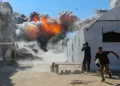
DaysofPal – Israeli forces have carried out intense artillery shelling and helicopter strikes in southern Gaza despite a United States-brokered ceasefire, killing civilians and further undermining fragile hopes for calm.
On Monday, an Israeli attack struck a tent sheltering displaced Palestinians in the coastal al-Mawasi area, killing a five-year-old girl and her uncle, according to local health officials.
Medical sources at the Nasser Medical Complex in Khan Younis said four other people, including children, were wounded in the strike. Gaza health authorities reported that the latest killings raised the number of Palestinians killed by Israeli forces since the ceasefire came into effect in October to at least 422.
The Israeli military claimed it had targeted a Hamas fighter allegedly planning an imminent attack on Israeli troops. However, it provided no evidence to support the claim, and it remained unclear whether the statement referred to the deadly strike on the displacement tent.
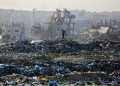
Despite the truce, Israeli attacks on Gaza have continued almost daily, alongside severe restrictions on humanitarian aid. Palestinian officials say roughly 88 percent of Gaza’s buildings have been damaged or destroyed during Israel’s ongoing war, forcing most of the enclave’s two million residents to live in tents, makeshift shelters, or structurally unsafe buildings left behind after Israeli troop withdrawals.
In another deadly incident on Monday, the Palestinian Civil Defence reported that a residential home previously damaged by Israeli strikes collapsed in the Maghazi refugee camp in central Gaza, killing a 29-year-old father and his eight-year-old son. Rescue crews later said they were unable to respond adequately to similar hazards due to critical shortages of equipment and fuel.
The ceasefire, reached after more than two years of Israeli attacks that have killed over 71,000 Palestinians, is being implemented in phases. Its first stage includes exchanges of captives and prisoners, increased humanitarian aid, and the reopening of Gaza’s Rafah border crossing with Egypt. Hamas has released all remaining living captives and returned dozens of bodies, while Israel has freed nearly 2,000 Palestinian detainees, including some serving life sentences.
Uncertain Hope for Rafah Reopening
Despite these developments, humanitarian organizations say Israeli restrictions continue to obstruct aid deliveries, and the Rafah crossing remains closed. The crossing had been Gaza’s sole gateway to the outside world before Israeli forces seized control of the Palestinian side in May 2024.
Israel’s Kan broadcaster reported on January 1 that Israeli authorities are preparing to reopen Rafah in “both directions” following pressure from US President Donald Trump.
If confirmed, the move would represent a shift from earlier Israeli policy that limited the crossing to outbound movement only, an approach widely condemned by regional powers, including Egypt and Qatar, amid warnings of forced displacement and ethnic cleansing.
The report has stirred cautious optimism among Palestinians. Tasnim Jaras, a student in Gaza City, said reopening Rafah was her “dream” so she could resume her education. Moaeen al-Jarousha, who was wounded during the war, said he urgently needed to leave Gaza for medical treatment abroad.
“I need immediate medical intervention. I live in very difficult conditions,” he said.
Reporting from Gaza City, Al Jazeera’s Hani Mahmoud noted that Palestinians have waited years for the crossing to reopen. “For many, this isn’t about travel, it’s about survival,” he said.
“Parents are seeking medical care denied for two years, students see a chance to continue their education, and families hope to reunite after long separations. But hope here is never simple.”
Mahmoud added that repeated announcements in the past have often been followed by sudden closures, deepening public skepticism.
An estimated 53% of Gaza is still under Israeli control in the meantime. Witnesses on Monday reported ongoing demolitions of residential homes in Gaza City’s eastern Zeitoun neighborhood. The Israeli military also said it shot a Palestinian who crossed the so-called “yellow line,” an unmarked boundary established after the ceasefire, claiming the attack was carried out to “remove the threat,” again without presenting evidence.
Shortlink for this post: https://daysofpalestine.ps/?p=71030