DaysofPal- In recent months, the occupied West Bank has witnessed a sharp escalation in Israeli military raids targeting rural towns and villages, particularly those near illegal Israeli settlements.
Palestinian residents report that these operations have become more aggressive, prolonged, and disruptive, raising fears that Israel may be laying the groundwork for the long-discussed annexation of the territory.
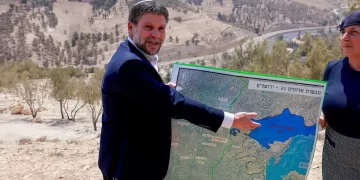
Such moves have been repeatedly threatened by prominent Israeli officials, including Finance Minister Bezalel Smotrich.
The raids have occurred in areas designated as “Area B” and “Area C” under the Oslo Accords. Area B is ostensibly under the civil administration of the Palestinian Authority (PA), while Area C has been under direct Israeli control since the agreements were signed in 1993.
Yet, the nature and intensity of these incursions suggest a deliberate erosion of Palestinian authority and sovereignty, fueling concerns among Palestinians about Israel’s broader objectives.
Villages Under Siege
On November 24, the village of Al-Mughayyir, located east of Ramallah, experienced a two-day siege by Israeli forces. According to Kazem Hajj Mohammed, a community activist, the military sealed all but one entrance to the village, effectively cutting it off from the surrounding areas.
Soldiers commandeered a local house, transforming it into a makeshift military base, where they interrogated residents on-site.
Simultaneously, other soldiers raided homes across the village, sparking confrontations with residents. The closure paralyzed daily life, forcing schools to shut down and preventing many villagers from commuting to work.
The official justification for the operation was an alleged incident involving youths pointing laser beams at settler vehicles on a nearby bypass road.
Military Barracks
Just days earlier, on November 19, the village of Burqa near Nablus endured a 24-hour military operation. During the raid, approximately 50 homes were stormed, and dozens of men were interrogated. Several residents were beaten so severely they required hospitalization.
Anti-settlement activist Sami Douglas described the scene as a “mini military operation.” Soldiers established a strong presence throughout Burqa, occupying buildings and neighborhoods while blocking access to the village.
Under the pretext of searches, they vandalized furniture and belongings, and residents reported being subjected to physical and verbal abuse.
Douglas argues that these tactics aim to instill fear and terror, citing threats from Israeli officers who warned parents and teachers of severe punishments if children threw stones at soldiers or settlers.
Strategy to Establish Control
The motives behind this surge in raids remain a subject of debate. Some believe the operations are designed to prevent any resistance from Palestinians when settlers pass near their villages.
Others see the raids as training exercises for Israeli soldiers, preparing them for future incursions into residential areas.
The broader context, however, aligns with Israeli discussions about imposing sovereignty over the West Bank. Douglas contends that these frequent incursions are part of a calculated policy to condition Palestinians to live under constant threat.
By turning homes, streets, mosques, and schools into battlegrounds or military installations, Israel seeks to embed its presence into every aspect of Palestinian life.
Psychological Toll
The raids have left a deep psychological imprint on Palestinian communities. According to Douglas, the sheer frequency of these operations has normalized them to the extent that Palestinians now view them as an unavoidable part of daily life.
“Every morning, people instinctively check their phones for news of raids or arrests,” he says, highlighting the pervasive sense of insecurity among residents.
Wider Picture
While the immediate aim of these raids may be to suppress resistance and bolster Israeli settlement expansion, they also appear to be part of a larger strategy to assert Israeli control over the West Bank.
By eroding Palestinian autonomy and creating a climate of perpetual fear, Israel may be paving the way for further territorial claims and sovereignty measures.
For Palestinians, the impact is devastating. As homes turn into military outposts and daily life becomes a battleground, the occupation’s presence is felt more intensely than ever, eroding any semblance of normalcy in their lives.
Source: Araby Al-Jadeed, The New Arab
Shortlink for this post: https://daysofpalestine.ps/?p=59423