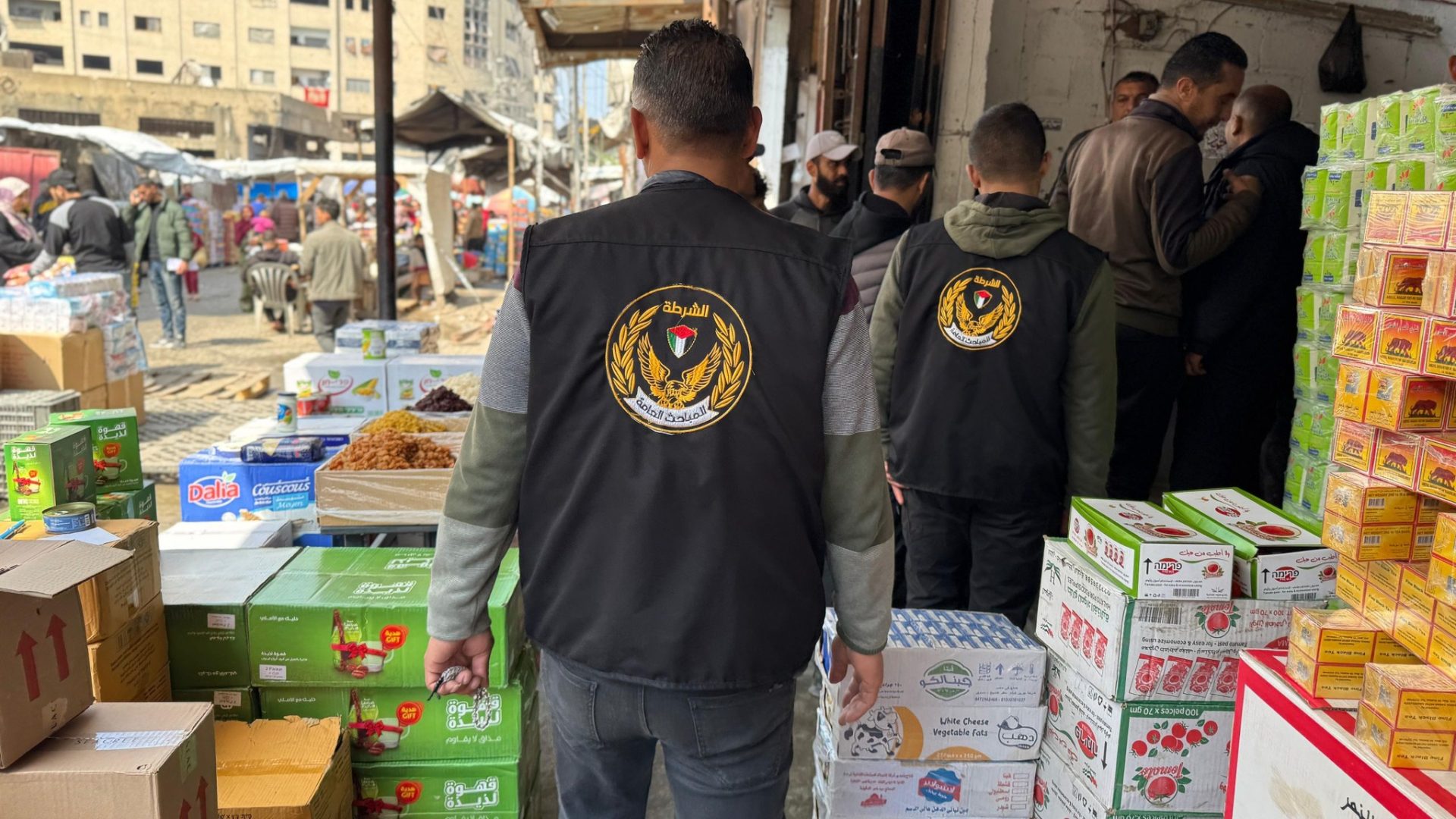
DaysofPal- As Gaza faces worsening living conditions under the ongoing war and a nearly two-decade-long blockade, a system known as “commercial coordination” is increasingly being cited as a key factor exacerbating poverty and economic hardship in the enclave.
Originally presented as a mechanism to facilitate the entry of goods, commercial coordination has evolved into a tool of monopoly and control.
According to reports, four Israeli companies now dominate the import of goods into Gaza, controlling the flow, quantity, and pricing of products, effectively placing the Palestinian economy under external oversight.
Under this system, intermediaries arrange the entry of goods through Israeli occupation in exchange for large fees, which are then passed along as hidden costs in shipping, storage, and distribution.
As a result, basic necessities, including food, clothing, cooking oil, and other daily essentials, are sold at inflated prices, creating an additional financial burden for ordinary residents.
Gaza residents say the rising cost of living has made survival increasingly difficult. Wisam Warsh Agha, displaced from her home in Beit Lahia by Israeli airstrikes, described how her family struggles to replace destroyed clothing and belongings.
She explained that market prices have doubled in recent months, reflecting the cumulative costs of commercial coordination.
Supermarket owner Ibrahim Masbah told Safa News Agency that prices for essential items have risen sharply, sometimes four to five times higher than pre-war levels.
He said that families are forced to pay inflated prices simply to meet basic needs, noting that some goods have become effectively inaccessible to most residents.
Economic analyst Ahmed Abu Qamar said Gaza has paid more than $1 billion in coordination fees since the outbreak of the conflict.
He explained that fees for a single truck carrying goods have tripled in some cases, with costs passed directly to consumers rather than absorbed by traders.
Abu Qamar warned that the system has turned commercial coordination from a logistical measure into a mechanism of monopoly control, with four companies effectively determining Gaza’s economic lifelines.
“This confiscates Palestinian economic decision-making and makes the local market dependent on the Israeli economy,” he said.
He described it as a form of “engineered famine,” where goods exist but are priced beyond the reach of most citizens.
The analyst added that Gaza’s economic sectors have collapsed almost entirely over the past year, with construction down 99 percent, industry 94 percent, agriculture 92 percent, and services 82 percent.
“Production has virtually stopped, incomes have vanished, and society is reduced to survival rather than development,” he said.
Abu Qamar emphasized that addressing the crisis requires ending commercial coordination, allowing unrestricted entry of goods, and holding accountable those who profit from the system.
He warned that continued enforcement of these mechanisms will have devastating long-term consequences for Gaza’s population and economy.
Shortlink for this post: https://daysofpalestine.ps/?p=71219