DayofPal—Hamas has published an extensive political document titled “Our Narrative… Al-Aqsa Flood: Two Years of Steadfastness and the Will for Liberation,” outlining its account of the October 7, 2023 operation and the subsequent two years of war in the Gaza Strip .
In the document, Hamas reports that the October 7 operation, “Al-Aqsa Flood, was not an isolated event but the culmination of decades of Israeli occupation, settlement expansion, the blockade of Gaza, pressure on Jerusalem and the Al-Aqsa Mosque, and what it describes as the failure of political negotiations and international institutions.
The movement frames the operation as part of a long-running Palestinian resistance dating back to the Nakba of 1948.
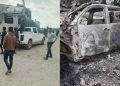
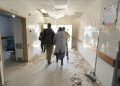
The text strongly condemns Israel’s military campaign in Gaza, describing it as a war of genocide marked by mass civilian casualties, widespread destruction of homes, hospitals, schools, mosques, and churches, and the use of starvation and displacement as tools of war.
Hamas cites figures of tens of thousands killed and hundreds of thousands wounded, with much of Gaza’s infrastructure destroyed, and blames Israel of deliberately targeting journalists, aid workers, and medical personnel .
Hamas also addresses Israeli allegations regarding the October 7 attack, rejecting claims that its fighters deliberately targeted civilians.
It calls for independent international investigations into both the events of October 7 and Israel’s conduct during the war, while accusing Israel of spreading disinformation to justify its military campaign.
According to the document, the war produced major political and strategic consequences. Hamas says Israel suffered significant military, economic, and psychological losses, including a collapse of deterrence, deep internal divisions, and increased emigration.
It also adds that Israel has become more internationally isolated, facing growing protests, boycott movements, and legal challenges, including cases at the International Court of Justice and arrest warrants issued by the International Criminal Court against Israeli leaders .
The document highlights what it describes as a global shift in public opinion, pointing to large-scale demonstrations worldwide, increased recognition of the State of Palestine by multiple countries, and the mainstreaming of terms such as “genocide,” “settler colonialism,” and “war crimes” in international discourse. Hamas portrays this as a victory in the “battle for global consciousness.”
On internal Palestinian politics, Hamas insists it cannot be isolated or excluded, describing itself as a deeply rooted political and social movement with sustained popular support.
It rejects calls for disarmament and confirms that resistance remains the dominant choice among Palestinians, citing opinion polls referenced in the text .
The document also addresses ceasefire negotiations, accusing war criminal Netanyahu’s government of repeatedly sabotaging agreements to end the war.
Hamas presents itself as having engaged “responsibly” with mediation efforts, including proposals backed by regional and international actors, and clarifies that a ceasefire reached in 2025 was the result of Palestinian steadfastness rather than military defeat.
Looking forward, Hamas outlines a set of priorities for the current phase, including a full Israeli withdrawal from Gaza, lifting the blockade, large-scale reconstruction, the release of Palestinian prisoners, protection of Jerusalem and the West Bank, internal Palestinian unity, rejection of normalization with Israel, and continued pursuit of international legal accountability.
The document concludes by asserting that Palestinians cannot be erased and that the struggle for liberation, return, and the establishment of an independent Palestinian state with Jerusalem as its capital remains, in Hamas’s words, a historical and political inevitability rather than an aspiration .
Shortlink for this post: https://daysofpalestine.ps/?p=70694