DaysofPal-The end of the Israeli war on Gaza marked a profound turning point in politics, consciousness, and the very meaning of victory.
What the Israeli occupation had hoped would conclude as a declaration of restored deterrence and the recovery of its captives instead ended in disappointment and disarray.
The Israeli army left the battlefield weakened, its society divided, and its once-feared security establishment stripped of credibility, while Hamas emerged as the party dictating how and when the war would end.
From the battlefield to the negotiation table, Hamas managed to redefine the rules of engagement. When the war began, the Israeli occupation believed it controlled both the opening and the ending, but two years later it discovered that endings are written not in command rooms but in the trenches of steadfastness.
Despite unprecedented destruction, Hamas transitioned from defensive endurance to political leverage, forcing the Israeli occupation to negotiate with a besieged movement it could neither defeat nor break.
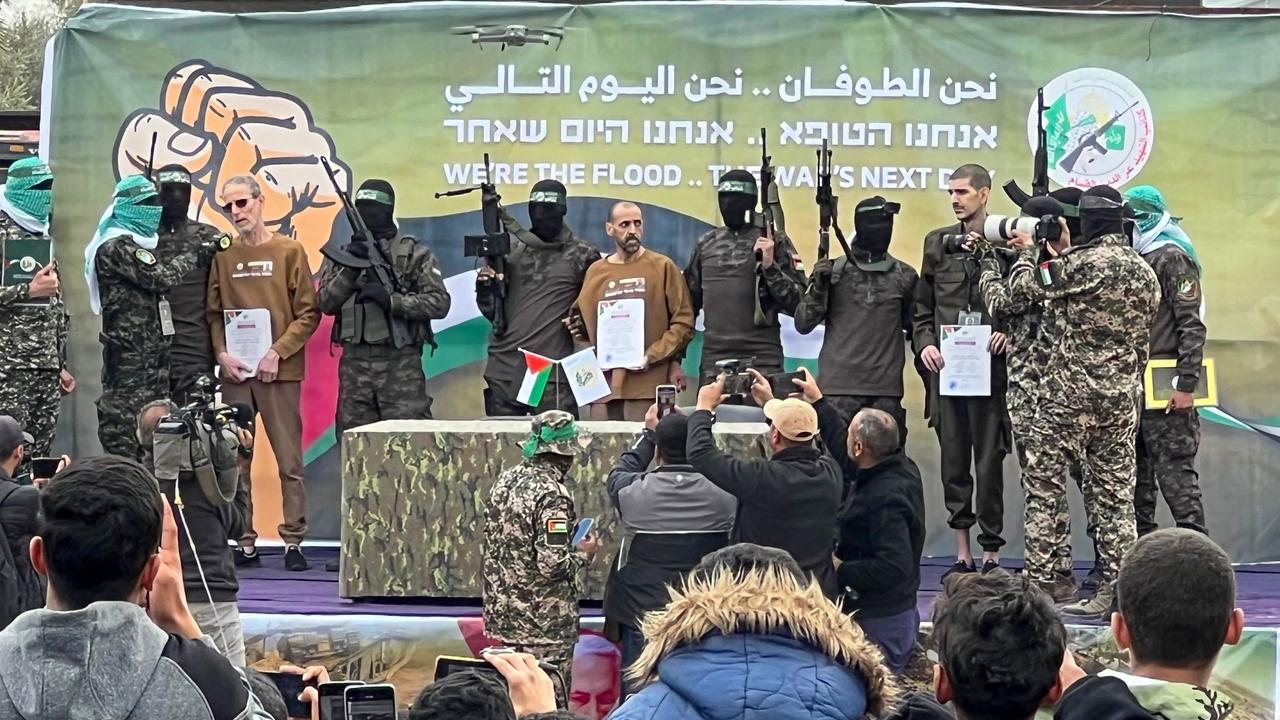
The final prisoner exchange deal symbolized this shift in the balance of power. Israel, desperate for a symbolic victory to mend its internal fractures, faced a movement negotiating from a position of confidence and sovereignty.
The resistance ended the war not by request but by decision, setting the timing and terms itself, and proving that those who stand firm in the field dictate the outcome at the table.
At the core of the Israeli military strategy was the ambition to dismantle Hamas’s organizational structure, believing that the movement would crumble under the weight of siege, bombardment, and isolation.
Yet the outcome was the opposite. Israeli journalist Chaim Levinson wrote in Haaretz: “Until the final day of the war, Hamas maintained its political leadership, its field command, and control over Gaza. No one defected, no faction emerged, no one negotiated surrender or sold information for money.”
This rare admission exposed the failure of the Israeli “disintegration strategy.” The movement remained unified, disciplined, and structurally intact.
What was meant to be the dismantling of Hamas turned instead into the disintegration of Israel’s own confidence and cohesion.
Hamas, despite the destruction and siege, functioned as what analysts describe as a “state in the form of a resistance movement,” with stable administrative, security, and decision-making systems that allowed it to manage the war with consistency and order. Even Israeli media figures voiced frustration at the outcome.
A reporter for Channel 14 lamented, “Why did we spill the blood of our soldiers in Gaza if it was the Americans who eventually retrieved our captives, not our military operations?” Such statements reflected a wider sense of failure in Israeli military and political establishments.
The prisoner deal itself exposed the limits of Israel’s much-celebrated intelligence and technological capabilities.
For two years, the Israeli occupation waged not only a military campaign but also an intelligence war, employing satellites, drones, and Western intelligence assistance, yet it failed to locate its captives or even obtain reliable information about them.
The al-Qassam Brigades managed the captives’ file under extraordinary secrecy, demonstrating that control over information can be more decisive than control over firepower.
When Hamas’s “Shadow Unit” contacted Israeli families of captives directly, it sent shockwaves through Israel’s security system.
Military analyst Yaron Avraham admitted, “If they had maps of our bases, why wouldn’t they also have the families’ phone numbers?” The episode symbolized a reversal of intelligence dominance: the resistance, long under surveillance, had become the surveillant.
The prisoner exchange was therefore not merely a humanitarian arrangement but a strategic revelation that stripped Israeli security apparatus of its aura of invincibility.
It proved that Hamas could outmaneuver one of the world’s most advanced intelligence systems through discipline, secrecy, and a mastery of human networks rather than technology. The movement exposed a fundamental truth: in modern conflict, the side that holds information, not just weapons, holds power.
Hamas’s negotiated end to the war produced two significant outcomes. First, it repositioned the Palestinian cause on the global political map.
The Israeli occupation had sought to bury Gaza and the Palestinian question beneath the rubble, to erase geography and memory alike, but the prisoner deal resurrected both.
The issue of Palestine returned to international debate not as a humanitarian crisis but as a political cause rooted in sovereignty and resistance. Second, the exchange represented a moral and symbolic triumph equal to any battlefield victory.
Within the ethos of resistance, a prisoner is not a statistic but a living symbol of dignity and loyalty. To secure such an agreement after a devastating war underscored Hamas’s ability to transform survival into agency, and endurance into victory.
In the aftermath, a new balance of deterrence has emerged. Hamas now controls both the battlefield and the information space, while the Israeli occupation has lost its sense of technological and strategic superiority.
Its internal divisions have deepened even as the Palestinian front, rising from beneath the rubble, regains a sense of unity and purpose.
The Israeli occupation faces a stark choice: to recognize this new reality and deal with it as a fact, or to plunge into another futile war in search of a symbolic victory that no longer exists.
From the ruins of Gaza, new equations are being written. Hamas has emerged not as a broken organization but as a movement redefining victory as endurance, sovereignty, and the power to shape the narrative itself.
The war’s conclusion was more than a ceasefire; it was a strategic realignment. In defeating the myth of Israeli invincibility, Hamas shifted the paradigm from survival to sovereignty, from reaction to authorship.
The prisoner deal was, in essence, a deal of consciousness before it was a deal of captives, a moment that confirmed a new reality: in this land, it is not the side with the strongest weapons that writes the ending, but the one with the longest breath and the deepest faith in the meaning of steadfastness.
Shortlink for this post: https://daysofpalestine.ps/?p=68429