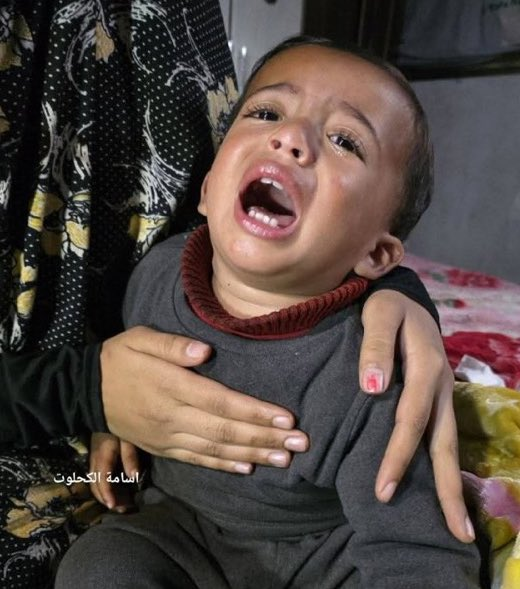
DaysofPal- While children around the world prepare for school with backpacks filled with books and dreams, the reality in Gaza is starkly different.
Children in Gaza wake to the sound of explosions that have persisted despite a ceasefire, beginning their days not in classrooms but in a desperate need for water and food amid rubble and dire living conditions.
As Palestinians mark Palestinian Children’s Day on April 5, an occasion established in 1995 to affirm children’s rights, Gaza’s youngest residents face deepening humanitarian crises, stripped of basic rights to education, safety, and play.
The ongoing Israeli war on the densely populated enclave has left devastating physical and psychological effects on children, who have emerged as the primary victims.
Local and international health and human rights reports indicate that women and children account for more than 60 percent of the total casualties, underscoring the scale of the humanitarian catastrophe.
Ten-year-old Tala Masoud sits outside her worn tent in Deir al-Balah, washing her family’s clothes by hand in a plastic container. Displaced from northern Gaza, she has been forced out of school and now dreams of becoming a doctor seem increasingly out of reach.
“Life is harsh during the war. Nothing is like it used to be,” she said, describing her feelings of loneliness and hunger, having lost friends in the violence.
Her family depends on charity kitchens, and she often spends entire days without food if no meals are available.
For many families, the war has forced children to take on responsibilities far beyond their years. Alaa Abu Nasser, a 34-year-old widow displaced with her five children, says the conflict has shattered childhoods and scattered dreams.
Her eldest son, Malik, 10, now helps support the family. He built a handcart himself, using it daily to fetch water and transport goods for others in exchange for small payments.
Similarly, Anas Hussein spends long hours selling items from a modest street stand to help his injured father and displaced family survive.
Fourteen-year-old Mahmoud al-Sheikh speaks with a maturity shaped by hardship. “Death is better than this life,” he said, describing the daily struggles faced by displaced children.
His wish is simple: a single room with four walls to shelter his family, instead of a tent repeatedly flooded by rain.
Before the Israeli war, Mahmoud dreamed of becoming a professional football player, but says that dream was destroyed along with Gaza’s sports facilities.
According to the Palestinian Central Bureau of Statistics, 18,592 children had been killed in Gaza by the end of December.
Dr. Salah Abdel Ati, head of the International Commission to Support Palestinian Rights, described the situation as a systematic assault on childhood.
“Gaza’s children are under the guillotine,” he said, accusing Israeli occupation of subjecting them to killing, siege, and deprivation of fundamental rights.
He added that the enclave has effectively become a “graveyard for children,” with violations extending beyond direct attacks to include the destruction of the systems necessary for their survival and development.
The war has also led to a sharp rise in orphanhood. According to local reports, the number of orphans has surged from 22000 before the war to approximately 85000, with many children losing one or both parents.
In some cases, entire families have been wiped out, leaving a single child as the sole survivor.
These children now live without support in environments lacking even the most basic necessities.
Many have entered the labor force prematurely, undertaking physically demanding work to sustain themselves and remaining family members.
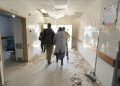
The crisis extends to education and healthcare. Nearly 90 percent of educational facilities have been destroyed or repurposed as shelters for displaced families, exposing children to disease and depriving them of schooling.
Psychological experts warn of long-term trauma among Gaza’s children. Dr. Dardah al-Shaer, a mental health specialist, said children are the most vulnerable during wars, often unable to process the violence around them.
Many suffer from anxiety, fear, sleep disturbances, and difficulty concentrating or learning. Others show signs of social withdrawal, depression, or behavioral disorders.
“The loss of parents is one of the most severe consequences,” he explained.
“Without them, children lose guidance, stability, and emotional support, effects that can last a lifetime.” He added.
According to previous United Nations data, around one million children in Gaza now require psychological and social support due to depression and anxiety linked to the war.
Instead of celebration, Palestinian Children’s Day in Gaza is marked by grief, survival, and resilience in the face of overwhelming adversity.
For many, the day serves as a reminder not of rights fulfilled, but of a childhood under siege, where dreams are buried beneath rubble, and the future remains uncertain.
Shortlink for this post: https://daysofpalestine.ps/?p=73610