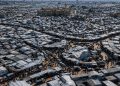
DaysofPal– In the Gaza Strip, where Israeli war and siege intensify, the humanitarian crisis has turned into a disaster threatening the lives of millions.
Since the closure of border crossings at the beginning of March last year and the halt of humanitarian aid shipments, food supplies have become scarce in an unprecedented way, with prices soaring to unimaginable levels. This has forced residents to seek primitive alternatives to survive.
In a scene reflecting the harshness of life, wild herbs such as mallow, sorrel, purslane, chamomile, and even mulberry leaves have come to dominate the dining tables of many families, becoming an emergency substitute for missing or overly expensive vegetables and necessities.
On May 12, the United Nations and its partners issued an official report warning that all of Gaza’s residents—nearly two million people—are now facing the risk of famine amid the continued closure of crossings and the escalation of military operations. According to the Integrated Food Security Phase Classification (IPC) report, approximately 469,500 people are suffering from catastrophic hunger, while more than 71,000 children and 17,000 mothers require urgent intervention to treat severe malnutrition.
Fatima Obaid , a mother of six from the Al-Daraj neighborhood, no longer has flour or money to buy vegetables. Every two days, she goes to a plot of land her sister owns to gather mallow, purslane, and sorrel. She tells the Palestine newspaper, “Prices are insane, and there’s nothing for us to eat. I started collecting herbs and now prepare three meals a week, repeating them despite the boredom.”
With a faint smile, she adds: “I create recipes using purslane and sorrel as substitutes for spinach, making sour pies with clay, salt, and chili, or cooking them with brown lentils.”
Sabreen Qublan , a farmer from the town of Abasan, used to cook mallow and chamomile during winter. However, after Israeli forces razed her land at the start of the war, she now gathers herbs from available areas and makes pies baked in a clay oven.
She tells Palestine : “These dishes were side meals we rarely ate, but today they’re our main course. No meat, no chicken, no canned goods… herbs have become our only food source.”
Ansam Atallah , a grandmother living in one of the displacement shelters, boiled mulberry leaves collected by her grandchildren from their neighbor’s tree to prepare an alternative version of stuffed grape leaves.
She says to Palestine, “It doesn’t taste like grape leaves, but it fills the stomach. We’re not looking for flavor; we’re just trying to stay alive.”
The painful question: Until when?
In Gaza today, wild herbs are no longer just symbols of poverty or rural life—they’ve become a forced means of survival in the face of famine. Amid this bitter reality, families continue to ask:
“How long will we keep eating from the ground while the world simply watches?”
Shortlink for this post: https://daysofpalestine.ps/?p=63095