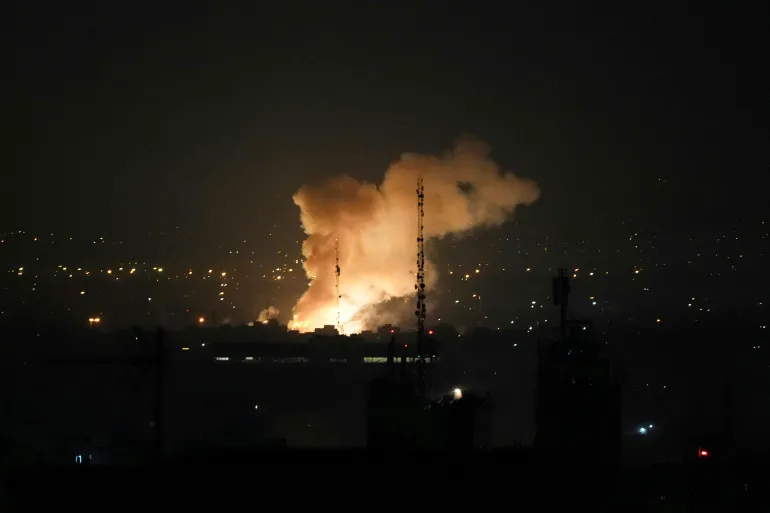
GAZA – Israel continues to intensify both its military assault and siege on the Gaza Strip, worsening what international organizations have repeatedly described as a catastrophic humanitarian crisis. The ongoing bombardment, coupled with severe restrictions on humanitarian aid, is pushing conditions across the besieged enclave toward further collapse.
According to reports from the ground, Israeli attacks have escalated across all areas of Gaza, with particularly heavy bombardment targeting the southern and central governorates in recent days.
Israeli forces have increased airstrikes, artillery shelling, home demolitions, and live-fire attacks, while repeatedly targeting tents sheltering displaced Palestinians in the al-Mawasi area, one of the locations Israel had previously designated as a so-called “safe zone.”
Israeli attacks kill civilians
On Friday, two Palestinians were killed after Israeli forces opened fire in southern al-Mawasi, including a seven-year-old girl and a 22-year-old man.
The area around “Bir 19” has been subjected to continuous Israeli gunfire and attacks, with civilians reportedly killed or wounded on a near-daily basis as Israeli forces continue to violate ceasefire understandings.
Israeli artillery also continues to pound towns east of Khan Younis, including al-Qarara, al-Zanna, Bani Suheila, Qizan al-Najjar, Abu Rushwan, al-Tahliya, Sheikh Nasser, and Batn al-Sameen.
Residential neighborhoods remain under constant attack through artillery fire, live ammunition, and airstrikes. On Friday evening, Israeli forces targeted a house in the al-Majadla neighborhood behind Nasser Medical Complex in western Khan Younis, causing extensive damage. No casualties were immediately reported.
Continued attacks on displacement camps
Israeli strikes have also continued to target tents housing displaced families, civilian vehicles, residential buildings, and entire neighborhoods.
Recent attacks on al-Bureij refugee camp and al-Maghazi in central Gaza destroyed numerous homes, while similar bombardment continues across Gaza City and northern Gaza.
Humanitarian crisis worsens
Alongside the military offensive, Israel continues to tighten restrictions on humanitarian aid entering the Strip.
Aid agencies report a significant reduction in the number of relief trucks permitted to enter Gaza, severely limiting the ability of international organizations to distribute food, drinking water, hygiene supplies, clothing, and other basic necessities to the population.
The United Nations World Food Programme (WFP) warned on Friday that it will be forced to further reduce food assistance unless additional funding is secured. The agency currently provides support to approximately 70 percent of Gaza’s population.
Most Palestinians in Gaza now rely almost entirely on humanitarian assistance after nearly two years of war, repeated forced displacement, and Israel’s ongoing blockade and restrictions on aid deliveries.
Hunger expected to worsen
According to the Integrated Food Security Phase Classification (IPC), the number of people experiencing acute food insecurity declined to approximately 1.2 million between mid-April and the end of June.
However, the IPC warned that these gains are rapidly being reversed. The number of Palestinians facing acute hunger is projected to exceed 1.4 million people—around 67 percent of Gaza’s population—by December if humanitarian access continues to deteriorate.
Humanitarian agencies have warned that without a sustained increase in aid deliveries, the enclave faces an escalating food crisis, leaving hundreds of thousands of Palestinians at increasing risk of hunger and deprivation as Israel continues its military offensive and siege.
Shortlink for this post: https://daysofpalestine.ps/?p=76605