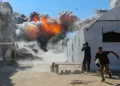
DaysofPal – Palestinian families in Gaza are returning to neighborhoods that have been reduced to rubble four weeks into a precarious ceasefire, confronting the extent of the environmental destruction and human suffering caused by Israel’s war.
In Khan Younis, Fatin al-Shaer is rebuilding her home brick by brick. “There is no access to clean drinking water,” she said. “The place is unsuitable for living.”
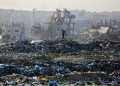
Across the Strip, broken sewage networks, shattered water pipes, and mounds of uncollected waste have turned many areas into breeding grounds for disease. Gaza City resident Eid al-Rahim Abu Ghneima described the misery: “This rubbish dump we are next to gives off a stench and is covered with flies day and night. Children suffer terribly. Skin diseases and diarrhea are common.”
The UN estimates more than 61 million tonnes of debris must be cleared from Gaza, an overwhelming task in a territory where fuel, machinery, and materials remain tightly restricted.
At the COP30 climate talks in Brazil, Palestinian ambassador Ibrahim al-Zeben warned that Gaza now faces “severe risks to public health,” noting that Israel’s war has destroyed farmland, contaminated soil, and used “hunger as a weapon.”
According to the Government Media Office in Gaza, around 90 percent of Gaza’s infrastructure has been damaged or destroyed. Some 300,000 housing units were completely leveled, while another 200,000 sustained severe or partial damage. The destruction has rendered more than 1.5 million Palestinians homeless, one of the worst housing catastrophes of the 21st century.
In northern Gaza, thousands of displaced families remain scattered between tents and rented plots of land, waiting for reconstruction that shows no sign of beginning. The ongoing Israeli obstruction of aid and construction materials continues to paralyze rebuilding efforts.
For many, returning to their destroyed homes is not a choice but an act of desperation. The conditions in temporary shelters are unbearable, both physically and psychologically.
With no safe or affordable alternatives, Palestinians face a cruel dilemma—to stay in tents unfit for human life or return to shattered buildings that no longer offer safety.
Despite the lull in bombardment, the war’s impact still hangs over every street and home. Once-vibrant neighborhoods have become wastelands. Roofless homes serve as makeshift shelters, and the absence of a clear reconstruction plan leaves families struggling each day simply to survive.
Shortlink for this post: https://daysofpalestine.ps/?p=69207