DaysofPal – Fears of a deepening humanitarian catastrophe are intensifying across the Gaza Strip, where residents are enduring the cumulative impact of Israel’s devastating war, collapsing infrastructure, and life-threatening environmental and health conditions.
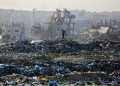
In Khan Younis, residents of the Al-Amari neighborhood have sounded the alarm over rising wastewater levels mixing with rain, threatening to flood nearby homes. Locals warn that the crippled sewage network, shattered by months of bombardment, could soon unleash a full-scale environmental disaster.
The Network of Civil Society Organizations in Gaza reported that the enclave is still suffering from “a real famine,” with humanitarian aid meeting less than one-third of basic needs.
Despite widespread destruction, UNRWA remains the main lifeline for displaced Palestinians, though many of its facilities have been severely damaged or destroyed.
Stefanos Fotio, head of the UN Food Systems Coordination Center, urged the immediate reopening of Gaza’s border crossings to restore the food supply chain and ensure the entry of life-saving assistance.
According to UNRWA, around 75,000 displaced Palestinians are sheltering in over 100 of its damaged schools and buildings, where conditions are “extremely harsh,” marked by overcrowding, disease, and a near-total absence of clean water and food.
The agency warned that a complete humanitarian collapse is imminent unless urgent international measures are taken.
A UN deputy spokesperson said that 81% of Gaza’s structures have been destroyed, calling the devastation “unprecedented in modern history.” The UN has officially recognized Israel’s campaign in Gaza as an act of genocide.
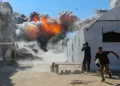
Gaza has become “a ticking time bomb” due to unexploded ordnance strewn throughout the region, according to Civil Defense spokesperson Mahmoud Basal. He said specialized equipment and technical teams are urgently needed to remove the explosives, but such resources are unavailable under the blockade.
The world’s hardest humanitarian mission
A detailed investigation by The Guardian described Gaza as facing “the most difficult humanitarian mission in modern warfare.” The report estimated that 61 million tons of rubble now cover the enclave, with over 10,000 bodies still trapped beneath the debris, possibly rising to 14,000 as searches continue.
Rescue crews are forced to dig by hand, using shovels and pickaxes, as Israel continues to block heavy machinery from entering Gaza. During 16 days of the ceasefire, teams managed to recover only 472 bodies.
The report further noted that 77% of Gaza’s road network has been destroyed, making aid delivery nearly impossible.
Clearing the rubble, it warned, could take more than seven years, especially as unexploded munitions have already caused 147 deadly incidents since October 2023, killing 52 people.
Global deliberations over a UN-backed force
On the political front, UN Secretary-General António Guterres said the organization is working to expand humanitarian aid and reinforce the ceasefire while urging a credible political process toward Palestinian self-determination.
Speaking at the Doha Social Development Summit, Guterres confirmed that the UN Security Council is considering a US-drafted resolution to establish an international stabilization force in Gaza.
He emphasized that “any entity formed in Gaza must derive its legitimacy from the United Nations” and reaffirmed the need for a two-state solution as the only sustainable path to peace.
According to diplomatic sources, the US proposal would see the international force operate in Gaza for no less than two years.
Tulsi Gabbard, the head of US intelligence, arrived in Israel to supervise the ceasefire’s execution and talk about postwar plans. The Israeli daily Israel Hayom reported that she met with Prime Minister Benjamin Netanyahu and senior officials to discuss border security with Lebanon, the Iran file, and the second phase of the Gaza ceasefire deal.
Gaza’s Government Media Office stated that Israeli forces have committed around 200 ceasefire violations since October 10, underscoring the fragility of the truce and the ongoing suffering of Gaza’s population trapped in an unprecedented humanitarian crisis.
Shortlink for this post: https://daysofpalestine.ps/?p=69244