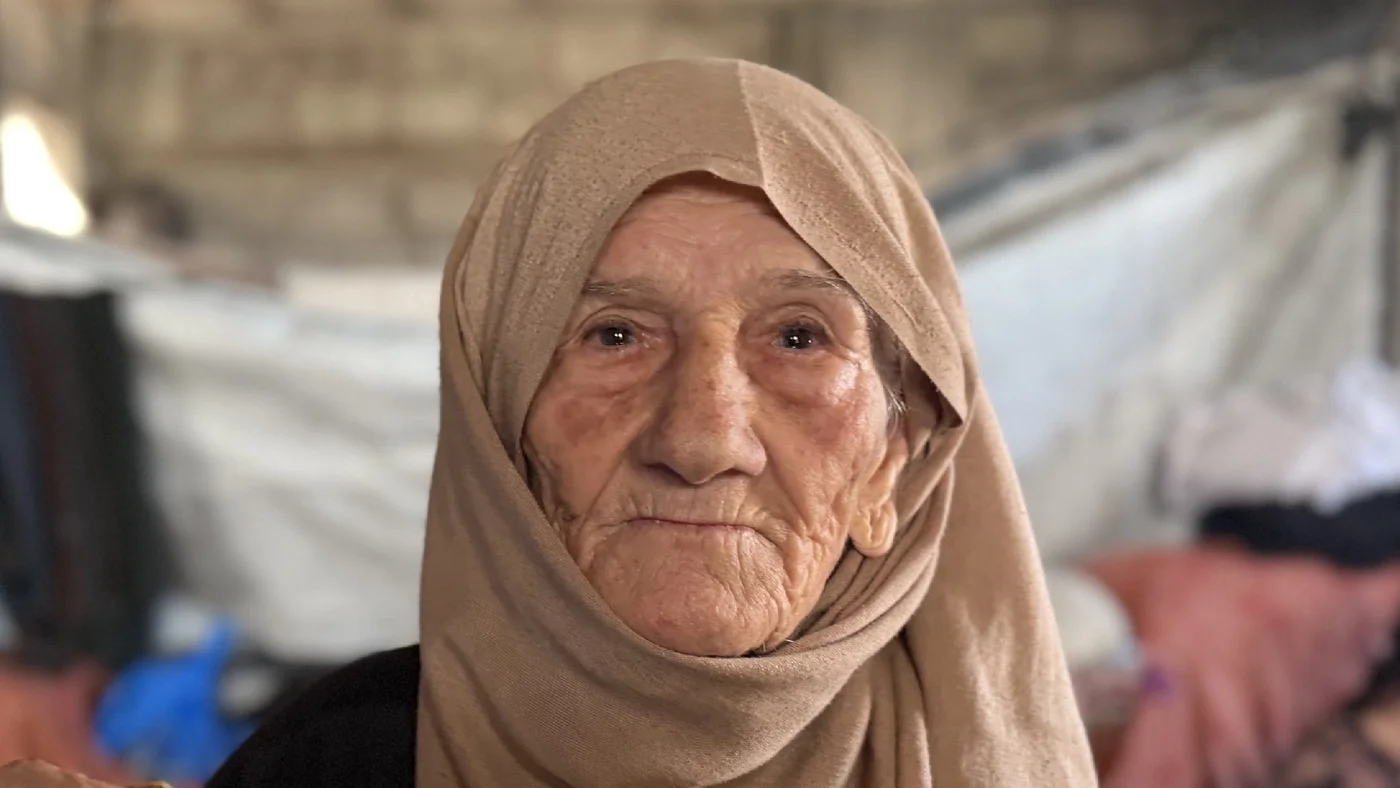
DaysofPal- At 95 years old, Fatema Obaid has lived through some of the most defining and devastating moments in Palestinian history.
From the mass displacement of 1948 to the ongoing Israeli genocidal war in Gaza, her life has been shaped by repeated loss, forced migration, and resilience in the face of hardship.
Obaid, a resident of Gaza City, has lost around 70 members of her extended family during the current conflict.
Despite enduring continuous bombardment, severe shortages of food and water, and multiple displacements, she has refused to leave her hometown, even under evacuation orders issued during the war that began in October 2023.
Having already experienced displacement during the 1948 Nakba, Obaid says the current events are even more devastating.
While the earlier catastrophe led to the loss of homes and land for hundreds of thousands of Palestinians, she believes today’s war has erased entire families and generations.
Originally from the Shujaiya neighborhood, Obaid was briefly displaced in 1948 before eventually returning home.
Decades later, however, her neighborhood has been destroyed, and she has been forced to flee repeatedly—more than ten times since the latest war began. Her home and much of eastern Gaza have been reduced to rubble.
The ongoing conflict has displaced nearly Gaza’s entire population, with many living in temporary shelters or tents.
Obaid herself now resides in an unfinished apartment with her grandchildren. Despite the harsh conditions, she remains determined not to leave Gaza City, saying she does not want to spend her final days in exile.
The humanitarian situation has worsened significantly over the past two years, with widespread shortages of basic necessities. Obaid recalls periods when even drinking water was unavailable, and food was scarce.
These conditions have taken a toll on her health, but she continues to endure.
In addition to losing family members, Obaid has also lost nearly all her personal belongings, including items she had preserved for decades, such as her wedding dress and mementos from her late husband.
The only item she still carries is a pair of earrings given to her by her father before 1948, one of the few remaining links to her past.
Obaid is among the dwindling number of Palestinians who witnessed the events of 1948 and are still alive today.
Since the start of the current war, thousands of elderly Palestinians have died, either as a direct result of attacks or due to deteriorating living conditions and lack of medical care.
Reflecting on her life, Obaid describes a long history of hardship, including the early loss of her mother and decades of struggle.
Yet she says the most painful experience has been repeated displacement and the prospect of dying away from her homeland.
Her story highlights the enduring human cost of conflict, spanning generations and continuing to shape lives in Gaza today.
Shortlink for this post: https://daysofpalestine.ps/?p=74698