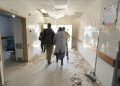
DayofPal– For Iyad Haribat, the journey to freedom was not just about leaving an Israeli prison, but about reclaiming his life and health after years of deliberate medical neglect.
Haribat, one of the most well-known medical cases in Israeli prisons, endured severe mistreatment that left his body frail and riddled with illnesses. Despite countless pleas for his release due to his deteriorating health, Israeli authorities ignored the calls.
Today, he basked into freedom thanks to the prisoner exchange deal occured as part of a ceasefire between Hamas and Israel.
Haribat was exiled to Egypt, where doctors informed him that his body is too weak for immediate surgery. For now, he must undergo extensive treatment and nutritional rehabilitation before he can endure the operation needed to close an open wound in his abdomen, a makeshift exit for bodily waste.
His brother, Yusuf, describes the brutal conditions his sibling endured in prison, saying “They barely gave him food—just a cup of rice and a cup of tomato sauce per day, which he had to divide into two meals, despite that they knew he was gravely ill. But starvation was just another weapon they used against him.”
Now, doctors say Haribat requires months of proper nutrition, antibiotics, and blood-thinning medication before they can consider surgery.
The family was devastated to learn that he had suffered a stroke during the war on Gaza, yet they had received no updates about his condition since their last visit in July 2023.
For Yusuf, the youngest of his brothers, the pain of separation has been lifelong. When Iyad was arrested in 2002, Yusuf was just five years old.
He was the only one allowed to visit his brother occasionally, as Israeli authorities routinely denied security clearance for other family members, including their father.
The visits forged an unbreakable bond between the two, making Iyad’s freedom even more emotional.
The family’s joy was overwhelming when they received the long-awaited call: Iyad was on the list for release in the sixth phase of the prisoner exchange and would be sent to Egypt.
Yusuf and the rest of the family rushed to travel to see him, but once again, Israeli authorities denied them permission.
“It felt like he had been arrested all over again,” Yusuf says. Yet, the sound of his brother’s voice, now filled with hope and freedom, has eased some of the heartache.
Their first phone call with his family lasted six hours, the time it took for Iyad to travel from Rafah to Al-Arish Airport. Now, their conversations have become a lifeline.
Iyad shares his excitement about being free, while his family reassures him of their undying love and longing to reunite. But for Yusuf, true happiness remains bittersweet.
“The people of Gaza made this possible. But our joy is incomplete because of the suffering they continue to endure. Every child in Gaza is a crown on our heads,” Yusuf said.
At 41 years old, Iyad Haribat is finally free after 23 years of imprisonment. Originally from Dura, near Hebron, he was arrested in 2002, subjected to three months of brutal interrogation, and eventually sentenced to life in prison.
By 2014, his health had begun to deteriorate severely due to systematic medical negligence, a slow-motion execution tactic used against Palestinian prisoners.
Over the years, Haribat developed a neurological disease, chronic tremors, memory loss, and an inability to stand unassisted.
Despite his fragile condition, he was frequently transferred between prisons, isolated in solitary confinement, and denied adequate medical care. Now, his fight is not just to recover, but to survive.
Shortlink for this post: https://daysofpalestine.ps/?p=61046