DaysofPal – Despite the ceasefire in Gaza, the humanitarian catastrophe is worsening. With no safe shelter and no land to return to, many displaced families are pitching tents inside graveyards because it’s the last free space available.
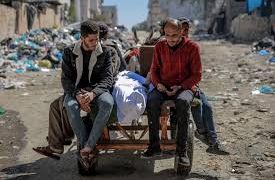
In Gaza, where entire neighborhoods have been reduced to rubble, tens of thousands of displaced Palestinians are now seeking refuge in the only open spaces left, graveyards.
Across the southern city of Khan Younis and beyond, families are pitching tents between tombstones, transforming cemeteries into makeshift camps. What were once sacred resting places for the dead have become shelters for the living, not out of choice, but out of sheer desperation.
“This graveyard wasn’t meant for the living,” said one displaced resident. “But today, it’s the only space where we can survive.”
Families live among headstones, sleeping on dirt and concrete slabs. There is no water, no electricity, and no privacy, only the struggle to endure. Parents describe the experience as a slow psychological collapse. The trauma of war, they say, has been compounded by the pain of watching their children grow up surrounded by death.
“For parents, the emotional toll is heavy,” said a father of twelve who fled the north. “We have to raise our children among tombstones. It’s unbearable.”
Another woman described the bitter irony of their new reality: “Graveyards, once sacred spaces for the dead, are now silent witnesses to a living crisis. In Gaza, even the land for the dead has become the last refuge for the living.”
A Displaced Nation
According to UN estimates, nearly 1.9 million Palestinians, around 90 percent of Gaza’s population, have been displaced since Israel’s war began. Many families have been forced to flee not once, but multiple times, as bombardments and forced evacuation orders left them without safe ground to stand on.
Overcrowded shelters in the south can no longer accommodate the influx of people. Renting even a few square meters of land to pitch a tent has become prohibitively expensive for families who have lost their homes, savings, and livelihoods.
The UN agency for Palestinian refugees estimates that more than 61 million tonnes of debris now blanket Gaza, with entire neighborhoods erased from the map. Families search the ruins for remnants of shelter, water, or something to rebuild their lives with, often finding nothing but dust and silence.
Ceasefire Without Relief
Despite a fragile ceasefire in place since October 10, the humanitarian catastrophe remains acute. Israel continues to impose severe restrictions on the entry of aid, leaving food, fuel, and medical supplies in critically short supply.
On Wednesday, the International Court of Justice ordered Israel to allow the flow of humanitarian aid into Gaza, ruling that it cannot use starvation as a method of warfare. Yet, the impact of that ruling has yet to be felt on the ground.
Most aid convoys are limited to the central and southern parts of the Strip via the Karem Abu Salem (Kerem Shalom) crossing, while northern Gaza remains almost entirely cut off.
In the meantime, life, or what is left of it, continues among the tombs.
In Gaza, the distinction between life and death has blurred. Cemeteries have become shelters, homes have become graves, and survival itself has become an act of defiance. As one resident put it quietly, sitting beside a cracked headstone:
“We no longer fear death. We live with it now.”
Shortlink for this post: https://daysofpalestine.ps/?p=68733